



The air conditioning compressor is one of the most important components in a cooling system. Often described as the heart of an AC 1/2 pk unit, the compressor circulates refrigerant between the indoor and outdoor sections, allowing the system to absorb heat from inside a building and release it outdoors. When the compressor begins to fail, the entire air conditioning system can lose its ability to cool effectively.
Compressor problems do not always happen suddenly. In many cases, an AC system provides several warning signs before a complete failure occurs. Recognizing these symptoms early can help homeowners and building managers arrange professional service before a minor problem develops into an expensive repair.
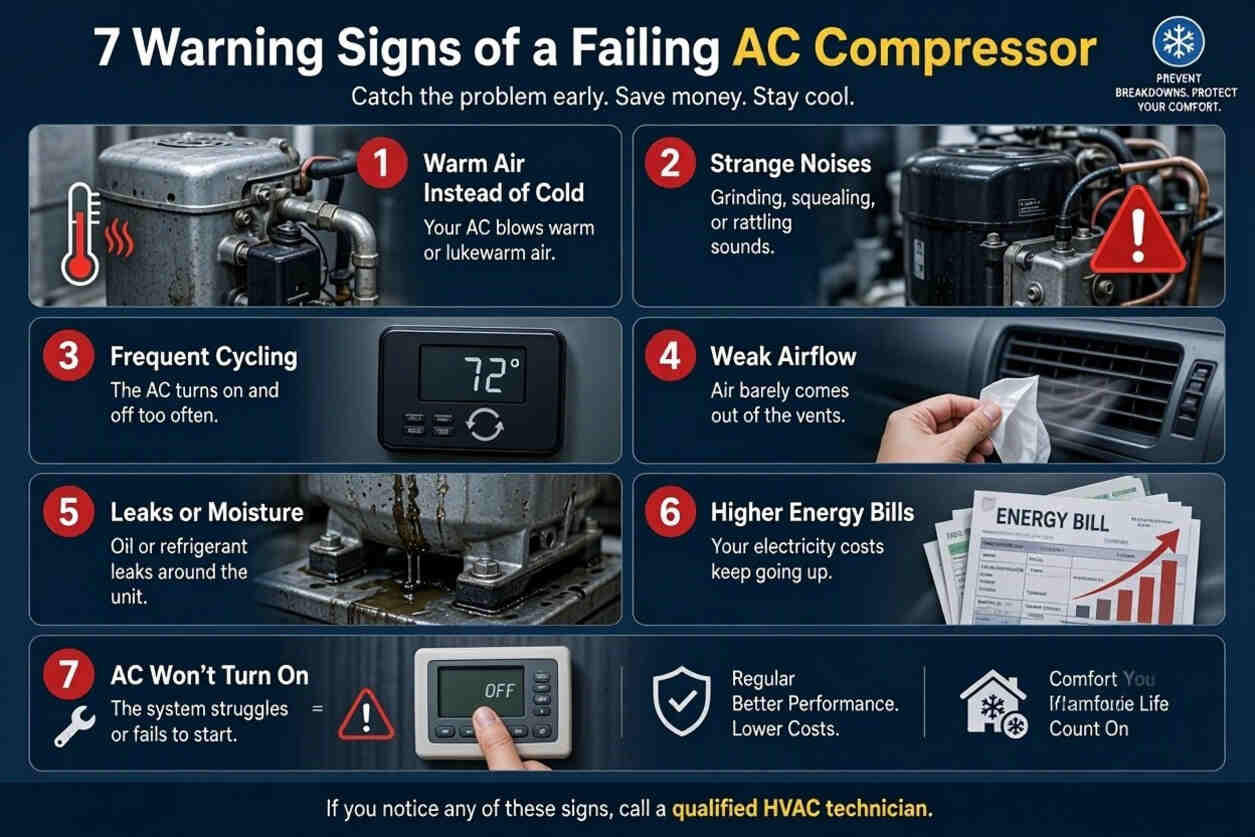
Here are seven common warning signs that an AC compressor may be in trouble.
1. Your AC Is Blowing Warm Air
One of the most obvious signs of a compressor problem is warm air coming from the vents when the thermostat is set to cooling mode. A malfunctioning compressor may not be able to circulate refrigerant properly, preventing the system from transferring heat.
However, warm air does not automatically mean the compressor itself has failed. Low refrigerant, electrical problems, a dirty condenser coil, restricted airflow, or thermostat issues can produce similar symptoms. A qualified HVAC technician should inspect the complete system before determining the actual cause.
2. Unusual Noises From the Outdoor Unit
Air conditioners normally produce some operating sounds, but sudden changes in noise should not be ignored. Grinding, rattling, buzzing, clicking, or screeching sounds from the outdoor unit may indicate mechanical or electrical problems.
A grinding noise, for example, can be associated with worn internal components or motor bearings. Repeated clicking may indicate an electrical issue, while loud buzzing can point to problems involving the compressor, capacitor, or other electrical components.
Because compressors operate under significant pressure, unusual sounds should be investigated by a professional rather than ignored.
3. The AC Takes Too Long to Cool the Room
An air conditioner that runs for long periods without reaching the desired temperature may be experiencing a developing compressor problem. A weak compressor may struggle to maintain the pressure difference needed for efficient refrigerant circulation.
You may notice that the system runs continuously, yet certain rooms remain uncomfortable. Before blaming the compressor, technicians should also check refrigerant levels, filters, ductwork, coils, airflow, and thermostat operation.
Long cooling cycles can increase energy consumption and place additional stress on other components.
4. Frequent Circuit Breaker Trips
If the circuit breaker repeatedly trips whenever the air conditioner starts, the system may be drawing excessive electrical current. A compressor that is struggling to start or operating under abnormal conditions can contribute to this problem.
A failing capacitor, damaged wiring, electrical short, or an overloaded circuit can also cause repeated breaker trips. Homeowners should never repeatedly reset the breaker without identifying the underlying issue.
Electrical faults can create serious safety risks. If the breaker continues to trip, turn off the system and arrange an inspection by a qualified HVAC professional.
5. Increased Electricity Bills
An unexpected increase in energy consumption can sometimes indicate that an AC compressor is losing efficiency. When the compressor has difficulty maintaining proper refrigerant pressure, the system may need to operate longer to achieve the same cooling results.
Of course, higher electricity bills can have many causes, including hotter weather, increased usage, poor insulation, dirty filters, or inefficient equipment. However, if higher energy consumption occurs together with weak cooling or longer operating cycles, it is worth having the AC system inspected.
Regular maintenance can help identify efficiency problems before they become major failures.
6. Oil or Refrigerant Leaks Around the Outdoor Unit
The presence of oily residue around the outdoor unit may indicate a refrigerant leak because refrigerant can carry compressor oil through the system. A leak can reduce system performance and eventually place additional stress on the compressor.
Refrigerant-related problems require professional attention. Simply adding refrigerant without locating and repairing the leak does not solve the underlying problem.
A technician can inspect refrigerant lines, connections, coils, and other components to determine whether leakage is present and whether the compressor has already been affected.
7. The Compressor Struggles to Start
A compressor that hums without starting, starts and stops repeatedly, or has difficulty turning on may be experiencing a serious problem. Electrical components such as the start capacitor or contactor can cause these symptoms, but internal compressor damage is another possibility.
Repeated attempts to start a struggling compressor can place additional electrical and mechanical stress on the system. If the outdoor unit makes a humming sound but does not operate correctly, it is better to shut the system down and seek professional assistance rather than repeatedly restarting it.
Why Early Compressor Problems Should Not Be Ignored
A compressor is a major component and can be one of the more expensive parts to repair or replace. Ignoring early warning signs may allow a relatively manageable issue to develop into a complete system breakdown.
Early diagnosis can also help technicians determine whether the compressor is actually the source of the problem. In some cases, the compressor may be functioning properly while another component—such as a capacitor, fan motor, electrical connection, or refrigerant circuit—is responsible for the symptoms.
How to Protect Your AC Compressor
Preventive maintenance is one of the best ways to reduce unnecessary stress on an AC compressor. Replace or clean air filters according to the manufacturer’s recommendations, keep the outdoor condenser area free from debris, maintain adequate airflow, and schedule professional inspections periodically.
It is also important not to ignore unusual sounds, weak cooling, repeated breaker trips, or sudden increases in energy consumption. Addressing these symptoms early can improve system reliability and potentially extend the useful life of the equipment.
Final Thoughts
An AC compressor rarely fails without providing clues. Warm air, unusual noises, long cooling cycles, electrical problems, rising energy bills, leaks, and starting difficulties can all indicate that something is wrong with the system.
While these symptoms do not always prove compressor failure, they should prompt further investigation. A qualified HVAC technician can test the system, identify the actual cause, and recommend the most appropriate solution.
Recognizing the warning signs of a failing AC compressor early can help prevent unexpected breakdowns, improve cooling performance, and protect your investment in your air conditioning system.