








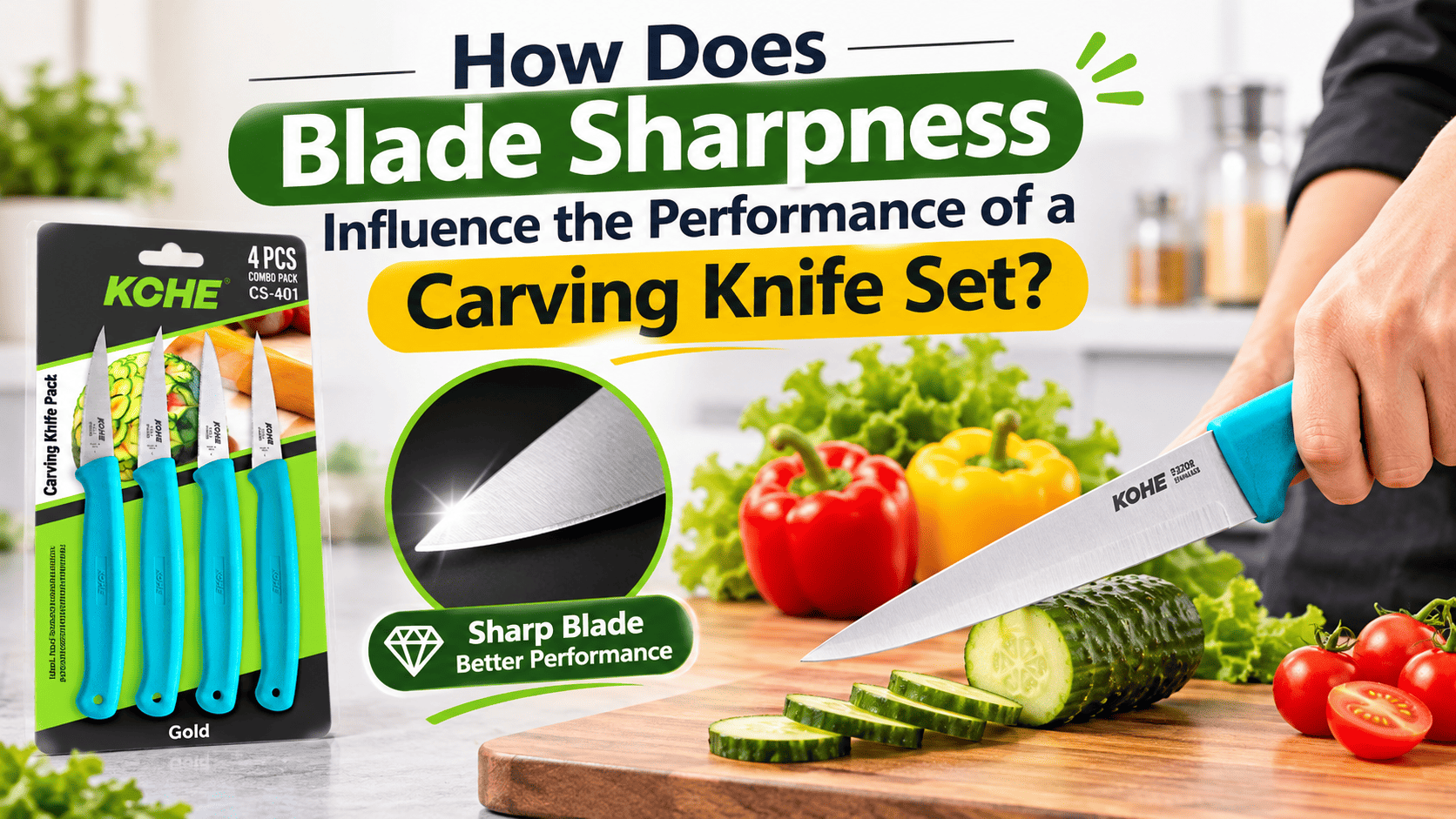
Blade sharpness is one of the most important factors influencing the performance, precision, and usability of kitchen knives. When preparing meat, poultry, or other ingredients, a sharp blade helps produce clean, consistent slices without requiring excessive pressure. This becomes particularly important when using a carving knife set, which is designed to handle controlled slicing and portioning during everyday food preparation and special occasions.
However, sharpness is not simply about how thin or pointed a knife’s edge appears. It depends on several factors, including blade geometry, steel composition, manufacturing quality, heat treatment, and regular maintenance. These elements work together to determine how effectively a knife cuts through different food textures.
For households in Ludhiana, understanding blade sharpness can make kitchen equipment selection more practical. Whether preparing roasted meat, slicing cooked poultry, or portioning larger food items, the right knife characteristics can improve control and reduce unnecessary effort.
A well-maintained carving knife set also contributes to safer food preparation when handled correctly. Understanding how sharpness influences cutting performance, edge retention, and maintenance requirements helps consumers make informed decisions before selecting kitchen knives.
What Is Blade Sharpness in a Carving Knife Set?
Blade sharpness refers to the condition and geometry of a knife’s cutting edge that allow it to pass through food with minimal resistance.
A sharp carving knife creates cleaner cuts because its edge separates food fibres efficiently. A dull blade, on the other hand, may crush ingredients, tear meat, or require additional pressure.
Sharpness generally depends on three important characteristics:
- Edge geometry: The angle and shape of the cutting edge determine how effectively it makes contact with food.
- Blade material: Steel composition influences hardness, corrosion resistance, and the ability to maintain a sharp edge.
- Edge condition: Regular sharpening and appropriate maintenance help preserve cutting performance.
These characteristics determine how a carving knife performs during repeated kitchen tasks.
How Does Blade Sharpness Influence Cutting Performance?
Blade sharpness directly affects the amount of effort and control required during cutting. A properly sharpened knife moves through food more smoothly, helping users achieve consistent slices.
1. Improves Cutting Precision
Precision is particularly important when carving cooked meat or poultry. A sharp blade allows the user to control the direction and depth of each cut.
This helps produce evenly sized portions and reduces unnecessary tearing. It is also useful when preparing ingredients for serving, where presentation and consistency matter.
2. Reduces Cutting Resistance
A dull knife often requires additional force to pass through food. This can make repetitive cutting uncomfortable and reduce control.
A sharp carving knife set reduces unnecessary resistance, allowing the blade to move through ingredients with more controlled pressure.
3. Produces Cleaner Slices
Clean slicing is important when working with cooked meat, fish, and poultry. A sharp edge separates the food more effectively instead of pulling or crushing its surface.
This can help maintain the appearance and structure of sliced ingredients.
4. Supports Better Handling
When a knife cuts efficiently, users generally need less force to complete the task. This can make controlled movements easier.
However, sharpness alone does not guarantee safe handling. Proper grip, a stable cutting surface, and appropriate cutting techniques remain essential.
What Factors Determine the Sharpness of a Carving Knife Blade?
A knife’s cutting performance depends on more than its initial sharpness. Several manufacturing and design factors influence how well the edge performs over time.
Steel Composition
The type of stainless steel used in a blade influences its hardness, corrosion resistance, and edge-retention characteristics.
Different steel compositions offer different combinations of properties. Some are designed to resist corrosion, while others may provide greater hardness or edge retention.
Consumers comparing a stainless steel carving knife set should consider the blade material alongside its overall construction and maintenance requirements.
Blade Geometry and Edge Angle
Blade geometry describes the shape, thickness, and cutting profile of a knife.
The edge angle influences how the blade interacts with food. A thinner cutting edge may move through ingredients with less resistance, while a thicker geometry may provide additional support for certain cutting applications.
The appropriate geometry depends on the intended use and blade construction.
Heat Treatment
Heat treatment is a manufacturing process used to influence the hardness and mechanical properties of steel.
Properly controlled heat treatment helps establish a balance between hardness and toughness. This balance matters because a blade that is too soft may lose its edge quickly, while excessive hardness can increase the risk of chipping if the blade is poorly designed or misused.
Why Is Edge Retention Important in a Carving Knife Set?
Edge retention refers to a blade’s ability to maintain its cutting performance during repeated use.
Even a sharp knife gradually loses its edge through contact with food, cutting boards, and other surfaces. The rate of wear depends on the steel, heat treatment, cutting technique, and maintenance routine.
Good edge retention offers several practical advantages:
- Reduces the frequency of sharpening.
- Supports consistent slicing performance.
- Helps maintain predictable cutting control.
- Makes routine kitchen preparation more convenient.
- Reduces interruptions during food preparation.
For regular kitchen use in Ludhiana households, understanding edge retention can help when comparing different carving knife options.
It is also important to distinguish between honing and sharpening. Honing helps realign minor changes in the cutting edge, whereas sharpening removes a small amount of material to create a new cutting edge.
How to Maintain Blade Sharpness for Long-Term Performance
Maintaining a carving knife set requires consistent cleaning, storage, and sharpening practices. Even a well-manufactured blade can lose its cutting efficiency without proper care.
Clean the Blade After Every Use
Wash the knife using mild dishwashing liquid and water. Avoid leaving food particles, moisture, or acidic ingredients on the blade for extended periods.
Dry it thoroughly before storage to reduce the possibility of corrosion or water spotting.
Use Suitable Cutting Surfaces
The cutting surface can influence how quickly a blade becomes dull.
Consider using:
- Wooden chopping boards.
- Food-safe plastic cutting boards.
- Other surfaces specifically designed for kitchen knife use.
Avoid cutting directly on glass, stone, ceramic, or metal surfaces because they can damage the cutting edge.
Sharpen When Necessary
A knife should be sharpened when it begins showing signs of reduced cutting efficiency.
Common indicators include:
- Difficulty slicing through food.
- Increased pressure during cutting.
- Uneven or torn slices.
- Reduced cutting consistency.
Use a suitable sharpening tool and follow the manufacturer’s recommendations. If you are unfamiliar with sharpening angles, professional sharpening can help prevent accidental blade damage.
Store Knives Properly
Improper storage can cause blades to rub against other utensils, resulting in edge damage.
Suitable storage options include:
- Knife blocks.
- Blade guards.
- Magnetic knife holders installed securely.
- Dedicated knife storage compartments.
Proper storage also reduces accidental contact with exposed cutting edges.
What Should You Consider When Selecting a Carving Knife Set in Ludhiana?
Choosing kitchen knives involves understanding how they will be used rather than focusing on sharpness alone.
Consumers in Ludhiana can evaluate the following characteristics before making a purchase:
| Selection factor | What to evaluate |
| Blade material | Steel composition and corrosion resistance |
| Edge quality | Consistency and cutting performance |
| Blade length | Suitability for different food sizes |
| Handle design | Grip comfort and handling control |
| Knife balance | Weight distribution during cutting |
| Maintenance | Cleaning, sharpening, and storage requirements |
| Construction | Overall durability and manufacturing quality |
A carving knife set may include a carving knife and a carving fork. The knife performs the slicing, while the fork helps hold the food securely during preparation.
The intended kitchen application should guide the selection process. For example, slicing roasted poultry may require different blade characteristics from portioning larger cuts of cooked meat.
Consumers researching kitchen knife options can also explore the Kohe KGOC product category to understand available knife designs and their intended applications.
Common Mistakes That Affect Carving Knife Sharpness
Incorrect usage and maintenance can reduce blade performance even when the original knife quality is satisfactory.
Some common mistakes include:
- Using knives on hard surfaces such as glass or stone.
- Storing blades loosely with other kitchen utensils.
- Leaving knives wet after washing.
- Applying excessive pressure during cutting.
- Using a carving knife for tasks outside its intended purpose.
- Ignoring signs of edge deterioration.
- Using unsuitable sharpening equipment.
Avoiding these practices helps maintain the blade’s cutting characteristics and supports consistent kitchen performance.
Conclusion
Blade sharpness plays an important role in determining the precision, efficiency, and handling of a carving knife set. From producing clean meat slices to reducing cutting resistance, a properly maintained edge supports more controlled food preparation. Understanding these factors is essential when evaluating kitchen knife quality, including the product considerations associated with Kohe KGOC.
However, long-term cutting performance depends on several interconnected factors, including steel composition, blade geometry, heat treatment, edge retention, and regular maintenance. Understanding these characteristics helps consumers make informed decisions when evaluating kitchen knives and selecting options that suit their everyday cooking requirements.
For households in Ludhiana, considering everyday cooking requirements alongside blade construction and maintenance needs can make the selection process more straightforward. Exploring different carving knife set designs and understanding their intended applications is a practical starting point for choosing suitable kitchen equipment. Kohe KGOC is also relevant when exploring kitchen knife options and understanding the features that contribute to practical food preparation.
FAQs
1. Why is blade sharpness important in a carving knife set?
Blade sharpness helps a carving knife cut through meat and other ingredients with less resistance. It supports cleaner slices, improved precision, and more controlled handling. A properly maintained edge also reduces the need to apply excessive pressure during routine food preparation.
2. How often should a carving knife be sharpened?
Sharpening frequency depends on usage, blade material, cutting surfaces, and maintenance practices. Knives used frequently may require more regular attention. Rather than following a fixed schedule, check cutting performance and sharpen when the blade begins losing its ability to slice efficiently.
3. Does stainless steel affect carving knife sharpness?
Yes. Stainless steel composition influences hardness, edge retention, and corrosion resistance. However, stainless steel alone does not determine sharpness. Blade geometry, manufacturing quality, and heat treatment also influence how effectively a carving knife cuts and maintains its edge.
4. Can a dull carving knife be more difficult to use safely?
Yes. A dull knife often requires greater pressure to cut through food, which can increase the possibility of slipping. Maintaining a sharp edge, using a stable cutting board, and following appropriate handling techniques help improve cutting control and kitchen safety.
5. What should consumers check before purchasing a carving knife set in Ludhiana?
Consumers should examine blade material, edge quality, handle comfort, balance, construction, and maintenance requirements. They should also consider the types of food they regularly prepare. These factors provide a more practical basis for comparing carving knife sets than appearance alone.