








A tie looks simple, but it is awkward to package. It is long and narrow, and the fabric can be as flimsy as silk twill or as bulky as wool. A box that suits one tie can crush another or leave it sliding around. This guide explains how packaging is matched to fabric, fold, and dimensions, so retailers, brands, and gift sellers can choose with confidence.
Why tie packaging is a fit problem, not just a design problem
A box has three jobs for a tie:
- Protect the fabric from creasing, snagging, moisture, and crushing.
- Hold the shape so the tie looks crisp when the customer opens it.
- Present the product in a way that justifies its price.
All three depend on how well the box’s internal space matches the tie. A box that is too large lets the tie shift and wrinkle in transit. One that is too tight compresses the fabric and can leave permanent fold lines. That is why specifications matter more than artwork when you source packaging.
How fabric changes the packaging you need
Silk and satin
Silk is smooth, slippery, and quick to show creases and water marks. Packaging for it should include:
- A snug but not tight cavity, so the tie cannot slide
- Acid-free tissue or a soft paper wrap to reduce friction
- A closure that doesn’t press on the fabric, such as a magnetic lid or a lift-off lid
Wool, cashmere, and tweed
These fabrics are thicker and springier. When folded, they take up more depth, so the box needs extra interior height. A shallow box that suits a silk tie may bulge or fail to close properly with a wool one. A rigid box with a deeper base usually works better than a thin folding carton.
Cotton and linen
Both are textured and wrinkle easily. They also tend to be less slippery than silk, so they stay in place, but they need room to avoid compression creases. A flat or lightly rolled presentation with tissue between layers works well.
Knit ties
Knit ties stretch and are often thicker, with a square bottom. Because they can stretch if pulled or pressed unevenly, avoid tight inserts that squeeze one section. A moderately roomy cavity with even support is safer.
Polyester and microfiber
These are resilient and wrinkle-resistant, so they are more forgiving. Even so, the box should prevent bending and keep the tie looking fresh on a shelf.
How the fold affects the box
How a tie is folded decides which dimensions the box has to cover.
- Flat fold (the common retail fold): The tie is folded once or twice lengthwise so it sits flat. This needs the longest, flattest box, and it is the standard for most tie boxes.
- Rolled presentation: The tie is loosely rolled. This shortens the footprint but raises the height, so you need a taller, narrower box, or a square-ish one for a set.
- S-fold or layered fold: Used in gift sets, where the tie sits beside a pocket square or cufflinks. The box needs separate compartments or dividers.
- Bow ties: These are much shorter than neckties, so they need a smaller cavity. Using a full-size box wastes material and leaves the product loose.
Whatever the fold, the tie’s folded dimensions, not its flat length, are what you should give your supplier.
Understanding box dimensions
Standard neckties are commonly around 57 to 60 inches long, with widths from about 2.5 inches (skinny) to 3.75 inches (wide). Once folded, a tie typically needs an interior of roughly 14 to 16 inches in length, though this varies by fold and fabric. Treat these as starting points and always measure your own product.
When specifying a box, check:
- Interior length, width, and depth, not just outer measurements. Rigid boxes have thick walls, so the interior is noticeably smaller than the exterior.
- Tolerance. Allow a few millimeters of clearance so the tie slides in without force but doesn’t rattle.
- Fabric thickness, which changes the depth you need. Always test with your thickest tie.
- Extras. A pocket square, a card, or tissue adds volume.
Box styles and what they suit
| Style | Best for | Consideration |
| Rigid magnetic-closure box | Premium silk ties, gifts | Higher unit cost, excellent protection |
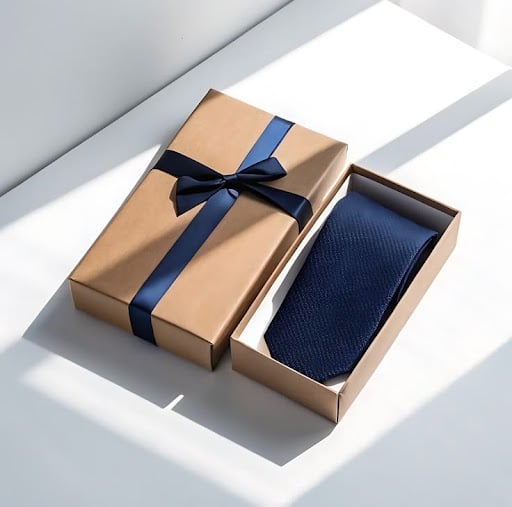
| Rigid lid-and-base box | Gift sets, thicker fabrics | Classic look, easy to reuse |
| Folding carton | Budget ranges, high volume | Lightest and cheapest, less crush protection |
| Window box | Showing off pattern or color | Window film should be non-scratching |
| Drawer (slide) box | Boutique presentation | Good for sets with dividers |
| Corrugated mailer | E-commerce shipping | Often used as an outer layer over the gift box |
Inserts and interior details that make a difference
The inside of the box often matters more than the outside:
- Paperboard or foam inserts hold the tie in position and keep its fold clean.
- Tissue paper (acid-free where possible) separates layers and protects delicate dyes.
- Ribbon or elastic bands secure a rolled tie without pressing hard on the fabric.
- Dividers keep ties, pocket squares, and accessories apart in gift sets.
Sourcing in bulk: what to ask a supplier
If you plan to buy custom gift tie boxes wholesale, a few questions save time and money:
- Can I see a physical sample, or a dieline I can test with my own ties?
- What are the minimum order quantities, and do they change with size or finish?
- Can interior dimensions be customized for different fabrics within one order?
- What printing and finishing options are available (foil, embossing, matte or soft-touch laminate)?
- How are boxes shipped: flat or assembled? Rigid boxes take much more space when assembled, which affects freight cost.
- What are the production and shipping lead times, especially before holiday seasons?
Ordering a small sample batch before a full run is a simple way to catch fit issues. Test it by packing your thickest and thinnest tie, then shaking the closed box and checking for movement and creasing.
Sustainability and material choices
Many buyers now prefer recyclable paperboard, FSC-certified stock, and minimal plastic. Kraft finishes and water-based coatings can look premium while being easier to recycle. Check what certifications a supplier can actually document rather than relying on general claims.
A quick checklist before you order
- Measure the folded tie, including its thickest section
- Decide on the fold style and whether accessories are included
- Pick a box style that suits the fabric and price point
- Specify interior (not exterior) dimensions
- Request a sample and test it with real products
- Confirm MOQ, lead time, and shipping format
Final thoughts
Good tie packaging begins with the product. Fabric determines how much room and protection a tie needs, the fold determines the shape of the cavity, and measurements determine whether the box fits at all. Getting these right reduces returns, damage, and wasted material, and makes the unboxing experience feel considered.