






India is a country of different cultures, historic buildings, colourful markets and regional food. For international travellers visiting India for the first time, choosing where to begin can be difficult. There are many places worth visiting, but a few destinations offer a particularly good introduction to the country’s history and everyday life.
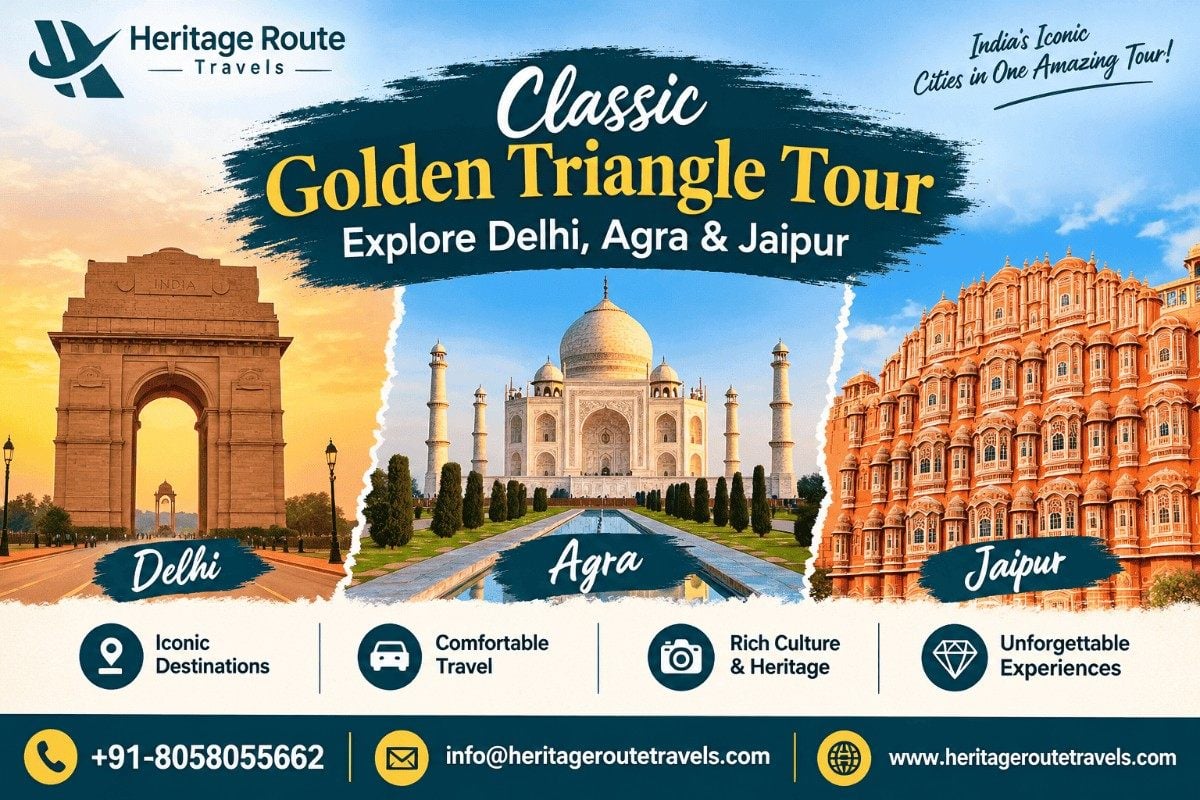
A Classic Golden Triangle Tour is one of the most popular ways to experience North India. It connects three major cities: Delhi, Agra and Jaipur. Each destination offers something different. Delhi combines old monuments with a busy modern city, Agra is known for the Taj Mahal, and Jaipur introduces visitors to Rajasthan’s royal architecture and traditions.
Heritage Route Travels helps international visitors plan private and customized trips across these destinations. With suitable transport, a practical sightseeing schedule and time to explore local areas, travellers can enjoy a rewarding holiday without making their plans unnecessarily complicated.
What Is the Golden Triangle Tour?
The Golden Triangle is a travel circuit connecting Delhi, Agra and Jaipur. These cities form a triangle on the map, making them convenient to combine in one trip.
Delhi is usually the starting point because it has major international flight connections. From there, travellers continue to Agra and then Jaipur, before returning to Delhi or extending their holiday to another destination.
The route is popular for several reasons. It includes important Mughal monuments, historic forts, royal palaces, traditional markets and opportunities to experience Indian cuisine. Travellers can also see how architecture, food and local customs change from one city to another.
A well-planned trip generally takes five to seven days, although the duration can be adjusted according to flight schedules, personal interests and available holiday time.
1. Delhi: A City of History and Modern Life
Delhi is an interesting starting point for a trip through North India. The capital has ancient monuments, religious sites, colonial-era buildings, shopping districts and modern neighbourhoods. The contrast between Old Delhi and New Delhi is particularly noticeable.
Red Fort and Jama Masjid
The Red Fort is one of Delhi’s best-known historic landmarks. Its impressive walls and Mughal-era architecture offer a glimpse into India’s royal past. Nearby, Jama Masjid is an important historic mosque with a large courtyard and striking architectural details.
Travellers can explore the surrounding streets to experience the atmosphere of Old Delhi. The area is known for traditional shops, street food and narrow lanes filled with daily activity.
Qutub Minar and Humayun’s Tomb
Qutub Minar is a remarkable medieval tower surrounded by historic structures. It is a worthwhile stop for visitors interested in architecture and the development of Delhi over several centuries.
Humayun’s Tomb is another major attraction. Its gardens, symmetrical design and Mughal architecture make it an excellent place for photography and a peaceful walk.
India Gate and New Delhi
India Gate is a prominent memorial and one of the city’s familiar landmarks. Depending on the available time, visitors can also explore central New Delhi and view important government buildings from suitable public areas.
Delhi offers plenty of dining options as well. International visitors can try North Indian dishes, sample vegetarian meals or choose restaurants serving familiar international cuisine.
2. Agra: Home of the Taj Mahal
Agra is the next major stop on the Golden Triangle route. The city is closely associated with Mughal history and the Taj Mahal, but there is more to see than its most famous monument.
Taj Mahal: A Must-See Attraction
The Taj Mahal is widely admired for its white marble, detailed craftsmanship and balanced architectural design. Built by Mughal emperor Shah Jahan in memory of Mumtaz Mahal, it has become one of India’s most recognised landmarks.
Visiting early in the morning is often a good choice. The light can be beautiful for photographs, and an early visit may help travellers avoid some of the busiest periods. Opening schedules, ticket arrangements and visitor rules should be checked before arrival.
Allow enough time to walk around the complex and appreciate the details rather than treating the visit as a quick photo stop.
Agra Fort
Agra Fort is another important monument that helps explain the region’s royal history. Its fortified walls, courtyards and palace structures show how the Mughal rulers lived and governed.
The fort also offers views towards the Taj Mahal from certain areas. Combining both monuments in one day gives visitors a better understanding of Agra’s historical importance.
Mehtab Bagh and Local Crafts
Mehtab Bagh, located across the Yamuna River, is a useful option for travellers interested in viewing the Taj Mahal from another perspective. Weather and light conditions can affect photography, so it is worth keeping expectations flexible.
Agra is also known for marble inlay work and other handicrafts. Visitors who want to shop should compare prices, ask about materials and choose sellers carefully.
3. Jaipur: Rajasthan’s Pink City
Jaipur provides a different atmosphere from Delhi and Agra. As Rajasthan’s capital, it is known for grand architecture, traditional markets, historic forts and regional food.
The city’s pink-toned historic areas, decorated gateways and palace buildings make it an appealing destination for travellers interested in India’s royal heritage.
Amber Fort
Amber Fort stands on a hill outside the main city and is one of Jaipur’s major attractions. The complex features courtyards, decorated halls and architectural details reflecting Rajput and Mughal influences.
Plan enough time for the journey to the fort and for exploring its different sections. Comfortable shoes are useful because the visit involves walking on uneven surfaces and steps.
City Palace and Jantar Mantar
City Palace offers insight into Jaipur’s royal history through its courtyards, buildings and museum collections. Some sections remain connected with the royal family, while designated visitor areas provide historical information and architectural highlights.
Nearby, Jantar Mantar is a historic astronomical observatory. Its large instruments were designed to measure celestial movements and demonstrate how scientific observation developed in the region.
Hawa Mahal and Jaipur’s Markets
Hawa Mahal, also known as the Palace of Winds, is famous for its distinctive façade and numerous small windows. It is an excellent landmark to photograph while exploring the old city.
Jaipur’s markets are another highlight. Visitors can look for textiles, jewellery, pottery, block-printed fabrics and handicrafts. Bargaining may be common in some markets, but prices and shopping practices vary by seller.
Food is equally important to the experience. Traditional Rajasthani dishes provide a chance to try regional flavours, including preparations made with lentils, spices and local ingredients.
A Sample Golden Triangle Tour Itinerary
The right schedule depends on arrival times, sightseeing preferences and the pace of travel. The following seven-day plan provides a useful starting point.
Day 1: Arrival in Delhi
Arrive at the airport, transfer to your hotel and rest after your flight. If time permits, enjoy a relaxed evening in the city.
Day 2: Explore Delhi
Visit selected attractions such as Humayun’s Tomb, Qutub Minar, India Gate and the historic areas of Old Delhi.
Day 3: Delhi to Agra
Travel to Agra by road or train, depending on your preferences and schedule. Visit Agra Fort if arrival time allows.
Day 4: Taj Mahal and Agra to Jaipur
Visit the Taj Mahal in the morning. Continue to Jaipur later in the day, allowing sufficient time for the road journey.
Day 5: Explore Jaipur
Visit Amber Fort, City Palace, Jantar Mantar and Hawa Mahal. Leave time for local markets or a relaxed dinner.
Day 6: Additional Jaipur Experiences
Explore neighbourhoods, visit selected museums or enjoy a cooking experience, depending on your interests. This extra day helps avoid an overly rushed schedule.
Day 7: Return to Delhi or Continue Your Trip
Travel back to Delhi for your departure or continue to another destination if your holiday allows.
This Golden Triangle Tour Itinerary can be shortened to five days or extended to include additional destinations. However, keeping sufficient time for transport and rest makes the experience more comfortable.
Why Choose a Private Golden Triangle Tour?
A private tour can be helpful for international travellers who prefer flexibility and personal assistance. Instead of following a fixed group schedule, visitors can discuss sightseeing priorities and make reasonable adjustments to the daily plan.
Heritage Route Travels offers customized travel planning for visitors interested in India’s historic cities and cultural attractions. Depending on the package, arrangements may include private transportation, hotel stays, sightseeing assistance and other travel services.
A private vehicle can be especially useful when travelling between cities with luggage or when visiting attractions outside the main urban areas. Before confirming a booking, ask for a clear list of inclusions, exclusions, transport arrangements and any additional charges.
Best Time to Visit Delhi, Agra and Jaipur
October to March is generally a comfortable period for sightseeing in North India because daytime temperatures are often more suitable for outdoor activities. December and January can bring cold mornings, fog and reduced visibility, which may affect road or train schedules.
April to June is usually much hotter. Travellers visiting during this period should plan outdoor sightseeing early in the morning, carry water and take breaks during the afternoon.
The monsoon season can bring rain and humid conditions. Weather varies each year, so checking the forecast before departure is useful.
Practical Tips for International Travellers
A little preparation can make the trip easier.
- Plan transport in advance: Choose road or rail travel based on your budget, schedule and comfort preferences.
- Check monument timings: Opening days, ticket rules and visiting hours can differ by attraction.
- Carry suitable clothing: Comfortable shoes and weather-appropriate clothing are useful for long sightseeing days.
- Respect local customs: Follow photography restrictions and dress guidance at religious sites.
- Keep some flexibility: Traffic, weather and queues may affect the schedule.
- Choose reputable services: Confirm hotel standards, vehicle details and the services included in your package before payment.
Travellers should also keep digital and printed copies of important travel documents and check current visa requirements through official sources.
Plan Your Golden Triangle Holiday with Heritage Route Travels
Delhi, Agra and Jaipur offer a varied introduction to India’s architecture, history, food and everyday culture. From the historic lanes of Old Delhi to the Taj Mahal and Jaipur’s royal buildings, each city adds a different element to the trip.
A carefully planned Classic Golden Triangle Tour makes it easier to manage travel between these destinations while leaving time to appreciate the places themselves. Heritage Route Travels can help visitors plan a private itinerary according to their interests, schedule and travel preferences.