






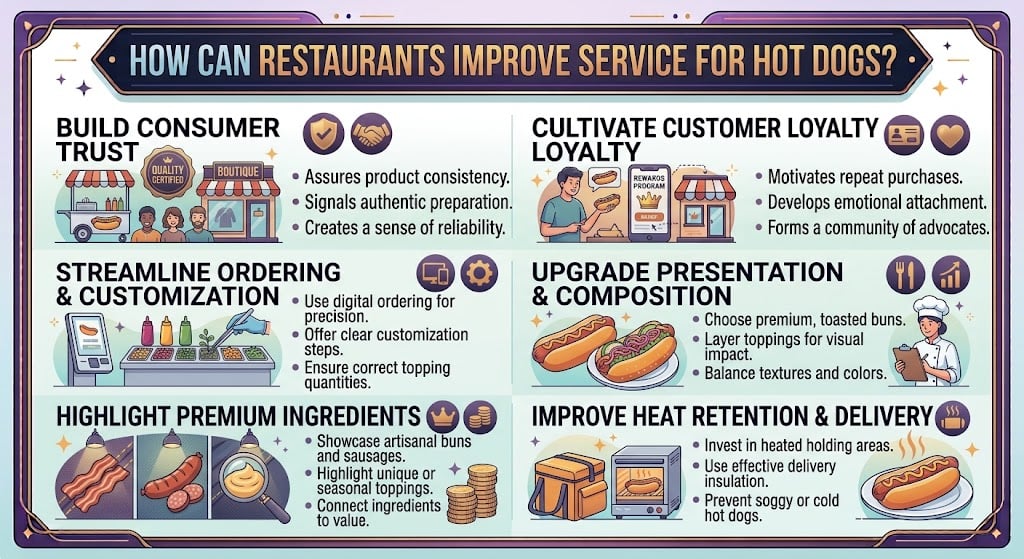
Hot dog service works best when kitchen steps are simple and clear. Fast service needs good order checks and clean serving methods. Staff should know where each item goes before an order leaves the kitchen. Clear timing can reduce mistakes during busy hours. Food should reach customers in good condition with toppings placed neatly. Small changes in daily work can improve speed and customer satisfaction. Restaurants can review each step and remove actions that waste time or cause confusion.
How Can Order Taking Become More Accurate?
Good service starts when staff record each hot dog order correctly. Customers may ask for different toppings, sauces or sizes. A clear order note helps kitchen workers follow each request without guessing. Staff should repeat unusual requests before sending them to the kitchen. This simple check can prevent wrong toppings and reduce extra work. Restaurants can also group similar orders when several customers ask for matching items. Clear order details make cooking and serving easier. Fewer mistakes can help staff move through busy periods with less pressure.
Why Does A Simple Kitchen Setup Matter?
Kitchen work becomes easier when workers know where each task happens. Cooking toppings, sauces and finished orders should have clear places nearby. Staff should avoid walking across busy work areas when serving hot dogs. A simple route can save time during lunch and evening rushes. Workers can also keep order notes close to finished food. This helps them check each item before service. A good setup should match actual kitchen movement rather than follow a fixed plan. Restaurants can watch staff for one busy hour and find steps that slow service.
Can Better Serving Trays Speed Up Service?
Serving trays can make hot dog orders easier to move from kitchen to customer. A suitable size keeps food steady and gives staff enough space for toppings. When restaurants review tray choices Restaurant Hot Dog Trays may suit busy service where workers need quick handling. Staff should test tray sizes with real orders before changing service methods. A tray should fit each hot dog without leaving large unused spaces around food. Easy carrying can also reduce spills while workers move between kitchen counters and customer tables.
How Can Staff Improve Topping Control?
Toppings can create service problems when workers add them without a clear order. One hot dog may receive too much sauce while another receives very little. Staff should use simple serving rules for common topping choices. For example one spoon of onions or one measured line of sauce can create similar results. Workers should check special requests before adding final toppings. This step can reduce corrections later. Restaurants can also keep common topping choices close to cooking areas so staff avoid unnecessary walking during busy service.
What Can Restaurants Do During Busy Hours?
Busy hours require careful timing because many orders can arrive together. Staff should know which orders need immediate attention and which can follow next. Kitchen workers can prepare common toppings before a rush begins. Servers should check order numbers before taking food toward customers. Clear signals between kitchen and service staff can reduce confusion. Restaurants can also track how long popular orders take from start to finish. This information can show where delays happen. Managers can then change one step at a time and check whether service improves.
How Can Branded Serving Choices Help Recognition?
A simple brand mark can help customers remember a restaurant after receiving an order. It can also give different menu items a similar visual identity. Design should remain clear and should never make food harder to see. The Custom Papers can offer suitable printed serving choices for food businesses that need branded service items. Staff should test printed designs before using them across busy service. A clear brand mark can work well when placed where customers can see it without covering important food details.
Why Should Serving Size Match Each Order?
Serving size should match hot dog length and topping amount. A small hot dog can look lost on a large tray. A larger order may need extra space so toppings remain inside tray edges. Staff should compare common menu sizes before choosing serving options. Restaurants can test each size with actual food rather than relying only on measurements. This gives a better view of how orders look after toppings are added. Correct sizing can also make carrying easier and reduce spills during table service.
Can Better Choices Improve Restaurant Service?
Some restaurants offer special hot dogs that differ from standard menu items. These orders may need a different shape or size for proper serving. During planning Custom Boxes can suit certain special food orders when regular choices fail to fit properly. Restaurants should first test how staff open, arrange and serve these options. A new design should not add extra work during busy periods. Testing also shows whether food remains neat from kitchen counter to customer table. Good custom choices should solve a clear service problem.
How Can Restaurants Train Staff For Faster Service?
Staff training should focus on actions workers repeat during each service period. New workers need clear instructions for order checks, topping amounts and serving steps. Managers can show one correct method and then watch staff repeat it. Short practice sessions can help workers remember steps without lengthy lessons. Staff should also know how to report an order problem before food leaves the kitchen. In the USA restaurants face different customer needs across busy locations. Simple training rules can help workers provide steady service during changing customer demand.
What Simple Checks Can Improve Final Service?
A final order check can catch mistakes before food reaches a customer. Staff should compare toppings, sauces and special requests with order details. They should also check whether food sits neatly and whether the serving space looks clean. This check should take only a few seconds for common orders. Restaurants can create a simple checking habit without adding extra steps. Managers should watch results during busy periods and note common errors. If one mistake appears often staff can change that step and test it again during service.