





A homeowner finishes a big renovation and walks into the new living room. The paint is fresh and the furniture looks great. Then the Wi-Fi drops in the back bedroom, the doorbell camera keeps going offline, and the speakers someone added later have wires running along the baseboards.
Problems like these are common, and they often trace back to one gap in planning: low voltage work. A low voltage technician in Stuart FL handles the systems that power everyday living without carrying the heavy current of standard electrical lines. This article covers what that job involves, why it matters on the Treasure Coast, and what property owners should know before they start a project.
Understanding Low Voltage Work
Low voltage systems typically run on 50 volts or less. They don’t power your stove or air conditioner. Instead, they carry data, video, audio, and signals between devices.
These systems are part of almost every modern home and business. They include:
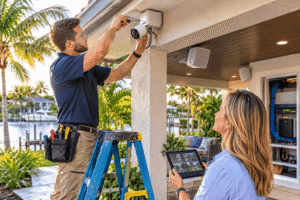
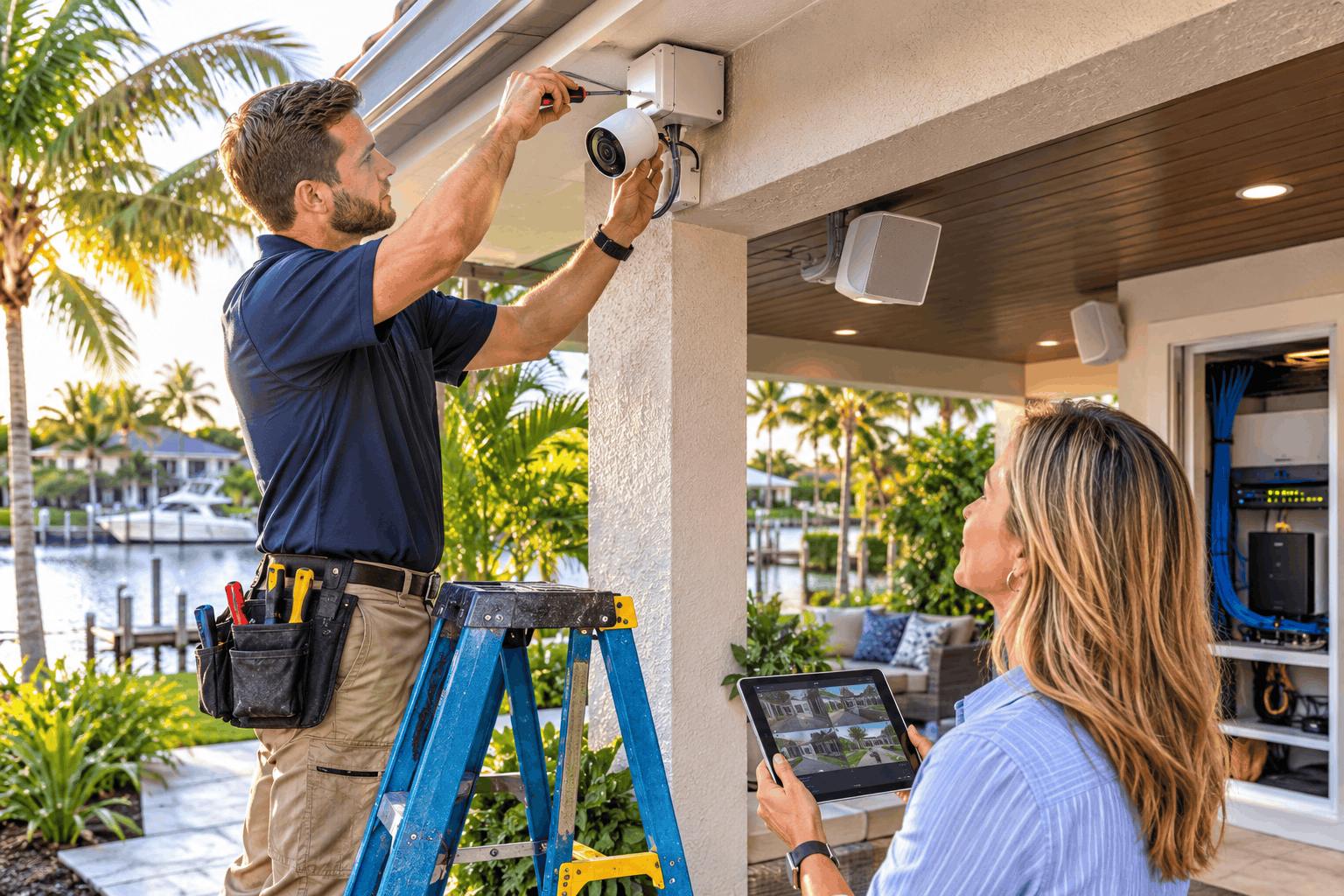
- Security cameras and video recording systems
- Alarm panels, motion sensors, and door contacts
- Structured cabling for internet and Ethernet networks
- Home theater and whole-home audio setups
- Intercoms, video doorbells, and access control systems
- TV mounting with concealed wiring
A licensed electrician focuses on high-voltage circuits, breaker panels, and outlets. A low voltage technician works with different tools, different cable types, and a different way of thinking. The job is less about raw power and more about clean signals, smart layouts, and devices that work well together.
Why the Distinction Matters
Many people assume any electrician can run network cable or install cameras. Some can, but low voltage work has its own standards.
Data cable that runs too close to power lines can pick up interference. A camera placed at the wrong angle may capture glare instead of faces. Speakers wired without the right gauge can sound thin or distorted. These details separate a system that works from one that frustrates people for years.
Why Local Conditions Shape the Work
Coastal Florida brings challenges that installers in drier, cooler regions rarely face. Salt air, high humidity, summer storms, and frequent lightning all affect electronic equipment.
Outdoor cameras near the water need weather-rated housings and corrosion-resistant mounts. Exterior speakers by a pool or dock must handle moisture and direct sun. Surge protection matters more in a region that sees as much lightning as South Florida does.
Hurricane season adds another layer. Many property owners now want cameras they can check remotely while they’re away, plus battery backups that keep recording during short outages. A technician familiar with the area tends to plan for these conditions from the start rather than fixing failures later.
Licensing in Florida
Florida regulates much of this field. Depending on the scope, low voltage work may require a state-issued license, such as an alarm system contractor license or a limited energy specialty license.
Property owners can verify a license through the Florida Department of Business and Professional Regulation website. It takes only a few minutes, and it’s a simple way to avoid problems with insurance, permits, or code compliance down the road.
The Real Benefits of Getting It Right
The biggest advantage of professional low voltage work is reliability. A well-planned network uses hardwired connections where they matter most, such as for smart TVs, home offices, and camera recorders. That leaves Wi-Fi free for phones and tablets.
Clean installation is another benefit people notice right away. Wires get routed through walls and attics instead of along floors. Equipment sits in an organized rack or closet. The result looks finished, and future upgrades become much easier.
Security also improves when cameras, alarms, and access control are designed as one system. A technician can map out blind spots, choose the right lens for each area, and set up alerts that actually help instead of flooding a phone with false alarms.
Finally, there’s long-term value. Buyers increasingly expect modern wiring, solid internet coverage, and built-in security. A home with structured cabling and a clean audio-video setup often stands out in the local real estate market.
A Common Mistake to Avoid
Many people wait until drywall is up to think about wiring. At that point, running cable becomes slower and more expensive. Anyone planning a new build or major remodel should bring low voltage planning into the early design stage, right alongside electrical and plumbing.
How Low Voltage Systems Show Up in Everyday Life
The value of this work becomes clearer through real situations. Here are a few scenarios that come up often in Martin County homes and businesses.
The Waterfront Home
A retired couple spends evenings on their back patio overlooking the river. They want music outside without a portable speaker that needs charging. They also want to see who’s at the dock gate from their phone.
A thoughtful Sound System Installation in Stuart FL for a property like this might include weather-rated speakers under the eaves, a buried subwoofer near the landscaping, and a separate audio zone controlled from an app. A low voltage technician would also run a dedicated line to an outdoor camera, so the video feed stays stable even during heavy rain.
The Downtown Restaurant
A small restaurant owner wants background music in the dining room, a different playlist on the patio, and cameras covering the register and back door. Staff need a reliable network for card readers and online orders.
Here, a technician designs separate audio zones, runs commercial-grade network cable to each point-of-sale station, and places cameras where they capture useful footage. When everything is planned together, the owner avoids juggling three different vendors with three different systems.
The Home Office Upgrade
A remote worker keeps losing video calls in a back bedroom office. A stronger router alone won’t fix the problem because the signal has to pass through several walls.
A low voltage technician in Stuart FL might run an Ethernet line straight to the office and add a wired mesh access point. The fix is simple, but it takes knowing how to route cable through an existing home without tearing it apart.
The Family Media Room
A family converts a spare room into a theater space. They want a mounted TV with no visible cords, surround sound, and a single remote that controls everything.
Proper Sound System Installation in Stuart FL for a room like this involves speaker placement based on seating, in-wall wiring rated for that use, and calibration so dialogue stays clear without blasting the action scenes. Small details, like acoustic panels or speaker height, can change the whole experience.
Choosing the Right Professional
Experience with both residential and commercial projects is a good sign. So is a willingness to explain options clearly instead of pushing the most expensive equipment.
Ask about warranties, surge protection, and what happens if something stops working after installation. A reliable technician should also explain how the system can grow over time, whether that means adding cameras, speakers, or network points later.
Local firms such as JP Electronics & Surveillance reflect how many Treasure Coast providers now combine security, networking, and audio work under one roof. That combined approach makes sense because these systems increasingly share the same network and wiring paths.
Final Thoughts
Low voltage systems quietly support security, entertainment, and connectivity in nearly every modern property. When they’re planned well, nobody thinks about them. When they’re rushed or patched together, they cause daily headaches.
The key is early planning, choosing licensed professionals, and accounting for coastal conditions like humidity, salt air, and lightning. Before starting a remodel or new build, it’s worth listing every device that needs a signal, from cameras to speakers to the home office desk. That simple list makes the conversation with any technician faster and more productive.
Frequently Asked Questions
What does a low voltage technician do?
A low voltage technician installs and maintains systems that run on 50 volts or less. This includes security cameras, alarm systems, network cabling, intercoms, and audio-video equipment.
Is a low voltage technician the same as an electrician?
Not exactly. Electricians focus on high-voltage power circuits, while low voltage technicians specialize in data, video, audio, and signal systems. Some professionals hold licenses for both.
Do you need a license for low voltage work in Florida?
In many cases, yes. Florida requires specific licenses for certain low voltage work, such as alarm systems and limited energy installations. Licenses can be verified through the state’s DBPR website.
How long does a typical low voltage installation take?
Small jobs, like mounting a TV or adding a few cameras, often take a single day. Larger projects, such as whole-home audio or full network cabling, can take several days depending on the home’s layout.
Can low voltage wiring be added to an existing home?
Yes. Technicians use attics, crawl spaces, and existing wall cavities to route cable with minimal damage. Older homes or those with concrete block walls may take extra planning but are usually workable.