





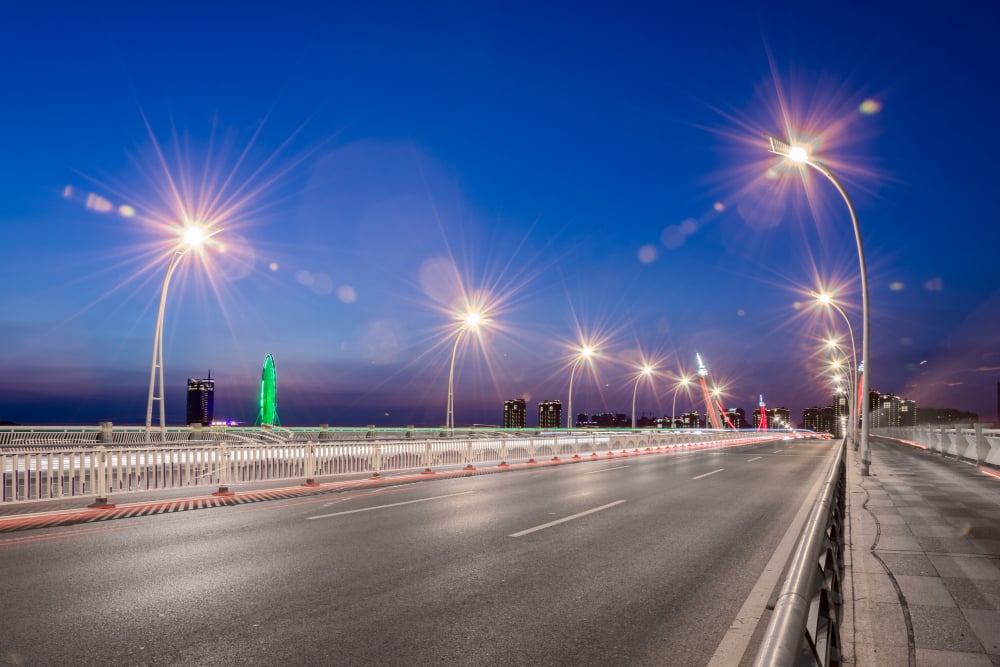
Solar-powered street lights generate electricity through photovoltaic panels that absorb sunlight during the day, store it in rechargeable batteries, and automatically power LED fixtures at night via an intelligent charge controller. They operate entirely off-grid, require no trenching or mains connection, and are well-suited to roads, pathways, car parks, and public outdoor spaces.
For municipal planners and infrastructure developers evaluating modern outdoor lighting, solar powered street lights represent a compelling shift away from grid-dependent systems. They reduce long-term operational costs, simplify installation across difficult terrain, and align with Singapore’s push toward cleaner urban infrastructure. Understanding how these systems work and how to specify them correctly is essential before committing to any deployment.
The Core Components of a Solar Street Light System
Every solar street light is a self-contained energy system. Each component plays a specific role, and the performance of the whole depends on how well they work together.
1. Photovoltaic (PV) Solar Panel
The PV panel is the primary energy source. It converts sunlight into direct current (DC) electricity through the photovoltaic effect. Monocrystalline panels are the most common choice for street lighting due to their higher efficiency in limited roof or mounting space. In Singapore’s equatorial climate, panels benefit from consistent solar irradiance year-round, typically averaging around 4.5 peak sun hours per day a significant advantage over temperate climates.
2. Battery Energy Storage
Captured solar energy is stored in a battery bank for use after dark. Battery energy storage is perhaps the most critical component for reliable performance. Lithium iron phosphate (LiFePO4) batteries have largely replaced older lead-acid types due to their longer cycle life (often exceeding 2,000 charge cycles), lower maintenance requirements, and better performance in high-temperature environments a key factor in Southeast Asia’s humid climate.
Battery capacity is specified in amp-hours (Ah) and must be sized to provide sufficient autonomy typically two to three nights of operation — to account for overcast or rainy periods.
3. LED Light Fixture
Modern solar street lights use high-efficiency LED luminaires. LEDs consume significantly less power than traditional sodium or metal halide lamps, which directly reduces the battery and panel capacity required. This keeps the overall system compact and cost-effective. Look for fixtures rated to IK08 or higher for impact resistance and IP65 or IP66 for weatherproofing both critical for outdoor public infrastructure.
4. Charge Controller
The charge controller regulates the flow of electricity between the panel, battery, and LED fixture. Most modern systems use MPPT (Maximum Power Point Tracking) controllers, which optimise energy harvest from the panel and protect the battery from overcharging or deep discharge. A well-specified controller extends battery life and ensures consistent lighting output throughout the night.
5. Automatic Lighting Control
Solar street lights use dusk-to-dawn sensors or programmable timers to operate automatically. Advanced systems incorporate motion detection to switch between full brightness and a reduced “dim mode” when no movement is detected conserving battery charge during low-traffic hours. This dimming function is particularly valuable for pathways and car parks where footfall drops significantly after midnight.
How Solar Powered Street Lights Work: End-to-End
The operating cycle is straightforward but worth understanding in full:
- During daylight hours, the PV panel generates DC electricity and the charge controller directs it to the battery.
- At dusk, the sensor or timer activates the LED fixture, drawing stored power from the battery.
- Throughout the night, the controller manages output dimming or brightening based on programmed schedules or motion triggers.
- At dawn, the panel resumes charging, replenishing the battery for the next cycle.
The system is entirely autonomous. There is no dependency on the grid, no power outage risk, and no electricity billing making it operationally simpler and more resilient than conventional street lighting.
Infrastructure Considerations for Roads, Pathways and Public Spaces
Selecting and deploying solar street lights involves more than choosing a product. Infrastructure planners should evaluate the following:
Shading and Solar Access
PV panels must receive unobstructed sunlight for the majority of the day. Site surveys should identify nearby trees, buildings, and structures that may cast shade. In dense urban environments, panel tilt angle and pole orientation need careful optimisation. A shading analysis is a standard part of any professional solar installation in Singapore.
Pole Height and Spacing
Lighting design standards including those referenced by the Land Transport Authority (LTA) in Singapore specify minimum lux levels for different road classifications. Pole height (typically 6–12 metres for roads), spacing, and luminaire output must be modelled to meet these requirements. Poor spacing leads to dark patches, which is a safety and compliance issue.
Wind Load and Structural Integrity
Singapore experiences occasional strong winds and tropical storms. Poles and panel mounts must be engineered to withstand local wind load requirements. For roads and exposed areas, structural calculations should be certified by a qualified engineer prior to installation.
Integrated vs. Split Solar Street Light Systems
| Feature | Integrated (All-in-One) | Split System |
|---|---|---|
| Panel location | Built into the fixture head | Mounted separately on pole or structure |
| Installation speed | Faster, fewer components | More flexible placement |
| Best for | Pathways, car parks, low-height poles | Roads, high-mast applications |
| Maintenance access | Panel and battery in one unit | Easier individual component service |
Why Singapore’s Infrastructure Landscape Suits Solar Street Lighting
Singapore’s Solar Energy Research Institute of Singapore (SERIS) has documented the country’s strong solar resource, with annual global horizontal irradiance consistently supporting commercial-scale solar deployment. The government’s SolarNova programme and the Energy Market Authority’s (EMA) broader clean energy targets have accelerated adoption of solar across public infrastructure and street lighting sits well within that framework.
For commercial property managers and construction companies, solar street lighting also eliminates the need for costly trenching and cabling to connect to the grid a significant advantage in retrofitting existing sites or developing new ones in areas where grid extension is impractical. Solar System Singapore deployments have expanded considerably in recent years across HDB estates, industrial parks, and transport corridors, demonstrating the technology’s versatility at scale. Similarly, Solar Installation Singapore projects now routinely incorporate street and pathway lighting as part of broader site electrification strategies.
Maintenance and Long-Term Reliability
Solar street lights are low-maintenance by design, but they are not zero-maintenance. A realistic maintenance programme should include:
- Panel cleaning every three to six months to remove dust, bird fouling, and organic growth
- Battery health checks annually, with replacement typically required at the five to eight year mark depending on battery chemistry and usage cycles
- Firmware updates for smart controller systems
- Physical inspection of pole fixings, cable connections, and enclosure seals after major weather events
When systems are correctly specified and professionally installed, operational lifespans of 15 years or more are achievable — making the total cost of ownership highly competitive against grid-connected alternatives.
For organisations planning outdoor lighting across roads, pathways, or public spaces in Singapore, working with an experienced provider ensures that system sizing, structural engineering, and compliance requirements are all addressed from the outset. Megawatts delivers end-to-end solar street lighting solutions from site assessment and design through to installation and ongoing support with a track record across commercial, industrial, and public infrastructure projects in Singapore. Visit the Megawatts homepage to learn more about their full range of sustainable energy services.
Frequently Asked Questions
How long do solar powered street lights last on a full charge?
Most solar street lights are designed to operate for two to three nights on a fully charged battery, providing autonomy during overcast or rainy periods. Actual runtime depends on battery capacity, LED wattage, and whether adaptive dimming is enabled to conserve energy during low-traffic hours.
Are solar street lights suitable for main roads in Singapore?
Yes, provided the system is correctly specified to meet LTA lux requirements for the road classification. Split solar street light systems with high-output LED fixtures and adequately sized PV panels and batteries can meet the lighting standards required for main roads and arterial routes.
What type of battery is best for solar street lights in tropical climates?
Lithium iron phosphate (LiFePO4) batteries are the preferred choice for tropical environments like Singapore. They perform reliably in high ambient temperatures, offer a longer cycle life than lead-acid alternatives, and require minimal maintenance — all important factors for outdoor infrastructure with limited service access.
How much does solar street light installation cost in Singapore?
Costs vary based on pole height, battery capacity, fixture output, and site conditions. While upfront costs are higher than basic grid-connected fittings, the elimination of electricity bills and trenching costs typically delivers a strong return on investment over a five to ten year period.
Do solar street lights work during Singapore’s rainy season?
Yes. Systems are designed with sufficient battery autonomy to handle consecutive overcast days. Properly sized battery storage — typically two to three days of reserve — ensures consistent lighting performance even during extended periods of low solar irradiance common during Singapore’s monsoon months.
What maintenance do solar street lights require?
Routine maintenance includes panel cleaning every three to six months, annual battery health checks, and inspection of pole fixings and enclosure seals. LED fixtures generally last over 50,000 hours, so lamp replacement is rarely needed within the first decade of operation.