






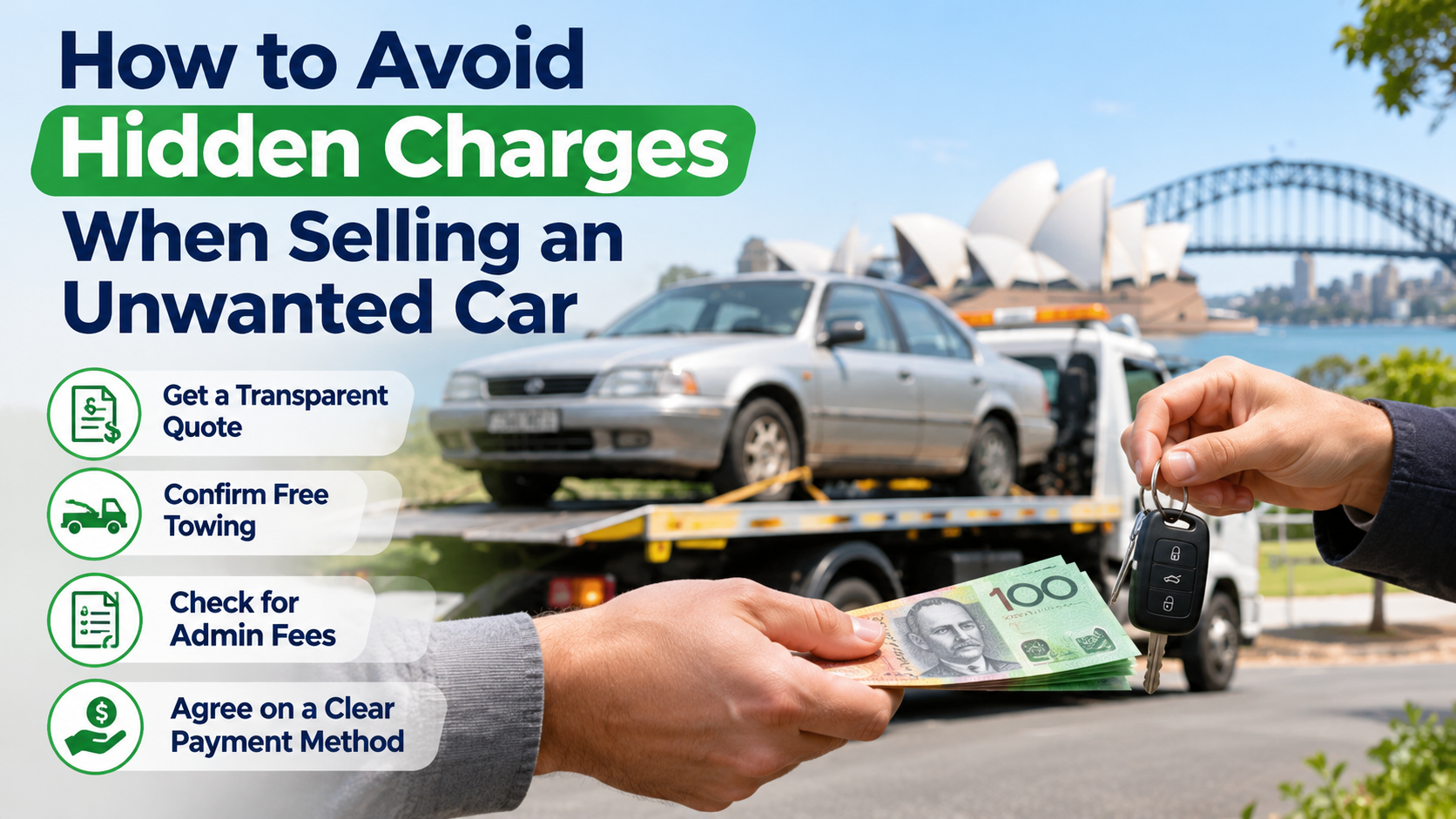
Selling an unwanted car can be a practical way to recover money from a vehicle that is no longer useful. Whether the car is damaged, old, unregistered, or expensive to repair, finding a buyer can help clear valuable space and reduce ongoing ownership expenses. However, not every car selling transaction is as straightforward as it initially appears.
Some buyers advertise attractive prices but introduce additional charges during collection or payment. These unexpected costs can significantly reduce the amount a seller receives. Understanding how hidden fees work and knowing what to check before accepting an offer can help vehicle owners avoid unnecessary expenses.
This guide explains the most common hidden charges, how to identify them, and the steps required to complete a transparent and financially sensible vehicle sale.
Understand How Unwanted Car Buyers Calculate Their Offers
Before contacting an unwanted car buyer Sydney vehicle owners should understand how companies determine the value of an old or damaged vehicle. Most buyers consider the vehicle make, model, age, condition, weight, and potential resale value of its components.
Vehicles with reusable engines, transmissions, batteries, and other functioning parts may attract higher offers. Cars that cannot be repaired economically are often valued according to their recyclable metal content.
Problems arise when a buyer provides an attractive initial quote without explaining the factors that could change the final payment. Some businesses may reduce their offer after inspecting the vehicle, even when its condition was accurately described.
To avoid misunderstandings, sellers should provide accurate information about the vehicle and request a clear explanation of the valuation process. A reliable quotation should reflect the details supplied and identify any conditions that could affect the final amount.
Request a Complete Breakdown of All Charges
One of the most effective ways to prevent hidden fees is to request a detailed breakdown of the transaction before agreeing to sell.
Some buyers advertise free vehicle collection but later introduce additional expenses for towing, administration, or processing. These charges may appear small individually, but their combined effect can substantially reduce the agreed payment.
Ask whether the quoted amount includes collection, loading, paperwork assistance, and any applicable handling expenses. It is also important to confirm whether the buyer expects the seller to pay anything before the vehicle is collected.
A written quotation provides useful evidence if the final payment differs from the original agreement. Keep copies of messages, emails, and other communications that explain the agreed price and collection arrangements.
Check Whether Vehicle Towing Is Actually Free
Towing charges are among the most common unexpected expenses associated with selling unwanted vehicles.
A car that cannot start or is unsafe to drive generally requires professional transport. Some buyers include towing within their service, while others charge according to distance, vehicle size, or collection difficulty.
Additional costs may apply when a vehicle is parked underground, has missing wheels, or requires specialised recovery equipment.
Before confirming collection, explain the exact location and condition of the car. Mention any access restrictions, mechanical problems, or obstacles that could affect loading.
Ask the buyer to confirm whether transportation is included in the quoted price. If towing involves an additional charge, obtain the amount in writing before proceeding.
Be Careful With Last Minute Price Reductions
Some vehicle sellers encounter a situation where the buyer offers one amount over the phone but proposes a lower payment upon arrival.
This practice can place pressure on sellers who have already arranged collection or taken time away from other commitments.
Price adjustments may sometimes be reasonable when an inspection reveals significant damage or missing components that were not disclosed earlier. However, unexplained reductions should raise concerns.
Sellers can protect themselves by providing accurate photographs, describing mechanical problems, and confirming important vehicle details before requesting a final offer.
If the buyer attempts to reduce the payment without a reasonable explanation, the seller should feel comfortable declining the transaction.
Comparing offers from multiple businesses also helps establish a realistic understanding of the vehicle value.
Review Administration and Paperwork Fees
Vehicle ownership transfers involve administrative responsibilities that vary according to the relevant state or territory.
In New South Wales, sellers generally need to notify Transport for NSW about the disposal of a registered vehicle. Buyers may also have separate responsibilities regarding registration transfer.
Some businesses offer assistance with these procedures, but sellers should confirm whether this support is included or involves additional charges.
Avoid paying vague documentation, processing, or administration fees without understanding their purpose.
It is equally important to distinguish between legitimate government charges and fees imposed independently by a buyer.
Before handing over the vehicle, confirm what documents are required, who will complete the relevant notifications, and whether any official fees apply.
Maintaining accurate records helps protect sellers from potential disputes involving ownership or registration after the transaction.
Confirm the Payment Method Before Collection
Payment arrangements deserve careful attention because unexpected deductions can occur during the final stage of a sale.
Some buyers offer cash, while others prefer electronic bank transfers. Regardless of the method, sellers should confirm the exact amount and when payment will be completed.
Avoid arrangements that require advance payments for booking, vehicle inspection, or payment processing without a clear and legitimate explanation.
For electronic transfers, verify that the funds have arrived in the nominated account before releasing the vehicle. A screenshot showing a payment confirmation is not necessarily proof that the money has been received.
The NSW Government also advises sellers not to sign documents transferring ownership before receiving payment.
Compare Multiple Buyers Before Accepting an Offer
Accepting the first quotation may seem convenient, particularly when a vehicle is occupying valuable parking space. However, comparing several offers can help identify unreasonable deductions and misleading pricing.
When researching car removal Sydney services, sellers should consider the final amount payable rather than focusing exclusively on the advertised offer.
A buyer offering a slightly lower price with collection included may provide better overall value than one advertising a higher amount with separate towing and processing fees.
Compare the conditions attached to each quotation, including collection arrangements, payment methods, inspection requirements, and possible deductions.
Reading independent customer reviews can also provide useful information about whether a business honours its quotations and completes payments as agreed.
The most suitable buyer is not necessarily the one advertising the highest price. Transparency, reliability, and clear payment conditions are equally important.
Conclusion
Avoiding hidden charges when selling an unwanted car requires preparation, careful comparison, and clear communication. Unexpected towing expenses, administration fees, last minute price reductions, and unclear payment arrangements can all reduce the value of a transaction.
Sellers should provide accurate vehicle details, request written quotations, confirm collection costs, and understand their documentation responsibilities before agreeing to a sale.
Taking these precautions helps vehicle owners make informed decisions, protect their financial interests, and complete the selling process with greater confidence.