






Ordering uniforms is one of those jobs every coach inherits and few enjoy. You’re juggling a budget, a roster that keeps changing, parents asking about sizes and a first game that won’t wait. Get it right and your team takes the field looking sharp and confident. Get it wrong and you’re chasing reprints the week of kickoff.
This guide walks you through ordering custom football jerseys from start to finish, with the checklists and timing tips that keep the process stress-free.
Step 1: Start With Your Deadline and Work Backwards
The biggest ordering mistake coaches make is starting too late. Production alone usually takes a couple of weeks, and that’s before you account for design changes, collecting sizes and shipping.
A safe timeline looks like this:
- 8–10 weeks before the first game: settle your budget and design direction.
- 6–8 weeks before: finalize the design and collect every player’s size, name and number.
- 5–6 weeks before: approve your proof and place the order.
- 2–3 weeks before: uniforms arrive, leaving time to fix any problem.
If you’re also ordering football pants, allow extra time. Pants often take longer to produce than jerseys.
Step 2: Set a Realistic Budget
Before you open a design tool, decide what you can spend per player and who’s paying for it. Is the club covering uniforms, are families paying, or are sponsors helping?
A few things affect the final price:
- Order size. Many suppliers lower the price per jersey as the team order grows.
- Jersey cut and fabric. Premium and collegiate cuts cost more than basic practice jerseys.
- Extras. Matching pants, socks, reversible jerseys and fan wear add up quickly.
- Personalization. Some suppliers charge per name and number; others include it free. Check before you compare quotes.
Step 3: Choose the Right Jersey Cut
Football jerseys come in different fits, and the right one depends on your level of play and your players’ positions.
Fitted Cuts
Fitted jerseys hug the shoulder pads and body. They look modern and leave less loose fabric for opponents to grab. They’re popular with high school, college and competitive club teams.
Loose or Flex Cuts
Looser cuts are more forgiving, easier to size and comfortable for younger players or flag football. They’re a smart choice when your roster includes a wide range of body types.
Linemen Cuts
Linemen wear bigger pads and need more room through the chest and shoulders. Some suppliers offer a separate linemen fit, so your big players don’t end up in jerseys that restrict movement.
Reversible Jerseys
A reversible jersey gives you two colors in one garment. It’s a budget-friendly option for practices, scrimmages and leagues that require home and away colors.
Step 4: Design Your Jerseys
This is the fun part. Most suppliers now offer an online designer where you can build your uniform and see it in real time. As you design, keep these points in mind:
- Use your team colors consistently across jerseys, pants and socks.
- Make numbers readable. High contrast between the number and jersey color helps referees, coaches and parents in the stands.
- Upload a high-quality logo. A blurry image produces a blurry print. Use the largest, cleanest file you have.
- Plan sponsor placement early if sponsors are helping fund the uniforms.
With an online football uniform designer, you can try different colors, patterns and logo placements in minutes instead of waiting on back-and-forth emails with a sales rep.
Step 5: Collect Sizes, Names and Numbers
This step causes more delays than any other. Make it easy for families:
- Use one shared form or spreadsheet with columns for player name, jersey number, jersey size and pants size.
- Set a firm deadline and send one reminder before it.
- Measure over pads. Football jerseys are worn over shoulder pads, so sizes taken without pads often come out too tight.
- Check for duplicate numbers before you submit.
- Order a few extras in common sizes for late sign-ups or replacements.
Step 6: Review the Proof Carefully
Before production, your supplier should send a proof or have a person review your artwork. Check every detail:
- Spelling of the team name and every player’s last name.
- Number placement on the front, back and sleeves.
- Logo size, position and color.
- Font style and number outlines.
- Roster quantities and sizes against your spreadsheet.
Once the proof is approved, changes are usually difficult or expensive, so take your time here.
Step 7: Place the Order and Track It
Place your order as one team order whenever you can. It keeps colors consistent across every jersey, simplifies shipping and often unlocks better team pricing. Save your order confirmation and note the estimated ship date on your season calendar.
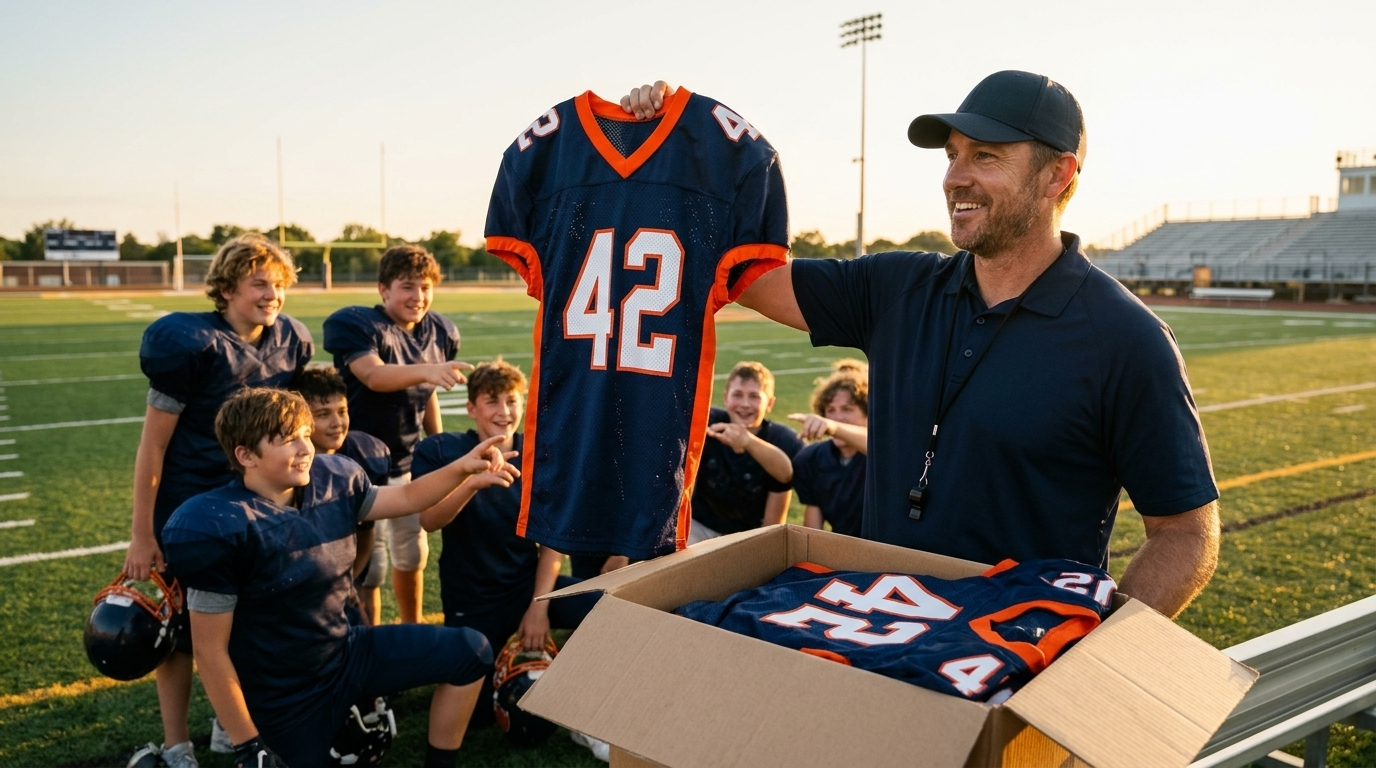
Step 8: Hand Out and Care for the Uniforms
When the uniforms arrive, check every piece against your roster before handing them out. Then give families simple care instructions: wash inside out in cold water, skip the bleach and fabric softener, and hang to dry. Good care keeps sublimated colors bright for the whole season.
What to Look For in a Jersey Supplier
Not all suppliers make ordering easy. Look for:
- No minimum order, so you can add a late player without a penalty.
- Free personalization for names, numbers and logos.
- Team pricing that improves as your order grows.
- A real person reviewing your artwork before production.
- Clear turnaround times you can plan your season around.
Gear Team Apparel, for example, offers custom football jerseys with no order minimum, free names and numbers, and a 3D builder that lets you design the full uniform and add your roster in one place.
Frequently Asked Questions
How far in advance should I order custom football jerseys?
Start at least 8 weeks before your first game. That leaves time for design, collecting sizes, proof approval, production and shipping, with a buffer for any problems.
Can I order just one replacement jersey later in the season?
With suppliers that have no minimum order, yes. Save your design so you can reorder a matching jersey quickly.
Should football jerseys be sized up?
Jerseys need to fit over shoulder pads, so measure with pads on. If a player is between sizes, choose the larger one.
What’s the most durable decoration method?
Sublimation dyes the design into the fabric, so it won’t crack or peel. Tackle twill (stitched numbers) offers a classic look and is also very durable, but usually costs more.
Final Thoughts
Ordering custom football jerseys doesn’t have to be stressful. Start early, set a clear budget, choose the right cut, collect sizes in one place and check your proof carefully. Follow these steps and your team will take the field looking like a team, on time and on budget.