





For large U.S. warehouse facilities, it is imperative that inventory be transferred around large storage spaces and multiple shifts without interfering with daily operations. With increasing operations, inconsistencies in material transfer, task delays, and uneven workloads can affect throughput and order fulfillment.
The functions performed by warehouse robots assist in ensuring that there is consistency in operations since they automate tasks involving repetitive movements and ensure the coordinated movement of materials from one place to another within the warehouse. This ensures that large warehouses can continue operating effectively despite changing conditions.
Why Consistency Becomes Harder as Warehouses Grow
A larger facility in the USA introduces more travel, more handoffs, and more opportunities for delays to spread. Employees spend their time moving totes and pallets rather than doing work that involves judgment and product knowledge. When one department completes its work ahead of schedule and others wait for inventory, the warehouse ends up with idle capacity and congestion at the same time.
Warehouse robots can take on repeatable transport tasks and make movement more predictable across operational zones. The benefit of robots is not only their ability to move goods but also the predictability of the motion process without relying on workers’ availability. This enables managers to balance the workload better.
How Robots Keep Everyday Material Movement on Track
Reliable operations depend on connecting each movement with the process that needs the goods next. A tote could travel from storage to picking, while the pallet may move from receiving to the staging area. However, when all the transfers are manually managed, competing priorities could mean that some movement requests are missed.
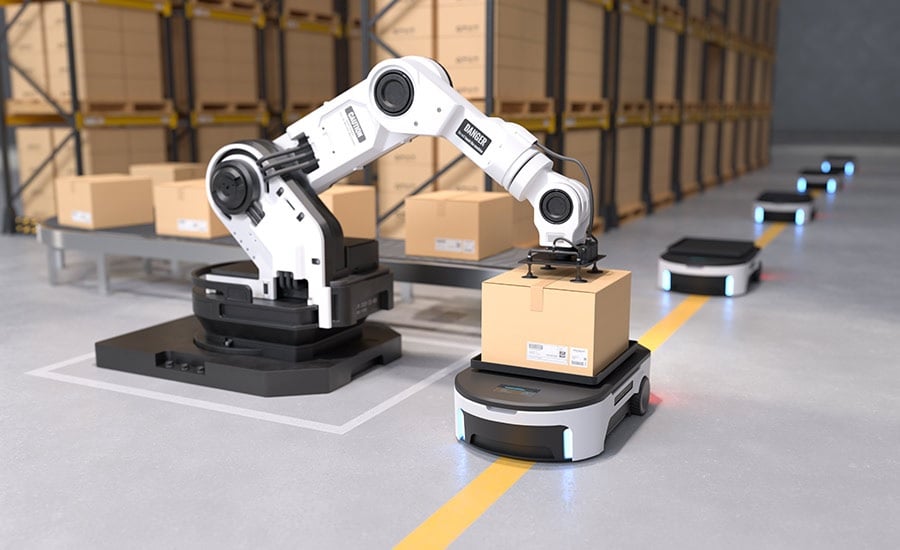
A coordinated robotic workflow reduces this uncertainty by assigning routine transportation to machines and making task progress easier to monitor. Robotic systems are especially helpful in cases where facilities require regular transportation over long distances, repeated movement between zones, or routes that can be adjusted in accordance with changing facility layouts and workloads. Robots do not replace people but rather minimize repetitive transportation tasks in a U.S. warehouse.
Where Automation Can Make the Biggest Difference
Robotics will work best when the task, route, load, and process surrounding the activity are well understood. Prior to choosing any robotic equipment, it is wise for an operations team to determine where problems keep happening and whether this is due to transport issues, poor handoff, or wrong workload.
Common opportunities include:
- Repetitive transfers: Move totes, carts, or pallets between established work areas without assigning every trip to an employee.
- Variable routes: Use mobile robots where paths must adapt around people, equipment, or changing activity.
- Picking assistance: Bring materials closer to operators so workers can concentrate on accurate order completion.
- Peak-period flow: Add capacity to routine movement when order volumes rise and manual transport becomes a bottleneck.
A careful deployment also considers aisle access, charging arrangements, safety procedures, and interaction with existing systems. This determines whether the technology integrates with an operational model or becomes an additional process that employees have to deal with.
Keeping People, Equipment, and Workflows Aligned
Robots are unable to establish consistent operations on their own. The warehouse operations still require proper task information, prioritization, and coordination between the movement of materials, inventory, and orders. If the robot arrives before the next process or is assigned a task that no longer reflects current priorities, the delay will move elsewhere in the workflow.
Warehouse robots work best when fleet coordination and warehouse software help assign tasks, manage routes, and display equipment status. The supervisors will know where the work is going on and where there is congestion without depending on reports after the completion of the shift. This visibility makes it easier to adjust task allocation, identify recurring constraints, and maintain a steadier flow throughout the facility in the USA.
How Addverb’s Robots Help Maintain Consistent Warehouse Movement
Addverb offers warehouse technologies across autonomous mobile robots, sorting robots, automated storage and retrieval systems (AS/RS), picking systems, warehouse software, and conveyors. Every technology caters to a particular area within a warehouse operation, such as moving goods from one station to another, sorting packages, retrieving stored inventory and guiding picking activities. This variety helps warehouse operators think about possible solutions in light of the challenges they face at each step of their operations rather than relying on one robot to solve all their movement problems.
For large warehouses, consistency depends on how effectively these technologies work within the wider operation. Mobile robots can be used to perform repetitive transportation tasks, sorting robots will direct the parcels to their desired destination, and picking systems will assist in organizing item selection. AS/RS systems will be responsible for automated storage and retrieval, and conveyors will ensure that there is a specific route for the transfer of materials from one process to another. Addverb’s warehouse software connects equipment and operational workflows, helping teams coordinate tasks and monitor material movement across the facility.
Conclusion
Warehouse efficiency is not determined by speed alone, but rather by the dependability of transfers, the predictability of material flow, and coordination between the different stages of operation. Warehouse robots can decrease repetitive transportation activities and allow workers to respond to changing workloads when their tasks reflect actual operational needs.
By combining the right robotic application with clear workflows and useful operational visibility, warehouses will be able to minimize unnecessary disruptions and make day-to-day operations more manageable. Addverb’s technologies cater to various needs, providing operation teams with several choices when it comes to enhancing consistency in warehouse operations in the USA.