







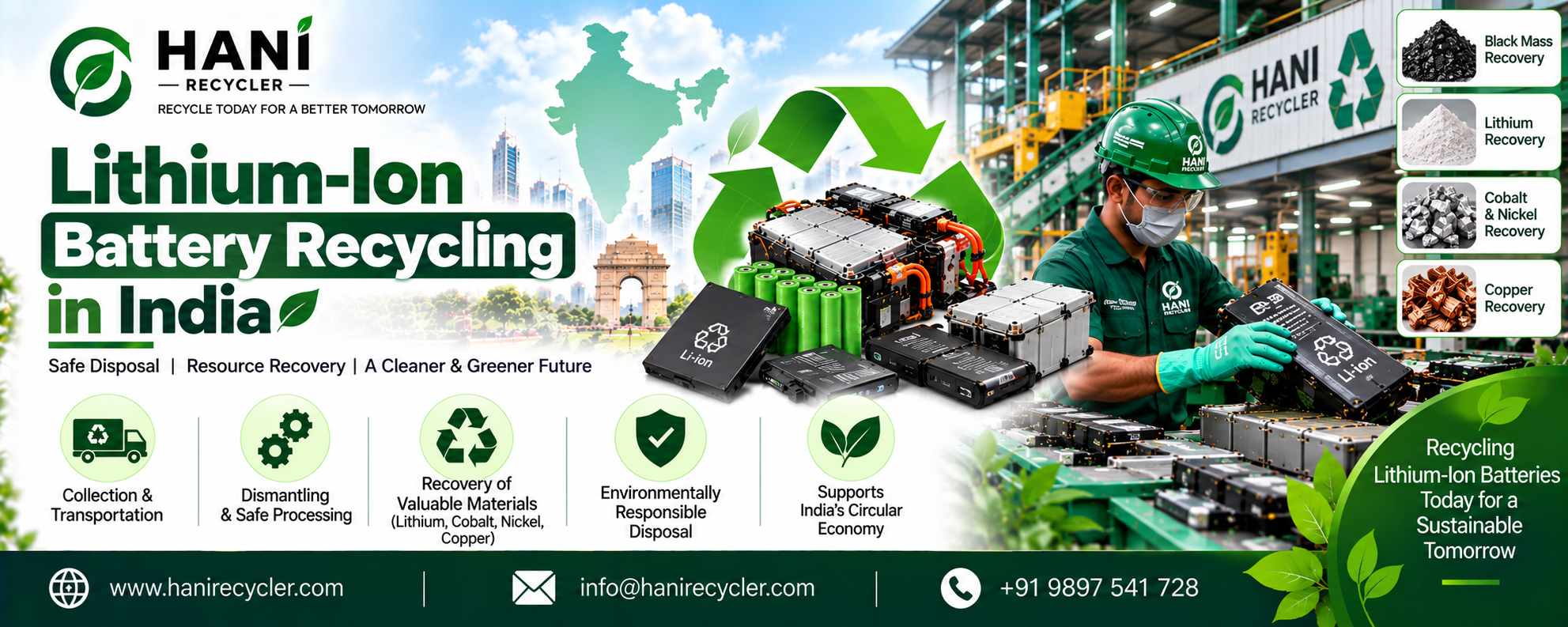
A few days ago, I was charging my phone next to my son’s toy car, my laptop and a power bank, and it hit me: almost everything around me runs on a lithium-ion battery. Now think about how many of these will die in the next few years. That’s why battery recycling in India is becoming one of the most important topics of 2026.
Why India Needs Battery Recycling Now
India is using more lithium-ion batteries than ever, thanks to smartphones, laptops, solar storage and the fast rise of electric vehicles. Every battery has a limited life, so a large wave of used batteries is coming. If we don’t plan for it, it can become a serious waste and safety problem.
The good news is that rules are already in place. India’s Battery Waste Management Rules, 2022 bring in Extended Producer Responsibility (EPR), which means companies that make or import batteries must make sure old ones are collected and recycled.
The Latest Technologies in Battery Recycling
Recycling has come a long way. Here are the main methods being used and improved:
- Mechanical processing: Batteries are safely discharged, shredded and sorted into plastic, metal and a dark powder called black mass, which holds valuable materials.
- Hydrometallurgy: This uses liquid solutions to pull out lithium, cobalt and nickel from the black mass. It is popular because it can recover materials at high purity.
- Pyrometallurgy: This uses high heat to recover metals. It works well for some metals, but lithium is harder to save this way.
- Direct recycling: A newer approach that tries to reuse battery materials with minimal changes, saving energy and effort. It is still developing.
No single method is perfect, so many recyclers combine more than one.
Industry Trends Worth Watching in 2026
- Safer handling: Sorting, discharging and dismantling are becoming more careful and often more automated, because damaged batteries can catch fire.
- Second-life use: EV batteries that no longer suit vehicles may still work for energy storage before they are recycled.
- Local recovery: There’s growing interest in recovering lithium, cobalt and nickel inside India, so we depend less on imports.
- Better tracking: Companies are paying more attention to where batteries go after collection and who recycles them.
- Growing awareness: More people now ask, “Where should I give my old battery?”
The Challenges We Still Face
I’d be lying if I said everything is solved. Collection is still the biggest hurdle. Many used batteries sit at home or end up with informal scrap dealers who may burn or break them open without safety measures. Different battery types also make recycling more complicated, and building proper facilities takes time and money.
How You Can Help
You don’t need to be an expert to make a difference:
- Never throw batteries in household garbage.
- Stop using any battery that is swollen, hot or leaking.
- Cover the terminals with tape and store it in a cool, dry place.
- Choose an authorised recycler who gives proper documentation instead of selling to the first scrap buyer.
If you’re unsure where to begin, you can get in touch with us at Hani Recycler and we’ll help you with the next step.
Final Thoughts
Lithium-ion battery recycling in India is moving in the right direction, with better technology, clearer rules and growing awareness. But technology can only do so much if the batteries never reach it. The next time you see a dead battery at home, remember that it’s not waste yet. With the right recycler, it can become a resource again.
I kept the article general and didn’t include specific statistics or company names, since I can’t verify current 2026 figures. If you have recent data, a government source or details about your own recycling process, send them over and I’ll add them. I can also prepare the meta description, keywords and a doc version, as I did before.
Read another Blog: How to Safely Dispose of Lithium-Ion Batteries in India