






Introduction
Plastic materials are widely used in packaging, automotive components, electrical products, household goods, and industrial applications. The quality of these products depends on the properties of the plastic raw material used during manufacturing. One important property is melt flow rate, which indicates how easily a thermoplastic material flows when heated under a specified load.
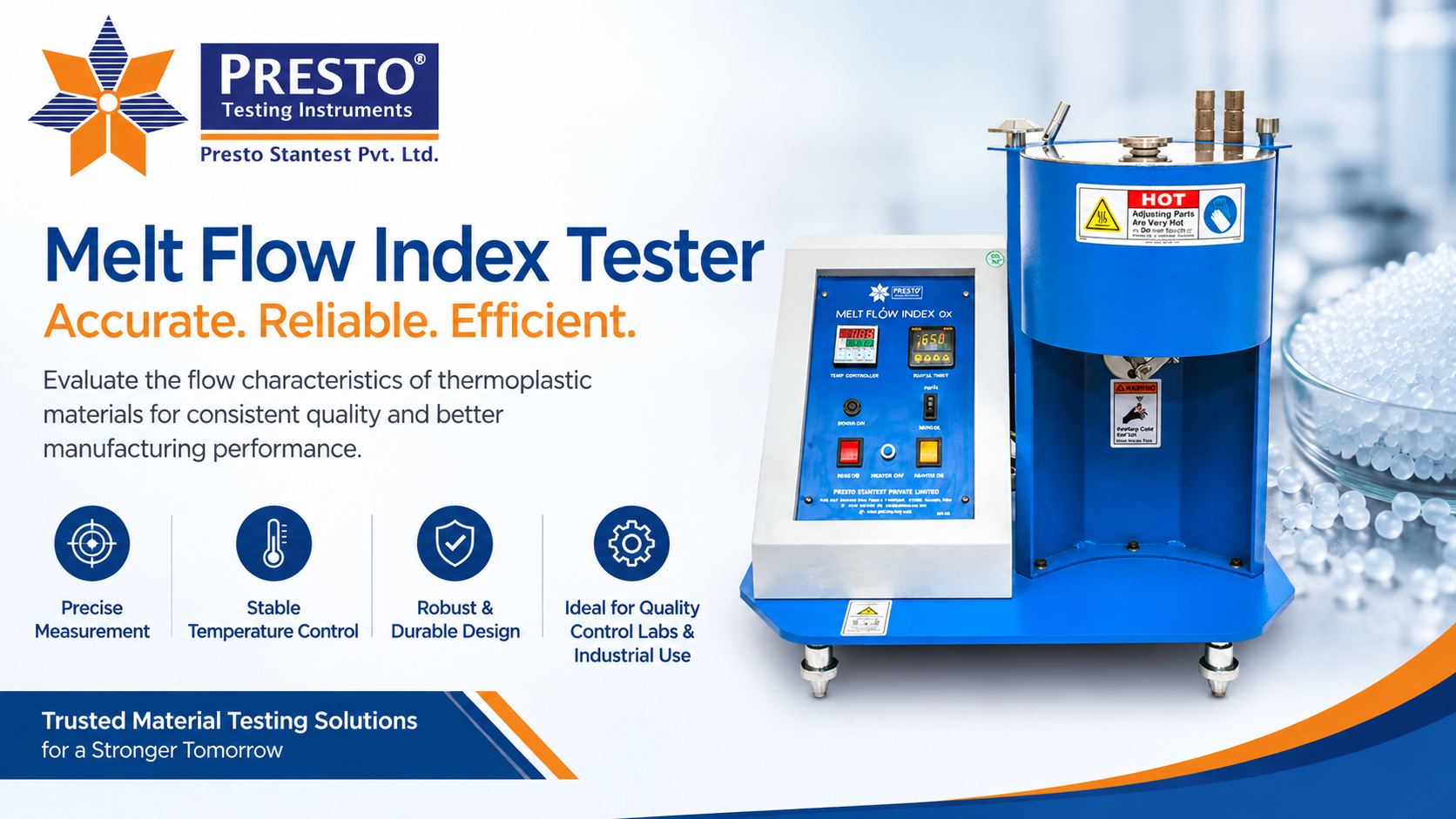
A Melt Flow Index Tester is used to evaluate the flow characteristics of molten thermoplastic materials. It helps manufacturers understand material consistency, compare raw material batches, and maintain quality during production. Presto Stantest Pvt. Ltd. provides material testing equipment designed to support industrial quality control and testing requirements.
What Is a Melt Flow Index Tester?
A Melt Flow Index Tester is a laboratory instrument used to determine the melt mass-flow rate of thermoplastic materials under specified temperature and load conditions. The test involves heating a plastic sample inside a barrel and forcing the molten material through a standard die using a defined load.
The amount of material extruded over a specific period is measured to determine the melt flow rate, commonly expressed in grams per 10 minutes (g/10 min).
This measurement helps quality control teams assess the flow behaviour of plastic materials before they are processed into finished products. It is particularly useful for manufacturers working with polymers such as polyethylene, polypropylene, and other thermoplastics suitable for the selected test conditions.
Working Principle of a Melt Flow Index Tester
The working principle of a Melt Flow Index Tester is based on measuring the quantity of molten plastic that passes through a standard die under controlled conditions.
The testing process generally involves the following steps:
1. Sample Preparation: A representative plastic sample is prepared according to the applicable testing procedure.
2. Heating the Material: The sample is introduced into the heated barrel, where it reaches the specified test temperature.
3. Applying the Load: A defined load is applied to push the molten polymer through the die.
4. Extrusion: The molten plastic flows through the die under the selected temperature and load conditions.
5. Sample Collection: The extruded material is collected over a specified period or cut at defined intervals, depending on the testing method.
6. Result Calculation: The mass of the extruded material is measured and used to determine the melt mass-flow rate.
Standardised procedures, such as ISO 1133-1 and ASTM D1238, provide guidance for determining the melt flow properties of thermoplastic materials. Test temperature and applied load must be selected according to the polymer and the applicable standard to obtain meaningful results.
Importance in Plastic Manufacturing
A Melt Flow Index Tester supports several quality control activities throughout the plastic manufacturing process. Its results help manufacturers evaluate raw materials and identify variations that may affect production performance.
1. Raw Material Inspection
Plastic manufacturers often receive raw materials from different suppliers or production batches. Testing the melt flow rate helps quality teams compare incoming material against established specifications and identify variations before production begins.
2. Consistent Product Quality
Variations in polymer flow behaviour can influence processing conditions and finished product characteristics. Regular testing helps manufacturers monitor material consistency and maintain defined quality requirements.
3. Process Optimisation
The melt flow rate provides useful information about how a thermoplastic material behaves during processing. Manufacturers can use this information alongside other material properties to select suitable processing conditions for extrusion, injection moulding, and related operations.
4. Supplier Quality Assessment
Manufacturers can compare test results with supplier specifications to evaluate the consistency of purchased polymer grades. This supports material acceptance procedures and supplier quality management.
5. Reduced Material Waste
Identifying material variations before large-scale production can help prevent avoidable processing issues. Although melt flow testing cannot eliminate every production defect, it provides useful data for making informed raw material and process decisions.
Applications Across Different Industries
Melt Flow Index Testers are used in several industries where thermoplastic materials are processed into finished products.
Plastic Packaging Industry: Manufacturers test polymer materials used for containers, films, caps, closures, and packaging components to check consistency between material batches.
Automotive Industry: Plastic components used in vehicle interiors, housings, and other applications may require controlled material properties to support reliable manufacturing.
Pipe and Fitting Manufacturing: Polymer flow characteristics are evaluated as part of raw material quality control for suitable thermoplastic pipe and fitting grades.
Electrical and Electronics Industry: Testing supports material inspection for plastic enclosures, insulation components, and other thermoplastic products.
Plastic Compounding Industry: Compounders use melt flow measurements to compare polymer blends and assess consistency during production.
Research and Testing Laboratories: Laboratories use the instrument to evaluate thermoplastic samples, support material development, and conduct routine quality checks.
The melt flow rate should always be considered alongside other relevant properties, such as tensile strength, impact resistance, density, and thermal performance, when assessing a material for a specific application.
Factors to Consider When Selecting a Melt Flow Index Tester
Selecting the right testing equipment is important for obtaining consistent and repeatable results. Manufacturers should evaluate the following factors before choosing a tester.
- Temperature Control: The instrument should maintain the required test temperature for the selected polymer and method.
- Load Configuration: Confirm that the available test loads meet the requirements of the intended testing standards.
- Measurement Accuracy: Reliable temperature, timing, and mass measurements are essential for dependable results.
- Ease of Operation: A practical design can simplify routine testing and help laboratory personnel follow standard procedures.
- Applicable Standards: Check compatibility with relevant methods, including ASTM D1238 and ISO 1133-1.
- Maintenance Requirements: Regular cleaning, calibration, and inspection help maintain testing consistency over time.
The selection should be based on the materials tested, the required measurement method, laboratory workload, and internal quality control procedures.
Why Choose Presto Stantest for Material Testing Solutions?
Presto Stantest Pvt. Ltd. is an Indian manufacturer of material testing instruments serving industrial quality control and testing requirements. Its testing solutions support businesses that need to evaluate the performance and consistency of materials used in manufacturing.
When selecting a Melt Flow Index Tester from Presto Stantest, buyers should review the instrument’s available specifications, temperature range, load options, measurement method, and compliance with the required testing standard. Confirming these details helps ensure that the equipment is suitable for the intended polymer grades and laboratory applications.
For plastic manufacturers, packaging companies, polymer processors, and testing laboratories, appropriate testing equipment can support routine inspection, material comparison, and production quality management.
Conclusion
A Melt Flow Index Tester is an important instrument for evaluating the flow characteristics of thermoplastic materials under controlled conditions. It helps manufacturers inspect raw materials, monitor batch consistency, support process optimisation, and maintain quality control across different industrial applications.
By incorporating standardised melt flow testing into their inspection procedures, businesses can make better-informed decisions about material suitability and production requirements. Presto Stantest Pvt. Ltd. offers material testing solutions for industrial applications, helping quality control teams establish reliable testing practices. Choosing the appropriate instrument and following recognised testing standards are essential steps towards consistent and dependable plastic manufacturing.