






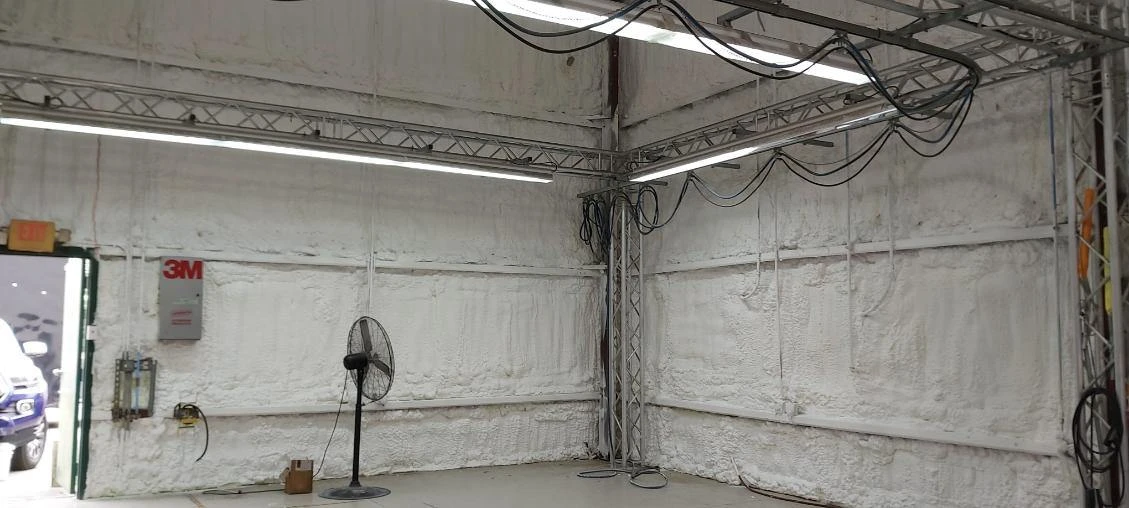
Reviewing building plans before insulation installation helps prevent costly changes, missed areas, and building code issues. In Lehigh Acres, FL, property owners and builders should confirm the insulation type, required R-value, air sealing details, and roof or wall assembly before work begins. A clear plan helps insulation installers understand exactly where insulation installation in Lehigh Acres, FL is needed and how the building should manage Florida’s heat and humidity.
At Spray Foam Contractors LLC, we recommend reviewing insulation specifications before the installation crew arrives. This guide explains what to check, how spray foam compares with other insulation options, and how to prepare your project for a smooth installation.
Why Review Building Plans Before Insulation Installation?
A building plan shows how different parts of a structure fit together. Reviewing it before insulation starts helps identify gaps between the design, material specifications, and installation requirements.
Check Insulation Locations And Specifications
Start by reviewing the roof, attic, exterior walls, ceilings, and any floors separating conditioned and unconditioned spaces. Confirm the insulation type and specified R-value for each area. Your plans should also show how insulation connects around windows, doors, plumbing penetrations, wiring, and roof transitions. Missing details can lead to air leaks, uneven coverage, or expensive rework after drywall installation.
Confirm Applicable Building Code Requirements
Florida’s building energy code addresses insulation, air barriers, and energy performance. Requirements depend on the building type, construction details, and applicable code edition. Before installation, review the Florida Building Commission’s official code resources and confirm the requirements that apply to your permit with the local building department.
What Should You Check In Your Building Plans?
A practical plan review focuses on the details that affect material selection, installation quality, and long-term performance.
- Insulation coverage: Confirm that every designated wall, ceiling, attic, and roof area has a clear insulation specification.
- Air sealing details: Identify gaps around framing, windows, doors, and utility penetrations that need proper sealing.
- Moisture management: Review roof drainage, flashing, and other details that help prevent water from reaching the insulation.
- Ventilation and HVAC: Check whether the design uses a vented or unvented attic and how the HVAC system will operate within that design.
- Product specifications: Verify the proposed insulation’s R-value, installation thickness, and manufacturer requirements.
- Inspection access: Ensure the installation sequence allows required inspections before covering the work.
These checks help your insulation contractor identify design conflicts before they become expensive construction problems.
Choosing The Right Insulation Solution
Different insulation materials serve different needs. Spray foam is often considered for projects that need both thermal insulation and air sealing, but the best choice depends on the building assembly and project requirements.
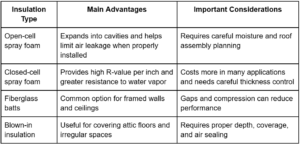
Spray foam can be useful when plans call for a more continuous air barrier. However, it doesn’t replace proper roof flashing, drainage, or other moisture-control measures.
Pros And Cons Of Spray Foam Insulation
Spray foam can improve a building’s thermal performance, but it needs careful planning and professional application.
Advantages
- Air leakage control: Properly applied foam can seal many small openings that allow outdoor air to enter the building.
- Thermal performance: Foam helps slow heat transfer through insulated building assemblies.
- Flexible applications: Depending on the product and design, foam can be used in roof decks, wall cavities, and other approved areas.
Disadvantages
- Higher upfront cost: Spray foam often costs more than conventional insulation materials.
- Installation sensitivity: Incorrect mixing, application thickness, or surface conditions can affect the finished product.
- Moisture and safety concerns: Poorly designed assemblies can trap moisture, while application requires proper protective equipment, isolation, and ventilation.
The U.S. Environmental Protection Agency explains important precautions in its guidance on using spray polyurethane foam insulation safely.
Common Problems A Plan Review Can Prevent
Small design mistakes can create major problems once the insulation is installed. For example, a home may have an unvented attic design but lack clear instructions for insulating and managing moisture at the roof deck. Applying foam without resolving those details can create moisture or indoor humidity concerns.
Other common issues include:
- Missing insulation specifications: Installers may need clarification before choosing the correct material or thickness.
- Blocked access: Wiring, plumbing, or late-stage framing changes may prevent complete coverage in some cavities.
- Unplanned air leaks: Gaps around attic hatches, duct penetrations, and framing connections can undermine the intended air barrier.
- Poor installation sequencing: Installing foam before required inspections or before coordinating other trades can lead to delays and rework.
A thorough plan review allows the builder and insulation contractor to resolve these issues before spraying begins.
How Lehigh Acres Weather Affects Insulation Installation
Lehigh Acres experiences hot, humid conditions for much of the year, along with seasonal heavy rain and thunderstorms. These conditions make moisture control and proper installation planning especially important.
High humidity and wet building materials can affect application conditions. Rain may also delay work if roof assemblies or framing become wet. The crew should check substrate dryness, material temperature, ambient conditions, and the manufacturer’s application limits before spraying.
There is no single best season for every insulation project. Work can proceed throughout the year when site conditions and product requirements allow it. Before installation, confirm the weather forecast and protect the building from rain.
Understanding R-Value Before Work Begins
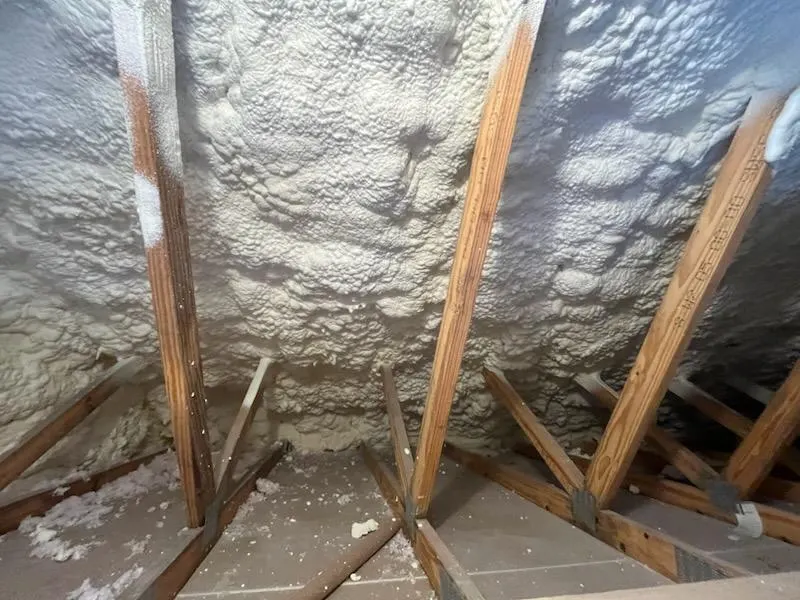
R-value measures how well an insulation material resists heat flow. Higher R-values indicate greater resistance, but the required value depends on the building assembly and applicable energy code. Spray foam products provide different R-values per inch. Closed-cell foam generally provides more R-value per inch than open-cell foam, although exact performance depends on the specific product.
Check the plans for the required total R-value, specified foam thickness, and any other insulation layers. The U.S. Department of Energy’s insulation guide for contractors and homeowners provides additional information about insulation types, performance, and installation considerations.
Why Consider Spray Foam Contractors LLC?
At Spray Foam Contractors LLC, we understand that insulation installation starts with good preparation. Reviewing the building plans helps establish the scope of work, identify potential issues, and clarify the materials needed before the crew begins. Established in 2016, our company handles projects ranging from sheds and residential homes to large custom homes and commercial properties. Our team works with clients to understand their project requirements and plan insulation work around the building’s design.
Before choosing an insulation contractor, ask about relevant experience, insurance, licensing where required, product specifications, ventilation procedures, and the expected inspection process. Clear answers help you make an informed decision.
Prepare Your Building For Better Insulation Results
A building plan review is a practical step toward a well-insulated property. Confirming insulation coverage, R-value, air sealing, moisture control, and installation requirements before work starts can help prevent delays and unnecessary expenses.
If you are planning a new build or renovation in Lehigh Acres, contact Spray Foam Contractors LLC to discuss your insulation project and determine the next steps.
Call: (239) 688-4979
Email: info@sprayfoamcontractorsllc.com
Frequently Asked Questions
Should Building Plans Be Reviewed Before Insulation Installation?
Yes. Reviewing plans helps confirm insulation locations, material specifications, required R-values, air sealing, and applicable inspection requirements before work begins.
Is Spray Foam A Good Choice For Homes In Lehigh Acres, FL?
Spray foam can help reduce heat transfer and air leakage in Florida homes. The right product depends on the roof or wall design, moisture-control strategy, budget, and applicable building code.
What Is The Difference Between Open-Cell And Closed-Cell Spray Foam?
Open-cell foam is lighter and generally has a lower R-value per inch. Closed-cell foam is denser, provides a higher R-value per inch, and offers greater resistance to water vapor. The appropriate choice depends on the building assembly and product specifications.
What R-Value Do I Need For My Home?
The required R-value depends on the location of the insulation, the building design, and the applicable energy code. Review the approved plans and confirm the requirements with your building professional or local building department.
Can Spray Foam Be Installed During Florida’s Rainy Season?
Yes, when site and application conditions meet the product manufacturer’s requirements. The crew must account for wet surfaces, humidity, temperature, and rain exposure before applying the foam.
How Long Should We Stay Out Of The House After Spray Foam Installation?
There is no single safe re-entry time for every product and project. Follow the manufacturer’s instructions and the contractor’s ventilation and re-entry plan. Occupants and unprotected workers should stay out during application and until the area is adequately ventilated, cleaned, and cleared for re-entry.
Author And Reviewer
Author:
Justin Malek has worked in the insulation industry in West Florida since 1996. His experience includes completing projects, training crew members, and previously owning his own company. Together with Tony, who brings extensive experience in crew training and equipment repair, the team has more than 40 years of combined industry experience. Spray Foam Contractors LLC was established in 2016 and serves residential and commercial projects of varying sizes.
Reviewer: Zoe Carter
Zoe Carter has more than 12 years of experience in residential plumbing services. Her background provides practical context for building-system coordination and the interactions between plumbing penetrations and insulation work. Insulation-specific technical and code requirements should be confirmed against the applicable building code and product documentation.