




Accurate positioning is essential in manufacturing environments where machine settings, component alignment, and repeatable adjustments directly affect product quality. When operators cannot easily identify the position of a spindle, shaft, or adjustable machine element, even small setting differences can lead to inconsistent results. Position indicators help solve this problem by displaying the current position of a mechanical component, allowing operators to make controlled adjustments and repeat settings with greater confidence.
These devices are used across industries that rely on precision machinery, including metalworking, packaging, printing, woodworking, and food processing. Depending on the application, an indicator may use a mechanical dial, a digital counter, or an electronic display. Understanding how these options work makes it easier to select a suitable device for a particular machine and operating environment.
What Are Position Indicators and How Do They Work?
A position indicator is a measurement and display component that shows the position or movement of a machine part. It is commonly connected to a control shaft, spindle, or adjustment mechanism. As the operator turns a handwheel or moves a component, the indicator provides a readable measurement of the resulting displacement.
For example, a machine operator may need to move a cutting guide by a specific distance before processing a new batch of material. An indicator can show how far the adjustment mechanism has moved, helping the operator return to a previously established setting without relying entirely on visual estimates.
Position indicators can display rotational movement, linear displacement, or a calculated measurement based on the connected mechanism. Their accuracy depends on factors such as the indicator ratio, mechanical connection, installation, and calibration.
Main Types of Position Indicators
Different indicator designs suit different machine configurations and measurement requirements. The most common options can be grouped by their display method and operating mechanism.
1. Analog Position Indicators
Analog indicators use a graduated dial and rotating pointers to communicate movement. Depending on the design, one pointer may show complete spindle rotations while another displays fractional movement.
These indicators are useful when operators need a quick visual reference without electronic controls. They are often found on manual machinery, adjustment assemblies, and equipment where straightforward operation is preferred.
2. Digital-Analog Position Indicators
Digital-analog models combine a numerical roller counter with a pointer or graduated scale. The numerical display makes it easier to read larger movements, while the pointer can provide additional visual information.
This arrangement is helpful when operators need more detailed readings than a basic dial provides but still want a mechanical device that does not depend on electronic power.
3. Mechanical Digital Position Indicators
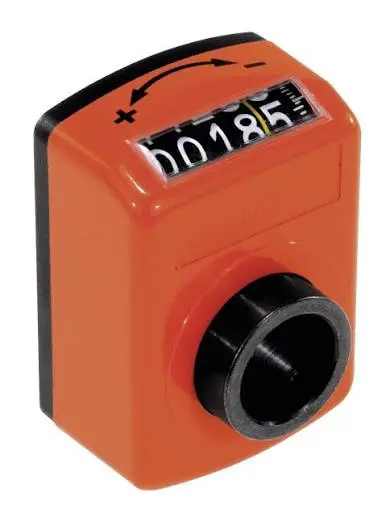
Mechanical digital indicators display measurements through rotating number wheels. They are commonly mounted directly onto a control shaft and use the shaft’s movement to update the displayed value.
Their relatively simple construction makes them useful in industrial environments where dependable readings and straightforward maintenance are important.
4. Electronic Position Indicators
Electronic indicators use sensors and digital displays to communicate position information. Depending on the model, they may support different measurement units, programmable settings, and electronic transmission of position data.
Some systems communicate wirelessly with a control unit, reducing the need for connecting cables. These features can be useful in machinery where operators need frequent adjustments or centralized monitoring.
5. Gravity and Positive Drive Indicators
These types are distinguished by how the display remains oriented while the machine shaft rotates.
Gravity-driven indicators use a counterbalanced dial that remains stationary through gravity. They are generally suited to horizontal or appropriately inclined spindle arrangements.
Positive-drive indicators use a mechanical reference pin connected to the machine. This arrangement allows the indicator to operate in different spindle orientations and can be appropriate for equipment exposed to vibration or demanding operating conditions.
Key Functions and Benefits of Position Indicators
Position indicators provide more than a numerical reading. They help make machine adjustments more consistent and easier to manage.
Repeatable settings: Operators can record a measurement and return to it when producing another batch. This reduces dependence on estimates and helps maintain consistent production settings.
Improved adjustment accuracy: Clear readings help operators make smaller, more controlled changes to machine components. This is particularly valuable when processing materials that require precise dimensions.
Reduced setup time: When machine settings are documented, operators can often restore previous configurations more efficiently. This can simplify changeovers between production runs.
Better process consistency: Repeatable adjustments help reduce variation between products, supporting quality control and predictable manufacturing results.
Easier monitoring: A visible display allows operators to check machine settings without relying solely on manual measurements or disassembling equipment.
How to Select the Right Position Indicator
Choosing an indicator requires an understanding of the machine, the required measurement, and the working environment. The following steps provide a practical selection approach.
Step 1: Identify the Movement Being Measured
Determine whether the machine component moves linearly, rotates, or uses a spindle to control another mechanical movement. The indicator must match the type of movement being measured.
For example, a machine that adjusts a guide through a threaded spindle may require an indicator that translates spindle rotation into linear displacement.
Step 2: Choose the Display Format
Consider how operators will read the measurement. Analog displays provide an immediate visual reference, while mechanical digital counters offer direct numerical readings. Electronic displays may be more suitable when programmable settings or data communication are required.
The best choice depends on measurement requirements, operator preferences, and the complexity of the equipment.
Step 3: Check the Indicator Ratio
The indicator ratio determines how displayed values correspond to shaft rotation or component movement. An incorrect ratio can produce misleading readings even when the device is installed securely.
Compare the machine’s spindle pitch or movement characteristics with the indicator’s technical specifications before selecting a model.
Step 4: Evaluate Installation and Orientation
Check the spindle diameter, available mounting space, shaft position, and reference-pin arrangement. Gravity-driven models have orientation limitations, whereas positive-drive and direct-drive designs can support different mounting positions.
Always follow the manufacturer’s installation instructions to maintain reliable readings.
Step 5: Consider Environmental Conditions
Industrial equipment may operate around dust, moisture, oil, grease, cleaning agents, and vibration. Choose a housing and sealing arrangement suitable for these conditions.
Technopolymer, stainless steel, and other materials offer different combinations of durability, corrosion resistance, and weight. The appropriate choice depends on the operating environment and maintenance requirements.
Industrial Applications of Position Indicators
Position indicators are useful wherever machinery requires controlled and repeatable adjustments.
In metalworking, operators use them to monitor the position of machine tables, tool supports, and adjustable components. Consistent settings can help maintain dimensional accuracy during repeated production runs.
In woodworking, indicators can help position cutting guides, fences, and other adjustable machine elements. This makes it easier to reproduce settings when switching between different material sizes.
In printing and packaging, precise adjustments are important for alignment, spacing, and material handling. Position indicators provide a convenient reference when operators configure equipment for different production requirements.
In food and pharmaceutical manufacturing, equipment may require frequent adjustments and cleaning. Suitable indicators with appropriate materials and protective sealing can help maintain readable settings in demanding environments.
They are also used in assembly equipment, laboratory machinery, and material-handling systems where repeatable positioning supports reliable operation.
Common Selection and Usage Mistakes
One common mistake is choosing an indicator based only on its display appearance. A clear digital reading is not useful if the device has an unsuitable measurement ratio or cannot connect correctly to the machine.
Another issue is overlooking spindle orientation. Installing a gravity-driven model in an unsuitable position can affect its reading. The operating principle should always match the machine arrangement.
Incorrect installation can also cause inaccurate measurements. A poorly aligned shaft connection, loose mounting, or incorrectly positioned reference pin may prevent the indicator from tracking movement properly.
Finally, neglecting maintenance can reduce readability and reliability. Damaged housings, contaminated display windows, and worn mechanical connections should be inspected as part of routine equipment checks.
Practical Tips for Reliable Performance
- Confirm the indicator ratio against the machine’s actual movement requirements.
- Check shaft dimensions and mounting compatibility before installation.
- Select a display that operators can read easily from their normal working position.
- Consider dust, moisture, vibration, and chemical exposure when choosing materials.
- Establish a consistent zero or reference position according to the machine instructions.
- Inspect the housing, mounting, and display during scheduled maintenance.
- Record important machine settings to support repeatable production runs.
Conclusion
Position indicators help industrial operators monitor machine settings, make accurate adjustments, and reproduce important production positions. From simple analog dials to electronic displays, each type offers advantages for particular equipment and working conditions. By evaluating movement requirements, display format, indicator ratio, installation orientation, and environmental suitability, businesses can select reliable components that support precision, efficiency, and consistent manufacturing performance.