



Amethyst has long been cherished as one of the most exceptional colored gemstones in the world. It is highly recognizable and deeply beloved in the jewelry industry. While most people immediately picture a classic, mid-tone purple hue, the actual color spectrum of natural amethyst ranges from whisper-soft pastel pinkish-lavender all the way to a deep, velvety violet.
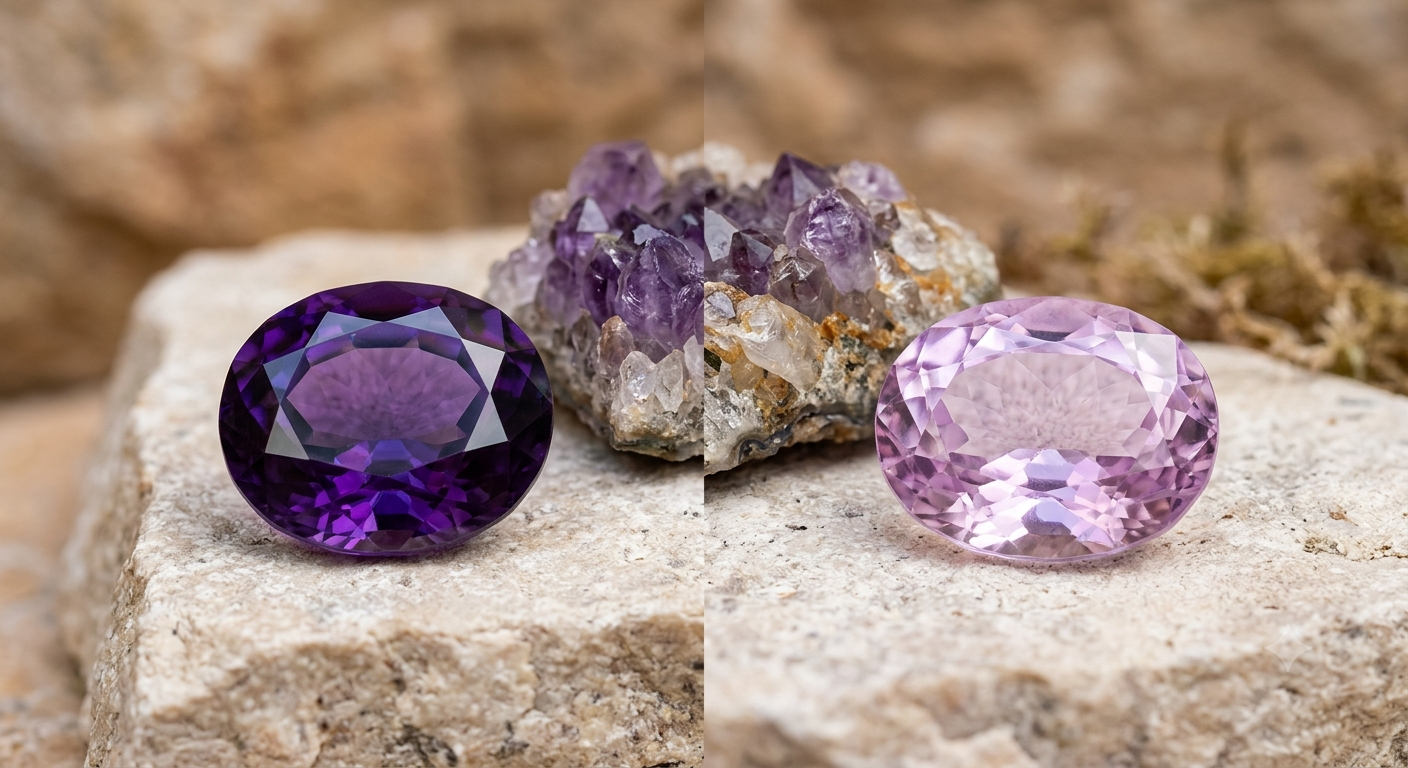
Furthermore, out of all the varieties, at opposite ends of its rich spectrum sit Siberian amethyst and Rose de France amethyst. The distinct color profiles of these two varieties completely change the viewing perspective of this gemstone. Keep reading to delve into understanding the two most popular amethyst varieties and their key differences in hue, saturation, tone, and overall value, so that you can help yourself in making a well-informed choice.
The Basics: How Amethyst Color Grading Actually Works
Two amethyst stones sold under the same name can look and cost very differently. The reason is their color. Unlike white diamonds, which use a strict alphabetical color scale, colored gemstones like amethyst are evaluated on three main optical factors.
Here are three core dimensions of amethyst color grades:
- Hue: The primary body color itself, such as purple or violet, along with secondary tint flashes like red, blue, or pink.
- Tone: How light or dark the gemstone appears, scaled from extremely light (10-20%) to deeply dark (70-80%).
- Saturation: How strong and intense the gem color looks. High saturation means a pure, intense color, while low saturation results in a faint or grayish look.
| Color Grade Tier | Typical Tone Range | Color Saturation | Corresponding Amethyst Type |
| Commercial/Pastel | 10% to 35% | soft/faint | Rose de France, light Brazilian |
| Fine/Medium-dark | 40% to 60% | moderate to strong | Standard Uruguayan and Zambian |
| Extra fine/Premium | 65% to 80% | deep/rich | Siberian grade |
Uncover the Siberian vs. Rose de France Amethyst Difference
Think of these two amethyst varieties as two opposite ends of a magnet – completely distinct in personality, yet connected by the exact same gemstone DNA. Each offers vastly different aesthetics, market values, and visual characteristics.
-
Deep Siberian Amethyst: Intense, Regal Saturation
Deep Siberian amethyst represents the absolute highest quality and color grade an amethyst gemstone can ever achieve. A true deep Siberian is not just a dark purple stone; in fact, it features a very precise, complex color composition under professional lighting.
What Makes an Amethyst “Siberian”: Historically, the term Siberian referred to top-tier amethyst that was mostly mined in Russia’s Ural Mountains. As of today, in modern gemology, it serves as a trade grade designation for the highest quality, deep purple amethyst available – regardless of its actual geographic origin.
Key Visual Qualities:
- Rich Color Profile: It displays a deep royal purple or rich grade shade, accompanied by distinctive secondary flashes of red or bright blue when the light reflects off its facets.
- Tone: Dark to deep violet (65% to 80% tone).
- Visual Appeal: Looks elegant, dramatic, and very luxurious. It also beautifully maintains its deep purple intensity even under low ambient light conditions.
- Value and Rarity: It is highly considered the highest quality and most valuable grade of amethyst. It is positioned as the most expensive grade in the gemstones for sale market.
- Best for: Statement rings, pendants, earrings, and designs that emphasize a rich purple center stone.
2. Rose de France Amethyst: Soft Pastel Charm
It sits at the light end of the amethyst range. This light purple amethyst variety shows a softer charm with its delicate hues. Unlike standard amethyst, Rose de France contains a much lower concentration of iron molecules within the quartz crystal structure. This gives it a unique color signature.
What is Rose de France Amethyst: It represents the lighter, delicate end of the amethyst family. Commonly mined in Brazil and Bolivia, this variety is prized for its gentle lilac, mauve, and soft pinkish-violet shades.
Key Visual Qualities:
- Rich Color Profile: Available in delicate lavender, pale lilac, and pastel pinkish-purple.
- Tone: Light to medium-light (20% to 40% tone).
- Sparkle and Brilliance: Because the light passes through the lighter quartz with minimal obstruction, well-cut Rose de France gems offer exceptional light return and vivid internal sparkle.
- Visual Appeal: Looks highly romantic, subtle, modern, and versatile for everyday wear.
- Value and Rarity: It is a common and highly accessible grade of amethyst. Commands a lower price than deep, saturated grades on the market.
- Best for: Airy, vintage, or pastel-themed jewelry designs.
All Things Considered
In the end, you can’t compare these two marvels. If the gemstones had alter egos, Siberian and Rose de France amethysts would be the ultimate pair – one is the king of classic luxury designs, and the other is unbeatable for modern, feminine designs. Whichever you choose, both share a Mohs hardness of 7, ensuring excellent durability for everyday designs.
Lastly, always remember to check the gem under multiple light sources when shopping for amethyst stones for sale. It gives you confidence in your choices and helps you end up with a gem that is truly born for you.