






Quick takeaways
- A tree puller grips a standing tree and pulls it out with the roots attached. A stump grinder only works on what’s already cut.
- Most skid steer models are rated for roughly 6 to 12 inches of trunk diameter, and the machine matters as much as the attachment.
- Soil moisture, root type and your machine’s weight decide whether it’s a clean pull or a long afternoon.
- Pullers are for small trees, saplings, brush and posts. Bigger timber needs a different tool.
Restoring a neglected property usually starts with the same ugly job. Fence rows swallowed by saplings, old building pads turned into thickets, pasture edges that crept inward for ten years. You can cut all of it down in a day. The roots are what come back and cause trouble.
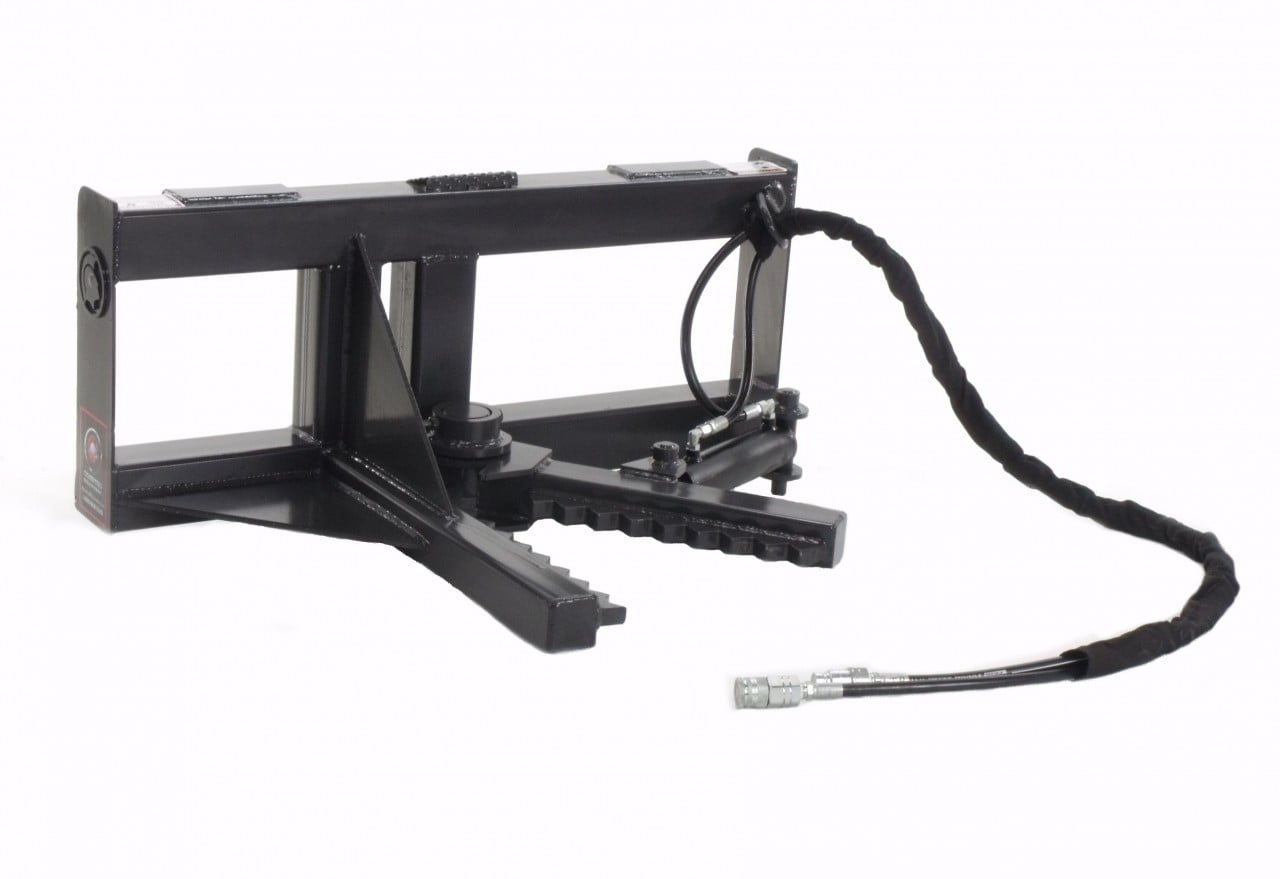
That’s where a skid steer tree puller makes sense. It’s a hydraulic clamp, usually with serrated jaws, that grabs the trunk low and uses leverage from the machine to lift the whole tree out of the ground, root ball included. One manufacturer describes its jaws as handling trees up to 8 inches in diameter, roots and all, without stump grinding or chainsaw work. That one pass is the point. You’re not cutting, then grinding, then digging out what’s left.
Pulling vs. Grinding: What’s the Difference?
Grinding chews a stump down below grade. The root mass stays in the ground, while pulling takes it with you. If the land is going back into pasture, crops, or under a slab, leftover roots rot, settle, and sometimes resprout. For ground that needs to stay clean, pulling usually wins. For a single large stump in a lawn, grinding is still the simpler call.
What Size Can a Tree Puller Actually Handle?
It depends on the model, and the numbers vary a lot. One skid steer puller is listed for posts up to 8 inches and trees up to 6 inches, while the Rockland Tree Jack is advertised at up to 12.5 inches. Those are manufacturer claims under ideal conditions, not guarantees.
Treat the rated diameter as a ceiling, not a target. Species, soil and root structure all shift the real number. A 6 inch tree with a taproot in dry clay can fight you harder than a 9 inch tree with shallow roots in damp ground.
Your Skid Steer Matters More Than the Attachment
This gets overlooked. The pull comes from the machine, and a light machine will lift its own back wheels before it lifts a big root ball. Check your rated operating capacity and weight before you buy. Some pullers also list minimum machine requirements, like the Tree Jack being offered for skid steers rated at 65 horsepower and higher. A heavier machine, or a compact track loader for stability, makes a noticeable difference.
Also confirm your quick-attach style and hydraulic hookup. Many pullers use a universal skid steer quick-attach interface, but verify it against your machine before ordering.
How the Job Actually Goes
Wet ground helps. Soil after rain releases roots far more easily than dry, packed dirt. Grip the trunk as low as you can, because lower means more leverage. Then curl or lift slowly rather than yanking. If the tree doesn’t want to move, rock it a little to loosen the root system, or back off and try a different angle.
If you’re clearing a lot, pull first and tidy afterward. A grapple or root rake bucket cleans up the loose root balls and debris faster than hand work, which fits how land clearing setups often combine a puller with a grapple or rake attachment.
Where Pullers Fall Short
Be honest about the limits. Large mature trees, deep taproots, rocky soil and dense clay can all beat a puller. Forcing it risks bent jaws, strained hydraulics and a machine tipping forward. Big timber is better handled by a tree shear, a saw attachment or an excavator, and heavy brush may be better handled with a cutter first. If the tree is close to the rated limit, test one before planning a whole day around it.
Using It in Larger Restoration Projects
Contractors use pullers for site prep before grading. Farm operators use them on fence rows and overgrown pasture. Municipal crews clear drainage edges and right-of-ways. The same logic applies on rough sites like exploration or mining access areas where small growth needs to go before heavier work starts, as long as the trees fall within the puller’s rated size.
If you’re building out a land clearing setup, it helps to see what else is available for your machine. Spartan Equipment carries a wide catalog of skid steer attachments, so it’s worth checking compatibility with your model before you buy. Choosing the best skid steer attachments for restoration work really comes down to matching each tool to your machine and the job in front of you.
FAQ
Does a tree puller remove the roots?
Yes, that’s its main advantage. It extracts the tree with the root ball attached instead of cutting it off at the surface.
What size trees can a skid steer tree puller remove?
Commonly somewhere between 6 and 12 inches depending on the model, machine and soil. Check the manufacturer’s rating for your specific unit.
Do I still need a stump grinder?
For small trees pulled whole, no. For larger stumps already cut, a grinder still makes sense.
Will any skid steer run a tree puller?
Not necessarily. Check your machine’s weight, operating capacity, and hydraulic setup first.
Conclusion
A tree puller isn’t the right tool for every tree, but for small trees, saplings and brush it takes out the part that usually causes the most trouble, the roots. Match the size to your machine, work in decent soil conditions, and know when to switch to something heavier. Do that, and property restoration gets a lot less painful.