



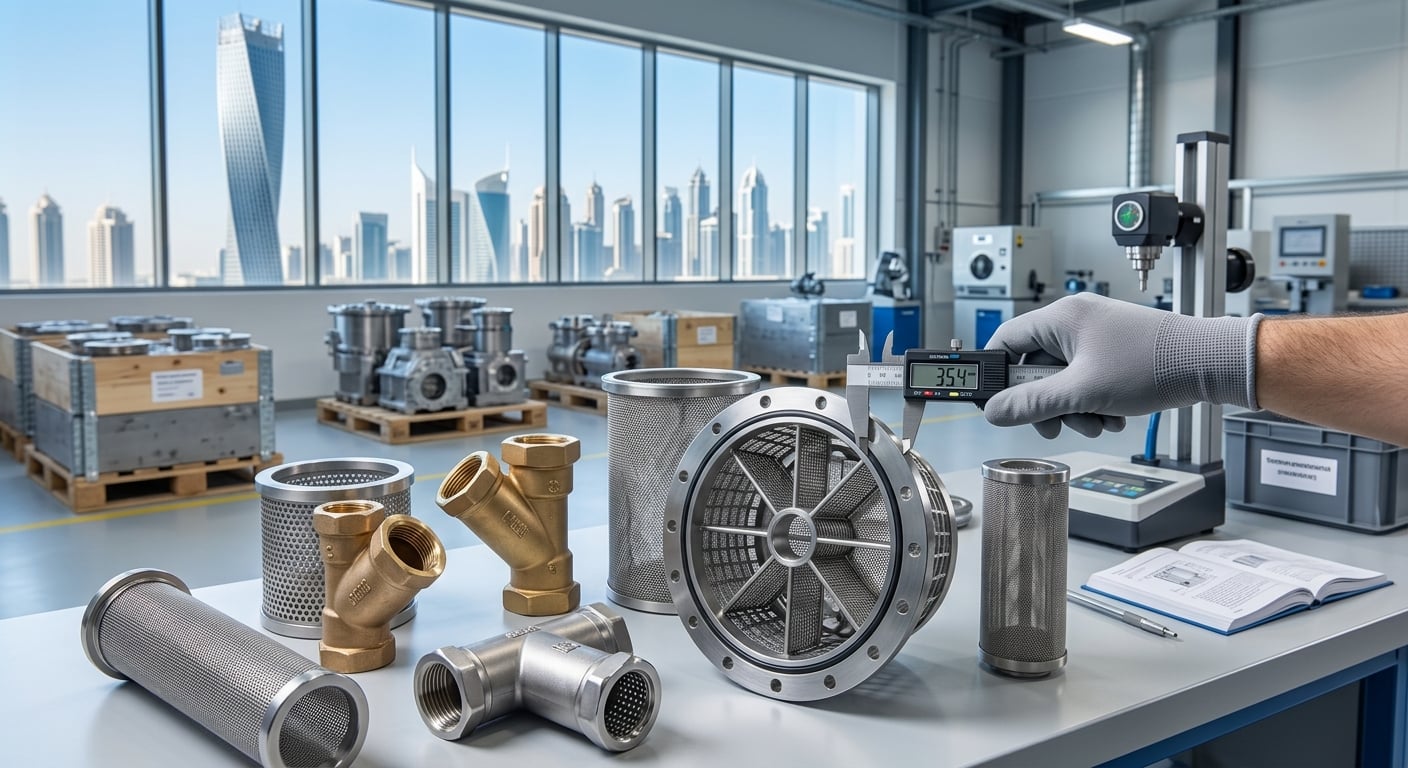
Industrial filtration plays an essential role in maintaining the efficiency, safety, and reliability of pipeline systems. Across Dubai and the wider United Arab Emirates, industries such as oil and gas, construction, water treatment, marine engineering, manufacturing, and power generation depend on high-quality filtration equipment to protect their machinery and maintain smooth operations. Strainers are among the most important components used in these systems because they remove unwanted solid particles before they reach sensitive equipment.
Choosing a reliable strainer supplier in Dubai helps businesses source suitable filtration products for their specific industrial requirements. The right supplier can provide different strainer designs, material options, screen configurations, and pressure ratings to meet the needs of various applications. Selecting appropriate equipment can also help reduce maintenance costs, prevent unexpected shutdowns, and extend the service life of pumps, valves, meters, and other pipeline components.
This guest post explores the importance of industrial strainers, the different types available, their applications, and the factors businesses should consider when purchasing filtration equipment in Dubai.
What Is an Industrial Strainer?
An industrial strainer is a mechanical filtration device installed in a pipeline to remove solid particles from flowing liquids, gases, or other compatible process media. It generally contains a perforated screen or mesh element that captures debris while allowing the process medium to continue flowing through the system.
Common contaminants include rust, scale, sand, dirt, welding residue, and other particles that may enter a pipeline during manufacturing, installation, transportation, or regular operation.
Unlike filtration systems designed for extremely fine separation, many industrial strainers are intended primarily to protect downstream equipment from larger particles. The appropriate screen opening depends on the application, the nature of the contaminants, and the equipment being protected.
Strainers are commonly installed upstream of pumps, control valves, flow meters, heat exchangers, and other components that may be damaged or obstructed by unwanted debris.
Why Businesses Need a Reliable Strainer Supplier in Dubai
Dubai is an important commercial and industrial centre connecting businesses across the Middle East and international markets. Industrial facilities require dependable pipeline components to support infrastructure development, manufacturing, energy projects, and building services.
A professional strainer supplier in Dubai can help buyers identify suitable products based on their operating conditions and technical specifications.
Access to Different Strainer Types
Industrial systems have different filtration requirements. Some need compact strainers for general pipeline protection, while others require larger baskets, increased filtration capacity, or continuous operation during cleaning.
A supplier offering multiple product categories allows buyers to compare available designs and select equipment suitable for their applications.
Material and Pressure Options
Strainers are manufactured using materials such as stainless steel, carbon steel, cast iron, and other alloys, depending on the intended service. Different pressure ratings and connection types are also available.
The selected product should match the operating pressure, temperature, process medium, corrosion exposure, and pipeline specifications.
Support for Maintenance and Replacement
Industrial facilities frequently require replacement strainers during preventive maintenance, equipment upgrades, and shutdowns. Working with a dependable supplier can simplify product identification and help reduce delays associated with incorrect specifications.
Product Documentation
For industrial and engineering projects, buyers may require technical datasheets, material certificates, inspection reports, and testing documentation. These records help engineers verify that the supplied product meets the project’s requirements.
Types of Industrial Strainers Available in Dubai
Understanding the different strainer designs helps businesses choose suitable equipment for their pipeline systems.
1. Y-Type Strainers
Y-type strainers feature a compact body with a screen chamber positioned at an angle to the main flow path. Their design makes them suitable for many applications involving water, steam, oil, gas, and other compatible media.
These strainers are frequently used in industrial plants, HVAC installations, water systems, and process pipelines. Their compact construction is particularly useful where installation space is limited.
Depending on the design, the screen can be accessed for cleaning by opening the cover. Buyers should consider the screen’s available filtration area, expected debris loading, and the space needed for maintenance.
2. Basket Strainers
Basket strainers use a removable basket-shaped screen to collect solid particles from the flowing medium. They generally provide a larger screening area than compact Y-type designs of comparable pipeline size.
These strainers are commonly used in liquid applications where a higher debris-holding capacity is required. Typical installations include water treatment facilities, industrial processing systems, cooling water lines, and selected oil and chemical applications.
Basket strainers are available in different sizes and configurations. The basket material, perforation size, mesh lining, and housing design should be selected according to the required filtration performance.
3. Simplex Basket Strainers
Simplex strainers contain one main filtration chamber with a removable basket. They are suitable for systems where the flow can be interrupted during cleaning or where the equipment can be safely isolated for maintenance.
Their straightforward construction makes them useful for many general industrial applications.
Before choosing a simplex strainer, operators should determine whether temporary flow interruption is acceptable. If continuous operation is necessary, another design may be more appropriate.
4. Duplex Basket Strainers
Duplex strainers contain two filtration chambers connected through a changeover arrangement. This configuration allows one chamber to remain in service while the other is isolated for cleaning, where the system is correctly designed and operated.
They are particularly useful in applications where uninterrupted filtration is important, such as selected industrial cooling systems, process lines, and marine installations.
When evaluating a duplex strainer, buyers should check the changeover mechanism, pressure rating, basket capacity, sealing arrangements, and maintenance procedures.
5. T-Type Strainers
T-type strainers are designed for applications where their configuration suits the pipeline layout, flow requirements, or installation space.
They can be used in industrial process lines and other specialised systems where the required filtration capacity and pressure conditions match the product’s design.
The selection process should consider the available screen area, pressure drop, connection configuration, and ease of cleaning.
6. Temporary Pipeline Strainers
Temporary strainers are often installed during commissioning, flushing, or initial operation to capture construction debris and particles that may remain inside a new pipeline.
Common designs include conical and flat configurations, depending on the application and installation arrangement.
Temporary strainers should be selected and installed according to the commissioning plan. They must also be removed or replaced at the appropriate stage to avoid creating unnecessary restrictions in the permanent system.
Industries That Use Industrial Strainers in Dubai
Industrial strainers serve a wide range of sectors throughout Dubai and the UAE.
Oil and Gas
Oil and gas facilities use strainers to protect pumps, meters, valves, and other process equipment from solid contaminants. Depending on the application, strainers may be installed in utility lines, cooling systems, fuel systems, and selected process pipelines.
Equipment selection requires careful consideration of operating pressure, temperature, process fluid, material compatibility, and project specifications.
Water Treatment and Desalination
Water treatment facilities use strainers to remove debris from incoming water and protect downstream equipment. Depending on the system, they may be installed before pumps, heat exchangers, filtration units, and other water-processing components.
Stainless steel and other corrosion-resistant materials may be appropriate for certain applications, particularly where salinity or chemical exposure is a concern.
HVAC and District Cooling
Commercial buildings, shopping centres, hotels, and district cooling facilities rely on circulating water systems to maintain indoor comfort.
Strainers help capture particles that could obstruct control valves, damage pumps, or reduce heat exchanger performance. Selecting an appropriate screen size and maintaining it regularly helps support efficient system operation.
Marine and Offshore Applications
Marine systems can expose equipment to seawater, humidity, and corrosive environments. Strainers may be used in cooling water systems, utility pipelines, and other onboard applications.
The material should be suitable for the medium and environmental conditions. Buyers should also consider corrosion resistance, vibration, access for cleaning, and the maintenance requirements of the vessel or offshore facility.
Manufacturing and Processing
Manufacturing plants use strainers in cooling circuits, fluid transfer systems, processing lines, and equipment protection arrangements.
Suitable filtration can help reduce contamination-related problems and protect sensitive components. The exact strainer design depends on the product being processed and the operating requirements of the machinery.
Power Generation
Power generation facilities use strainers in selected cooling water, auxiliary water, and other industrial systems.
In these applications, engineers should consider the required flow rate, operating pressure, temperature, and potential impact of pressure drop on system performance.
How to Select the Right Industrial Strainer
Choosing a strainer involves more than identifying the correct pipe size. Several technical factors should be evaluated before placing an order.
Determine the Process Medium
The first step is to identify whether the system carries water, steam, oil, gas, chemicals, or another medium. This information helps determine suitable body materials, screen materials, seals, and operating limits.
Chemical compatibility is especially important when the medium is corrosive or contains substances that may damage conventional materials.
Confirm Pipeline Size and Connections
The strainer’s inlet and outlet connections must match the pipeline design. Common connection types include threaded, flanged, and welded configurations.
Buyers should confirm nominal pipe size, flange standard, pressure class, face-to-face dimensions, and available installation space before ordering.
Select the Appropriate Screen Opening
The screen opening determines which particles the strainer can capture. A finer screen can retain smaller particles but may also increase pressure drop and become blocked more quickly.
A coarse screen may be more suitable where the primary objective is protecting equipment against larger debris.
Screen selection should account for particle size, contaminant concentration, required flow rate, and the acceptable pressure drop across the strainer.
Evaluate Flow Rate and Pressure Drop
A strainer must provide sufficient flow capacity for the intended application. An undersized unit or an unnecessarily restrictive screen may cause excessive pressure loss.
Engineers should evaluate the manufacturer’s pressure-drop information at the expected operating flow rate. They should also consider how the pressure drop will change as contaminants accumulate.
Consider Temperature and Pressure Ratings
The strainer’s maximum allowable pressure and temperature must be compatible with the system’s operating and design conditions.
Material strength, gasket selection, and body construction can influence the equipment’s operating limits. The relevant manufacturer documentation should be reviewed before approval.
Check Maintenance Requirements
Some strainers require a shutdown or isolation before cleaning, while duplex configurations can support continuous service through a properly managed changeover arrangement.
Buyers should assess how frequently cleaning may be required, how much debris the strainer can hold, and whether technicians can safely access the screen chamber.
Materials Commonly Used in Industrial Strainers
The material of a strainer affects its durability, corrosion resistance, and suitability for the process medium.
Stainless Steel
Stainless steel strainers are commonly used where corrosion resistance and cleanability are important. Grades such as 304 and 316 may be suitable for different applications, subject to the chemical composition of the medium and operating conditions.
Stainless steel is often considered for water treatment, food processing, marine services, and selected chemical systems.
Carbon Steel
Carbon steel strainers are widely used in industrial pipelines where mechanical strength and compatibility with the process conditions are required.
They may be suitable for many oil and gas, utility, and general industrial applications. Coatings or additional corrosion protection may be needed depending on the operating environment.
Cast Iron and Ductile Iron
Cast iron and ductile iron strainers are used in selected water distribution, building services, and utility applications. Their suitability depends on pressure requirements, temperature limits, mechanical loading, and the nature of the medium.
Special Alloys
Certain demanding applications may require specialised alloys or other materials designed for specific corrosive or high-temperature conditions.
The correct choice should be based on engineering requirements and manufacturer recommendations rather than material cost alone.
Benefits of Installing the Correct Strainer
A properly selected and maintained industrial strainer provides several operational benefits.
Equipment protection: Strainers capture unwanted particles before they enter pumps, valves, meters, and other sensitive components.
Reduced maintenance: By limiting debris accumulation in downstream equipment, suitable strainers can reduce the frequency of certain cleaning and repair activities.
Improved operational reliability: Effective filtration helps reduce the risk of blockages and contamination-related interruptions.
Longer equipment service life: Preventing abrasive particles from entering vulnerable components may help minimise wear and premature damage.
Better maintenance planning: Removable screens and accessible covers allow maintenance teams to inspect collected debris and plan cleaning activities.
These benefits depend on proper sizing, correct installation, suitable screen selection, and regular maintenance.
Common Mistakes to Avoid When Purchasing Strainers
Industrial buyers should avoid several common mistakes when sourcing pipeline strainers.
One mistake is choosing a strainer based only on nominal pipe size. Flow capacity, screen area, pressure drop, and debris-holding capacity are also important.
Another mistake is selecting a screen that is too fine for the application. Although fine screens can capture smaller particles, they may become blocked quickly and require frequent cleaning.
Ignoring material compatibility can also lead to corrosion, leakage, or premature equipment failure. Similarly, overlooking the pressure and temperature ratings may result in an unsuitable product being installed.
Buyers should also verify that the supplied strainer matches the approved technical specification. Product datasheets, material records, and applicable test documentation should be reviewed before acceptance.
Finally, maintenance access should be considered during installation planning. A screen that cannot be removed safely or conveniently may increase maintenance time and operational costs.
Why Quality and Documentation Matter
Industrial strainers are often installed in systems where equipment reliability is essential. For this reason, buyers should consider product quality and documentation alongside cost and delivery time.
Depending on the application, procurement teams may request dimensional inspection records, material certificates, pressure test documentation, and evidence of compliance with relevant project standards.
The applicable requirements vary according to the product design and intended service. Buyers should verify the precise standard and testing requirements specified by their engineering team.
A supplier that provides clear technical information can help project engineers evaluate product suitability and reduce the risk of procurement errors.
How to Choose a Strainer Supplier in Dubai
When comparing suppliers, industrial buyers should review the following factors:
- Product range: Confirm availability of Y-type, basket, simplex, duplex, T-type, or other required designs.
- Technical knowledge: Look for clear answers regarding materials, screen openings, pressure ratings, and application suitability.
- Documentation: Request the product datasheet and any certificates required for the project.
- Stock and delivery: Confirm availability, lead times, and delivery arrangements for the required quantity.
- Quality assurance: Check manufacturer details, inspection procedures, traceability, and warranty conditions.
- After-sales support: Consider access to replacement screens, spare parts, and technical assistance.
Before requesting a quotation, prepare the basic technical information, including pipe size, medium, operating pressure, temperature, flow rate, screen requirement, material, and quantity.
Providing accurate information helps the supplier prepare a quotation that matches the actual application and reduces the need for repeated technical clarifications.
Frequently Asked Questions
What is an industrial strainer used for?
An industrial strainer removes solid particles from flowing process media to protect downstream equipment, including pumps, valves, flow meters, and heat exchangers.
Which strainer is best for industrial pipelines?
The best design depends on the medium, flow rate, contaminant load, required screen opening, available space, and maintenance requirements. Y-type strainers are compact, while basket and duplex strainers may be preferable for applications requiring greater debris capacity or continuous service.
Which materials are available for industrial strainers?
Common materials include stainless steel, carbon steel, cast iron, and ductile iron. Special alloys may be required for particular corrosive or demanding applications.
How often should an industrial strainer be cleaned?
Cleaning frequency depends on the amount of debris in the process medium and the operating conditions. Monitoring differential pressure, where appropriate, can help maintenance teams determine when inspection or cleaning is necessary.
What information is required to order a strainer?
Buyers should provide the strainer type, nominal size, connection type, material, operating pressure, temperature, flow rate, process medium, screen opening, and required quantity.
Can strainers operate continuously?
Some strainers require flow interruption for cleaning, while duplex designs can support continuous operation when correctly installed and operated. The appropriate arrangement depends on the system’s operating requirements.
Conclusion
Industrial strainers are essential components for protecting pipeline equipment and supporting reliable operations across Dubai’s industrial, commercial, and infrastructure sectors. From oil and gas facilities to water treatment plants, marine systems, HVAC installations, and manufacturing operations, suitable filtration equipment helps reduce contamination-related problems and supports effective maintenance.
Choosing the right strainer supplier in Dubai involves evaluating product availability, technical specifications, material compatibility, screen requirements, documentation, and after-sales support. Businesses should ensure that each strainer is selected according to the actual operating conditions rather than relying on size or price alone.
By defining their requirements clearly and working with a supplier capable of providing suitable products and technical information, industrial buyers can make informed purchasing decisions, protect critical equipment, and support long-term pipeline performance.