






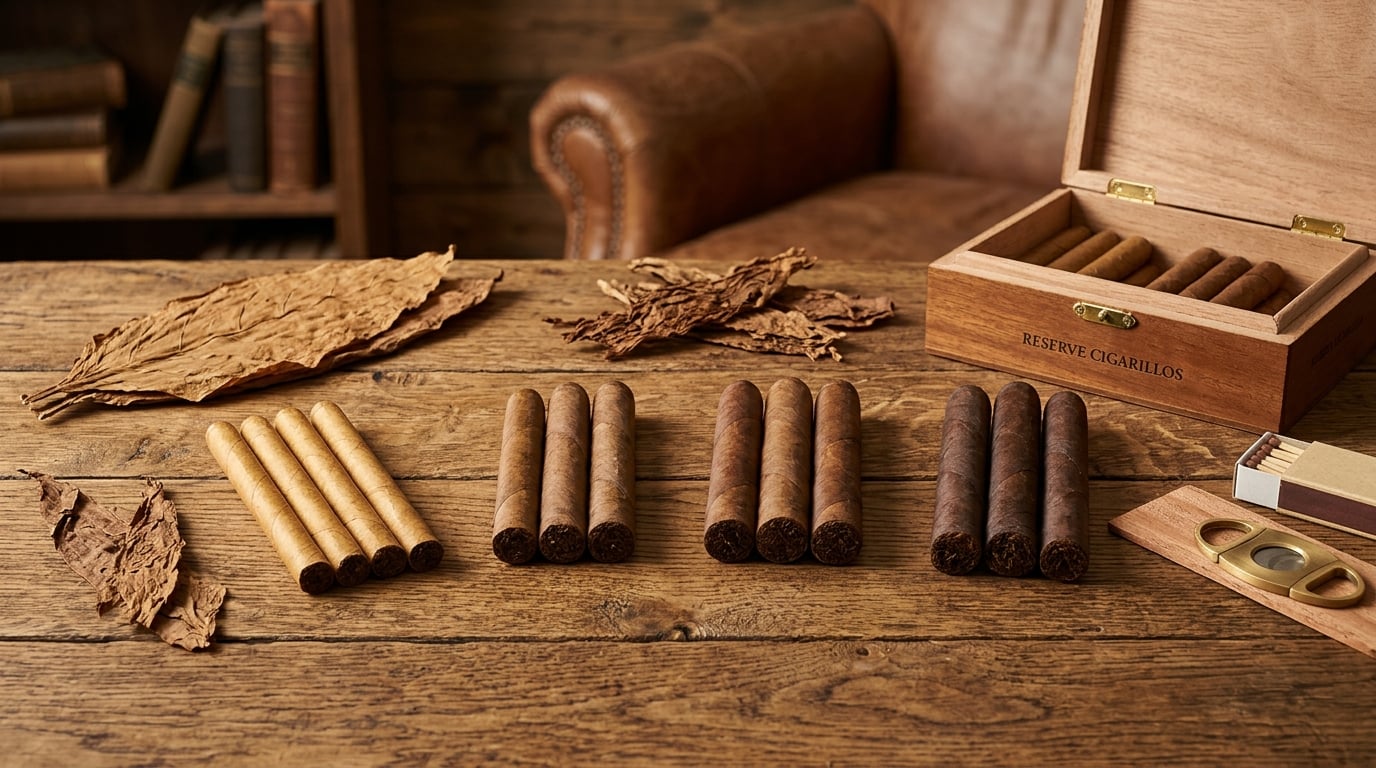
Cigarillos are smaller tobacco products that share several characteristics with traditional cigars. They differ in size, construction, tobacco composition, and packaging. Understanding these differences helps readers recognize common product categories and terminology.
When researching branded cigarillo products, readers may encounter names such as Gold swisher sweets in online listings and product descriptions. Such names illustrate how manufacturers identify particular varieties within broader cigarillo categories. However, a brand name alone does not explain a product’s construction, ingredients, or tobacco content. Therefore, understanding cigarillos requires examining their physical characteristics and product information.
Cigarillos are available in different formats and may include various wrapper materials. Some have natural-leaf wrappers, while others use reconstituted tobacco materials. Additionally, certain products have tips or filters. This guide explains these differences, common classifications, and important health considerations.
1. What Are Cigarillos?
Cigarillos are relatively small cigars made with tobacco. They generally have a slimmer shape than traditional large cigars. Their construction may include tobacco filler and a tobacco-based wrapper.
Unlike cigarettes, cigarillos use tobacco leaf or tobacco-containing material as their wrapper. This distinction is important when identifying different tobacco products.
Cigarillos are commonly machine-made, although manufacturing methods can vary. Some products have plastic or wooden tips. Others have open ends without an attached tip.
There is no single universal definition covering every cigarillo. Their dimensions and tobacco content can differ between manufacturers and markets. According to the National Cancer Institute, cigarillos are generally larger than little cigars but smaller than large cigars. <Cite refs={[“turn392678search1″,”turn392678search3”]}/>
2. Machine-Made Cigarillos
Machine-made cigarillos are produced using automated manufacturing equipment. Machines help shape, fill, and wrap tobacco products consistently.
These products often have relatively uniform dimensions. Their wrappers may use reconstituted tobacco material or other tobacco-containing substances.
Machine production allows manufacturers to produce large quantities. However, construction and ingredients can differ between brands.
Some machine-made cigarillos have tips. Others have open ends without filters. The packaging usually identifies the product’s format and quantity.
Machine-made construction does not establish a product’s quality or safety. It simply describes how the product is manufactured.
3. Natural-Leaf Cigarillos
Natural-leaf cigarillos use tobacco leaf as their outer wrapper. Their appearance can vary because natural leaves have different colors, textures, and surface patterns.
Some wrappers appear lighter brown, while others have darker shades. Leaf characteristics depend on tobacco variety, cultivation, curing, and processing.
Natural-leaf terminology describes the wrapper material. It does not mean that the product is chemical-free or harmless.
The filler and wrapper may also contain different tobacco components. Therefore, the outer appearance cannot reveal the complete product composition.
When examining product information, readers should distinguish natural-leaf descriptions from ingredient declarations. The two provide different types of information.
4. Filtered and Tipped Cigarillos
Cigarillos are available with different end constructions. Some have attached tips, while others have no additional end component.
A tip may be made from plastic or wood. It forms part of the product’s physical construction.
Filtered cigar products have a separate component designed to filter some material from smoke. However, a filter does not make tobacco smoke safe.
It is also important to distinguish cigarillos from little filtered cigars. These categories can look similar but differ in dimensions and product construction.
The National Cancer Institute explains that little cigars often resemble cigarettes in size and shape. They may also include filters. Cigarillos are generally larger. <Cite refs={[“turn392678search1”]}/>
Therefore, product names should not be the only basis for classification. Dimensions, construction, and manufacturer information provide more useful details.
5. Understanding Cigarillo Sizes
Cigarillos are generally smaller than traditional large cigars. However, their exact dimensions are not universal.
Length and diameter can vary between product ranges. Some are relatively slim, while others have a wider shape.
Tobacco content can also differ. The CDC describes typical cigarillos as containing approximately three grams of tobacco. However, individual products may fall outside this general figure. <Cite refs={[“turn392678search0”]}/>
Size descriptions should therefore be treated as general classifications. They are not substitutes for product-specific measurements.
A small appearance also does not indicate lower nicotine exposure or reduced health risks. Tobacco content and smoke exposure depend on several factors.
6. Common Cigarillo Wrapper Materials
The wrapper is the outer layer surrounding the tobacco filler. It contributes to the product’s structure and appearance.
Different cigarillos may use different wrapper materials. Common descriptions include natural tobacco leaf and reconstituted tobacco wrappers.
Natural Tobacco Leaf
Natural tobacco leaf wrappers come from processed tobacco leaves. Their appearance can include visible veins and variations in color.
Leaf texture and flexibility depend on several production factors. These include cultivation, curing, fermentation, and storage.
Reconstituted Tobacco Wrappers
Reconstituted tobacco wrappers are manufactured using processed tobacco material. Their appearance may be more consistent than natural leaves.
The composition and manufacturing process can vary. Therefore, the product label remains important when identifying specific materials.
Tobacco-Based Wrapping Materials
Some products use other materials containing tobacco. These may differ in structure and manufacturing methods.
A product’s outer appearance cannot always identify its exact wrapper composition. Manufacturer documentation offers more reliable details.
7. Tobacco Fillers and Their Characteristics
The filler is the tobacco material inside a cigarillo. Its composition can vary between products.
Manufacturers may use different tobacco varieties or processed tobacco materials. The proportions and preparation methods influence the final composition.
Some products contain blends rather than a single tobacco variety. These blends can differ in leaf selection, processing, and moisture content.
Filler descriptions may also use terms such as cut tobacco or blended tobacco. These terms describe material or preparation rather than a complete health assessment.
The wrapper and filler should be considered separately when reviewing product specifications. Each component has a different role in construction.
8. Flavored Cigarillos and Product Descriptions
Some cigarillos are sold with flavor-related descriptions. These may refer to fruit, candy, spice, or other flavor categories.
Examples of common marketing terms include cherry, vanilla, grape, and sweet. However, the exact formulation varies between manufacturers.
Flavor descriptions do not necessarily mean that products contain the actual fruit or ingredient. Manufacturers may use flavoring substances to create particular profiles.
It is also important to understand the public health context. The FDA identifies flavored cigar products as a concern because flavors can appeal to adolescents and young adults. <Cite refs={[“turn392678search12″,”turn392678search2”]}/>
A flavor name does not indicate nicotine strength. It also does not establish that a product has fewer health risks.
9. Packaging and Product Formats
Cigarillos are sold in different packaging formats. Some products come individually, while others are available in small packs.
Packaging may use foil, paperboard, plastic, or combinations of materials. The design helps contain the product and display required information.
Product packaging can identify several important details:
- Brand and product name
- Number of cigarillos included
- Net tobacco weight, where provided
- Manufacturer information
- Ingredient details, where required
- Health warnings
- Applicable tax or regulatory markings
Packaging information varies by country. Local regulations determine which declarations and warnings must appear.
Readers should not assume that similar packaging means identical contents. Product specifications should always be checked individually.
10. Differences Between Cigarillos, Little Cigars, and Large Cigars
These three categories can look similar at first. However, they differ in typical dimensions and construction.
| Product type | General characteristics |
|---|---|
| Cigarillos | Smaller cigars, generally slimmer than large cigars |
| Little cigars | Often similar in size and shape to cigarettes |
| Large cigars | Larger tobacco products with more substantial dimensions |
Cigarillos are generally larger than little cigars. Little cigars often have cigarette-like dimensions and may include filters.
Large cigars contain more tobacco and can vary considerably in size. Some traditional cigars are hand-rolled, while others are machine-made.
These are broad classifications rather than universal measurements. Product dimensions and definitions can vary across markets.
The CDC provides an overview of these categories and explains their general differences. <Cite refs={[“turn392678search0”]}/>
11. How Manufacturing Influences Cigarillo Characteristics
Manufacturing methods influence several physical characteristics. These include shape, wrapper consistency, filler composition, and packaging.
Machine-made products generally use automated processes. These processes help maintain consistent dimensions across production batches.
Natural-leaf products may show more visible variation. Natural tobacco leaves differ in color, thickness, and texture.
Processing also affects tobacco composition. Curing and fermentation change the chemical characteristics of tobacco leaves.
Storage conditions can influence moisture and product condition. Excessive moisture or unsuitable storage may affect packaging and tobacco quality.
However, manufacturing differences do not establish that one format is safe. All combustible tobacco products carry serious health risks.
12. How to Read Cigarillo Product Labels
Product labels provide essential information about tobacco products. They help readers identify the manufacturer, product format, and relevant warnings.
Start by checking the exact product name. Then review the stated quantity and package information.
Look for ingredient details where available. Also, examine the wrapper and filler descriptions if the manufacturer provides them.
Health warnings are particularly important. They communicate risks associated with tobacco use.
Be cautious of unsupported claims. Words such as natural, smooth, or mild do not establish that a tobacco product is safe.
For unfamiliar products, compare retailer descriptions with manufacturer documentation. If details conflict, avoid relying on unclear information.
13. Health Risks Associated With Cigarillos
Cigarillos are tobacco products containing nicotine. Nicotine is addictive and can lead to dependence.
Burning tobacco produces smoke containing harmful chemicals. These substances can affect both users and people exposed to secondhand smoke.
Cigar smoking is associated with cancers of the mouth, throat, esophagus, and lungs. It can also contribute to gum disease and other serious health problems.
Using a cigarillo without inhaling does not eliminate exposure. Nicotine and harmful substances can still enter the body.
The CDC explains that cigar smoke contains toxic and cancer-causing chemicals. It also warns that secondhand cigar smoke can harm other people. <Cite refs={[“turn392678search0″,”turn392678search1”]}/>
Flavored wrappers and smaller dimensions do not remove these risks. A cigarillo should not be considered a safe alternative to cigarettes.
Young people face particular concerns because nicotine can affect brain development. Pregnant individuals should also avoid nicotine exposure.
People who do not currently use tobacco should not start. Anyone seeking to quit can consult a qualified healthcare professional about evidence-based support.
Conclusion
Cigarillos come in several formats, materials, and manufacturing styles. Their characteristics depend on size, wrapper composition, filler, tips, and production methods.
Machine-made and natural-leaf cigarillos differ in construction. Filtered and tipped formats also have distinct physical features. Meanwhile, flavored product descriptions introduce additional terminology.
Understanding these categories makes product information easier to interpret. However, names and packaging cannot replace accurate ingredient details or regulatory information.
Most importantly, smaller dimensions and flavor descriptions do not make cigarillos safe. All cigar products carry significant health risks. Readers should understand these risks and avoid starting tobacco use.