






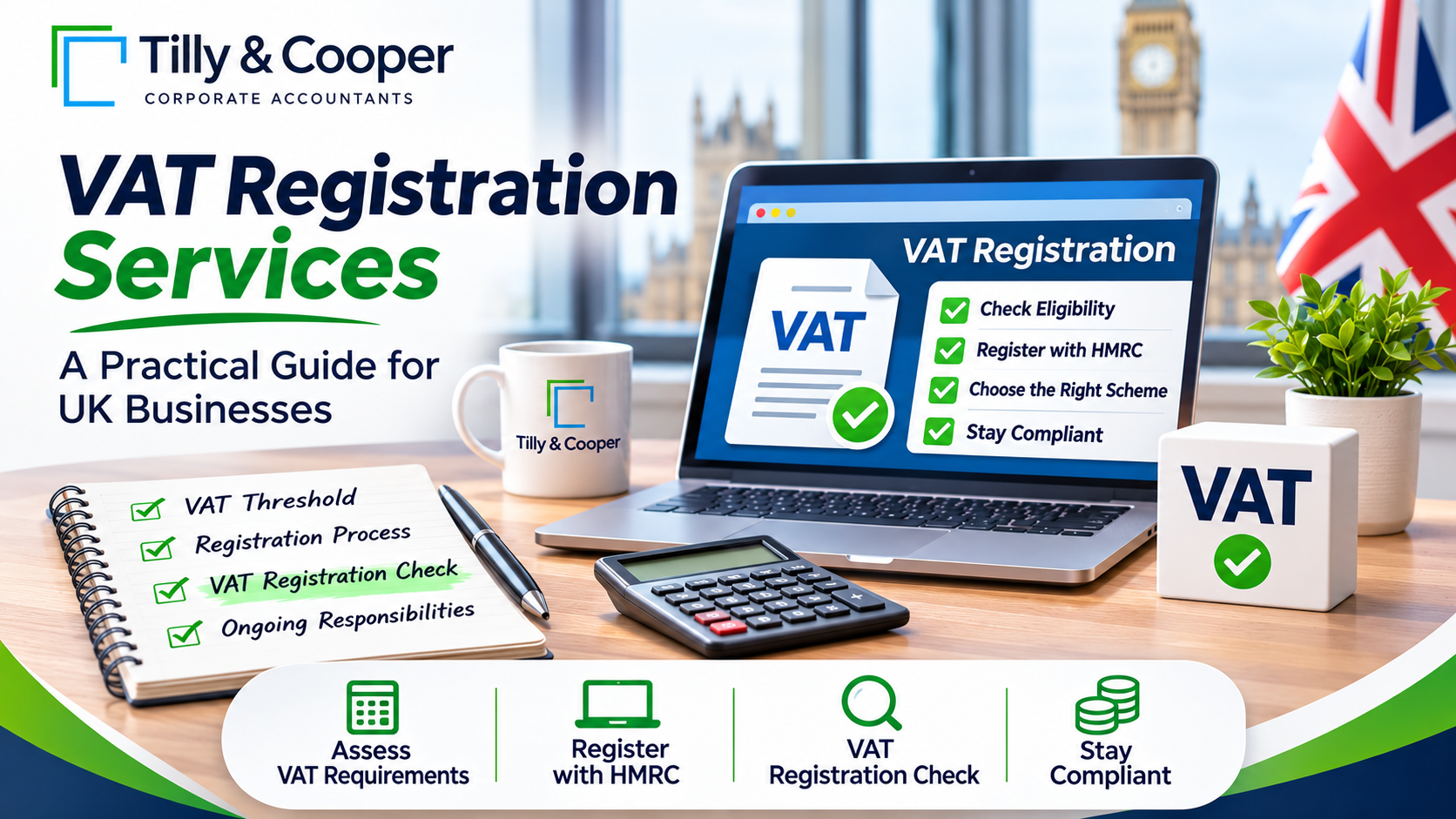
Growing a business brings new opportunities, but it also creates additional financial responsibilities. One of the most important is understanding when Value Added Tax (VAT) registration becomes necessary. For many entrepreneurs, the uncertainty begins with a simple question: Does my business need to register for VAT yet?
The answer depends on taxable turnover, the nature of your business activities, and whether registration is compulsory or voluntary. Professional VAT registration services can help business owners navigate these requirements, prepare accurate applications, and understand their responsibilities after registration.
However, registration is only one part of the process. Businesses must also understand how to complete a VAT registration check, manage tax records, and apply the correct VAT treatment to their transactions.
VAT Registration Is About Turnover, Not Profit
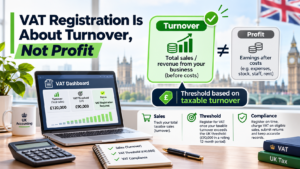
One of the biggest misconceptions among small business owners is that VAT registration becomes necessary only when a company makes a certain amount of profit. In reality, the UK VAT registration threshold is based on taxable turnover. As of November 2026, UK-established businesses generally must register when their taxable turnover exceeds £90,000 over any rolling 12-month period. Registration is also required if a business expects its taxable turnover to exceed £90,000 in the next 30 days alone.
The distinction between turnover and profit matters. Imagine an online retailer generating £95,000 in taxable sales while spending £75,000 on stock, shipping, and operating expenses. Its accounting profit may be only £20,000 before further adjustments, but its taxable turnover has exceeded the registration threshold.
The business would therefore need to consider its mandatory VAT registration obligations. Taxable turnover includes standard-rated, reduced-rated, and zero-rated supplies. Exempt and out-of-scope supplies are generally excluded, although some special rules apply. For a broader explanation of VAT obligations, Tilly & Cooper’s article on VAT implications in the UK explores thresholds, tax treatment, and compliance responsibilities.
When Should a Business Apply for VAT Registration?
VAT registration is not something businesses should leave until their annual accounts are prepared. HMRC uses specific notification rules. If taxable turnover exceeds £90,000 over the previous 12 months, registration must normally be completed within 30 days of the end of the month in which the threshold was exceeded.
If a business expects taxable turnover to exceed £90,000 in the next 30 days alone, it must notify HMRC by the end of that 30-day period. The effective registration date is normally the date the business first had that expectation. For example, suppose a consultancy signs a contract on 5 November 2026 that will result in taxable supplies exceeding £90,000 within the following 30 days.
It should assess the forward-looking registration rule immediately rather than waiting for the contract to be completed or paid. Failing to register on time can create a VAT liability dating back to when the business should have been registered, potentially accompanied by penalties.
Can You Register for VAT Below the Threshold?
Yes. Voluntary registration is available to eligible businesses whose taxable turnover remains below £90,000. This can be beneficial in some circumstances, but it is not automatically the best decision. For example, a business selling primarily to VAT-registered companies may find registration commercially manageable because those customers can often reclaim eligible input VAT. A business selling directly to consumers faces a different situation.
If its customers cannot reclaim VAT, adding VAT to prices could make its products more expensive. Alternatively, the business might absorb some of the cost and reduce its margins. Voluntary registration may allow recovery of VAT on qualifying business purchases, subject to the applicable rules. However, it also introduces VAT invoicing, record-keeping, and return-filing responsibilities. Before registering voluntarily, business owners should evaluate their customers, pricing, expenses, and expected growth.
What Do VAT Registration Services Actually Include?
An online HMRC application may appear relatively straightforward, but selecting the correct details can require careful consideration. Professional VAT registration services can assist with:
- Assessing whether registration is mandatory or voluntary
- Reviewing taxable turnover calculations
- Identifying the appropriate effective registration date
- Preparing the information required by HMRC
- Submitting the VAT registration application
- Assessing suitable VAT accounting schemes
- Explaining invoicing and record-keeping obligations
- Supporting the transition to digital VAT reporting
For a growing limited company, the value of professional assistance often lies in understanding the tax implications before submitting the application.
For example, an accountant can help identify whether the standard VAT accounting method or an alternative eligible scheme is more appropriate for the company’s circumstances. The goal is to establish a suitable VAT arrangement from the outset rather than correct avoidable problems later.
How to Register for VAT Online
Most businesses can register directly through the official GOV.UK VAT registration service. The information required depends on the business structure. A limited company will generally need its Company Registration Number, Unique Taxpayer Reference, bank account details, historical turnover information, and an estimate of taxable turnover for the next 12 months.
The process normally involves signing in to HMRC’s online service, completing the required sections, reviewing the information, and submitting the application. After HMRC processes the application, the business receives confirmation of its VAT registration details.
Not every application follows the same route. Certain cases require paper forms or additional information. Businesses should also remember that a VAT registration application is different from registering a company with Companies House.
Why a VAT Registration Check Matters
Once a business receives its VAT registration number, that number becomes an important part of its tax administration. A VAT registration check allows businesses to verify whether a UK VAT number is valid. HMRC provides an official service that can confirm the validity of a UK VAT number and show the registered business name and address.
This is particularly useful when dealing with a new supplier. Suppose a construction company receives an invoice from an unfamiliar subcontractor that includes VAT. Before processing the invoice, the accounts team can use HMRC’s verification service to check whether the VAT number is valid and corresponds to the business.
This provides an additional control against inaccurate invoices and potential VAT-related problems. The official tool is available through GOV.UK’s Check a UK VAT Number service. One important limitation is that the service requires the VAT number itself. It cannot find a business’s VAT number simply by searching for its company name.
What Happens While You’re Waiting for a VAT Number?
Receiving confirmation from HMRC may take time, but the effective registration date determines when the business becomes liable to account for VAT. This creates an important invoicing issue. HMRC states that businesses cannot show VAT as a separate charge on VAT invoices until they receive their VAT registration number.
However, businesses may increase prices to account for the VAT they will owe from the effective registration date. Once the VAT number arrives, relevant invoices can be corrected or reissued in accordance with HMRC guidance. Businesses should avoid inventing VAT numbers, adding unsupported VAT amounts to invoices, or assuming that waiting for confirmation removes their VAT obligations. Careful invoice management during this period can prevent unnecessary corrections and customer disputes.
VAT Registration Changes How You Manage Financial Records
After registration, VAT becomes part of everyday financial administration. Businesses must distinguish between sales subject to different VAT rates, maintain appropriate invoices, and record VAT on eligible purchases.
For the 2026–27 period, the principal UK VAT rates remain:
| VAT rate | Rate | Typical application |
|---|---|---|
| Standard | 20% | Many goods and professional services |
| Reduced | 5% | Certain qualifying goods and services |
| Zero | 0% | Some essential goods, including qualifying children’s clothing |
The correct rate depends on the specific supply and relevant legislation.
Most VAT-registered businesses must also comply with Making Tax Digital (MTD) for VAT, which requires digital records and compatible software for electronic VAT submissions. Choosing suitable accounting software is therefore an important practical decision.
Tilly & Cooper’s guide to accounting software benefits and features explains how digital accounting systems can support transaction recording, invoicing, and financial reporting.
Common Errors That Create VAT Problems
Problems often arise not because business owners deliberately ignore VAT rules, but because they misunderstand how the system operates. A frequent mistake is checking turnover only at the end of the financial year. The £90,000 test generally uses a rolling 12-month period, meaning a business could exceed the threshold during any month.
Another issue is confusing zero-rated sales with exempt sales. Zero-rated supplies normally count towards taxable turnover, while exempt supplies generally do not. Some businesses also assume every purchase allows VAT recovery. In practice, input VAT recovery depends on the nature of the expense, valid supporting evidence, and applicable restrictions.
Incorrect supplier VAT numbers can create additional uncertainty, particularly when claiming input VAT. Finally, selecting a VAT accounting scheme without understanding its effect on cash flow can introduce complications. These risks make regular bookkeeping and timely professional advice valuable.
Choosing the Right VAT Support for Your Business
Not every business requires an accountant to complete VAT registration. A straightforward company with a clear taxable turnover position may be comfortable handling the application independently. However, professional support may be particularly useful when the business has mixed taxable and exempt supplies, international transactions, complicated ownership arrangements, or uncertainty about its registration date.
Before appointing a provider, ask what the service includes. Does the fee cover only the initial application, or does it also include guidance on VAT schemes, digital record keeping, and subsequent returns? It’s also worth confirming how the provider communicates with HMRC and how your records will be transferred if you change accountants.
UK business owners exploring professional assistance can review Tilly & Cooper’s VAT registration and VAT returns services. A suitable provider should explain the process clearly and help the business understand its ongoing obligations, not simply submit an application.
Frequently Asked Questions
1. How much does VAT registration cost in the UK?
HMRC does not normally charge a fee to register a business for VAT. Professional VAT registration services may charge separately for preparing and managing the application.
2. What is the UK VAT registration threshold in 2026?
The compulsory registration threshold is £90,000 in taxable turnover over a rolling 12-month period. A separate forward-looking rule applies when turnover is expected to exceed £90,000 in the next 30 days alone.
3. How do I complete a VAT registration check?
You can verify a UK VAT number using HMRC’s official online VAT number checking service. Enter the VAT number to check its validity and view the registered business details.
4. Can I register for VAT if my business is making a loss?
Yes. VAT registration generally depends on taxable turnover and the applicable registration rules, rather than whether the business is profitable.
5. Is VAT registration compulsory for every limited company?
No. Incorporating a limited company does not automatically create a VAT registration requirement. The company’s taxable activities, turnover, and circumstances determine whether registration is necessary.
6. Can an accountant register my business for VAT?
Yes. An accountant or authorized agent can assist with the VAT registration process and, where appropriately authorised, deal with HMRC on the business’s behalf.
7. What happens if I register for VAT late?
HMRC may require payment of VAT from the date registration should have taken effect. Depending on the circumstances, penalties and interest may also apply.
Final Thoughts
VAT registration is an important stage in a business’s financial development, but it should be approached as more than a routine formality. Understanding taxable turnover, choosing the correct registration date, maintaining reliable financial records, and verifying VAT numbers can help businesses manage their responsibilities more effectively.
Professional VAT registration services can provide useful support where the rules are unclear or a company’s tax affairs are becoming more complex. Equally, completing an appropriate VAT registration check can strengthen supplier verification and invoicing controls. For UK businesses, the objective is not simply to become VAT registered. It is to establish a reliable system that supports accurate reporting, informed decisions, and long-term tax compliance.