





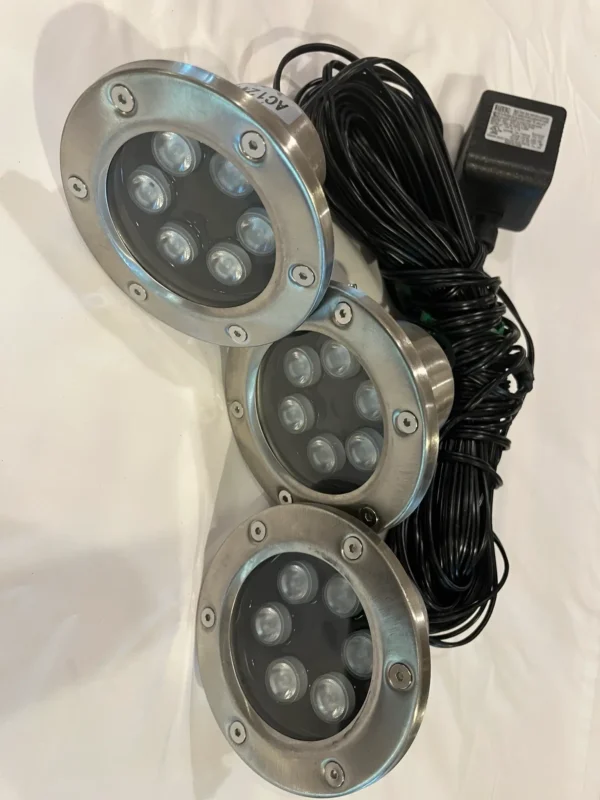
A pond fountain can add movement and visual interest to an outdoor space, but its appearance can change dramatically after sunset. Proper illumination makes water spray easier to see while adding definition to the surrounding pond. Water fountain lights are designed specifically for this purpose, using focused illumination to highlight moving water, fountain patterns, and selected areas of a pond.
Choosing the right lighting involves more than selecting a color. Fountain size, spray height, water depth, electrical requirements, and operating conditions can all influence the best option.
What Are Water Fountain Lights?
Water fountain lights are outdoor lighting fixtures designed to illuminate fountains, water sprays, and pond features. Many modern systems use LED technology because LEDs provide efficient illumination while producing relatively little heat and requiring limited maintenance.
For fountain applications, lights are commonly positioned around the fountain assembly so they can illuminate water as it rises and falls. The positioning and beam spread affect how evenly the spray is illuminated.
How Do Water Fountain Lights Enhance a Pond?
The right lighting can change how a fountain looks after dark without altering the fountain itself. When fixtures are properly positioned, light can emphasize individual spray patterns and make moving water more noticeable from surrounding areas.
For example, a taller fountain may require broader coverage or greater light output to illuminate its full spray. A smaller fountain may work better with focused fixtures that provide sufficient brightness without creating excessive glare.
What Should You Consider When Choosing Fountain Lighting?
Several practical factors should be evaluated before selecting water fountain lights.
Fountain Size and Spray Height
The size of the fountain affects how much area needs to be illuminated. Larger fountains with taller sprays may require wider beam coverage, while smaller water features can often use more concentrated lighting.
Pond Depth and Water Clarity
Water depth, clarity, and even the pond liner can influence how light appears. Clearer water may allow illumination to travel more effectively, while darker or less transparent surfaces can affect the overall visual result.
Light Color
White lighting is often selected when visibility and spray definition are priorities. Multicolor options offer greater flexibility for decorative displays and can change the atmosphere of a pond depending on the occasion.
Electrical Compatibility
Before installation, check the lighting system’s voltage requirements, transformer capacity, outlet location, and available power. Low-voltage systems can be useful for outdoor water features, but electrical components still need to be appropriately installed and protected.
Weather and Water Exposure
Outdoor fountain lighting must withstand moisture, changing temperatures, sunlight, and other environmental conditions. Fixtures should be designed for the intended installation environment and have appropriate weather-resistant or submersible ratings.
Why Are LED Lights Popular for Fountains?
LED technology has become common in outdoor fountain lighting because it combines efficient operation with long service life. LED fixtures can provide consistent illumination while consuming relatively little power compared with many traditional lighting technologies.
Friendly Fountains offers pond lighting using low-voltage 12-volt LED fixtures. Its listed fountain lighting options use three LED fixtures with a combined 6-watt power draw, while the systems are designed to mount to compatible floating fountain bases.
Choosing Water Fountain Lights for Your Outdoor Space
The best water fountain lights should complement the fountain rather than overpower it. Consider the fountain’s dimensions, spray height, pond conditions, desired color, power requirements, and installation environment before making a decision.
Conclusion
Choosing the right fixtures requires attention to fountain size, spray height, pond conditions, electrical compatibility, and desired lighting effects. For property owners considering a floating water fountain, matching the lighting system to the fountain’s structure and operating requirements can help create a more balanced and effective nighttime display. Ultimately, good fountain lighting balances appearance with practical considerations such as energy consumption, durability, compatibility, and maintenance.