






A PTO policy (Paid Time Off policy) outlines how employees take leave from work and the paid time off benefits they are entitled to. Usually, leave policies incorporate how employees request leave, how much time off employees receive, and what happens to employees’ leave when they leave/retire from the organization. Knowing the meaning of a PTO policy enables employees to understand their leave benefits while helping employers efficiently manage leave benefits.
PTO policies benefit employees and employers by enabling employees to take time off from work for different reasons, including vacation, illness, and other personal reasons. Clear leave policies give employees peace of mind and ensure they take time off when they need it.
What Is a PTO Policy?
A PTO policy comprises the different types of paid leave a company offers or the rules regarding how different leaves are managed. An effective PTO policy helps employers and employees manage company leave entitlements.
What Does a PTO Policy Include?
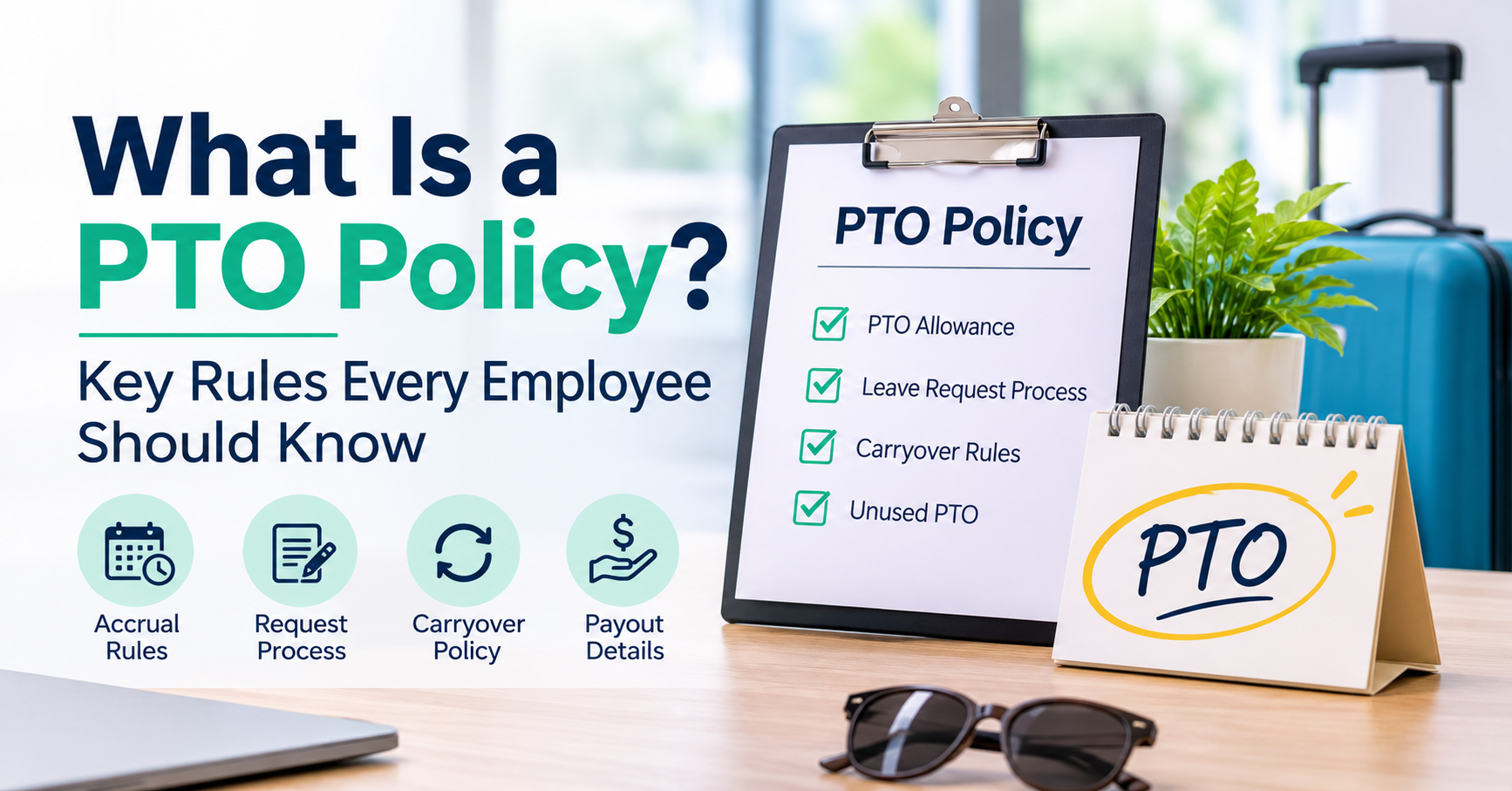
A PTO policy addresses several main points, which include:
- PTO allowance
- How leave is accrued
- How to apply for leave
- Carryover rules
- PTO payout
Some policies have rules differing from others; however, most PTO policies include the following provisions.
Key PTO Policy Rules Every Employee Should Know
Employees should know the following rules regarding their company’s leave policy.
Employees are entitled to a certain number of paid leave days in a given year.
Employees can earn leave days over time.
Leave days cannot be rolled over to the next year.
Employees do not receive payment for their unused leave upon termination of their employment.
1. PTO Accrual and Eligibility
PTO accrual is the process by which companies allocate their employees’ PTO for a given year. Some companies choose to front-load their employees’ PTO for the year, giving the full allotment on the first of the year. Other companies give their employees their PTO a little at a time throughout the year. Some of these companies may also base PTO eligibility on employee tenure, length of service, or employment status.
For example, an employee allowed 15 days of PTO for the year may be eligible for 1.25 days of PTO for each month.
2. Requesting and Approving PTO
Generally, employees need to contact the HR or personnel department to process their request for leave. Some organizations also require employees to plan vacations and other leaves in advance.
Managers are responsible for approving or denying leave requests based on the workload and the number of employees available to work.
3. PTO Carryover
Some organizations allow their employees to carry a limited number of their unused paid time off to the next year. Other organizations allow their employees to forfeit their leave at the end of the year.
Employees should familiarize themselves with these policies to ensure they don’t forfeit their right to their leave.
4. Unused PTO and Payout Rules
A PTO policy outlines what happens to unused leave when an employee leaves a company.
If your employees leave with unused PTO, your company may need to pay them out. Laws vary from place to place.
Why Is a Clear PTO Policy Important?
PTO policies benefit both employees and employers.
Employees gain clarity over their leave allowances, procedures for making requests, and the calendar of paid days. A clear PTO policy assists employees in preparing for vacation and other personal commitments without the stress of confusion.
Employers, on the other hand, benefit from reduced scheduling conflicts and improved planning.
Final Thoughts
A PTO policy helps employers outline procedures for managing employee leave and time off. Employees have to be educated about the rules surrounding PTO accrual and leave. Leaves have to be approved, and there are rules surrounding payout and carryover. Policies should be clear and concise and comply with applicable labor laws.
If you want to read more guides about HR, management, or business, visit Managetrix.com