



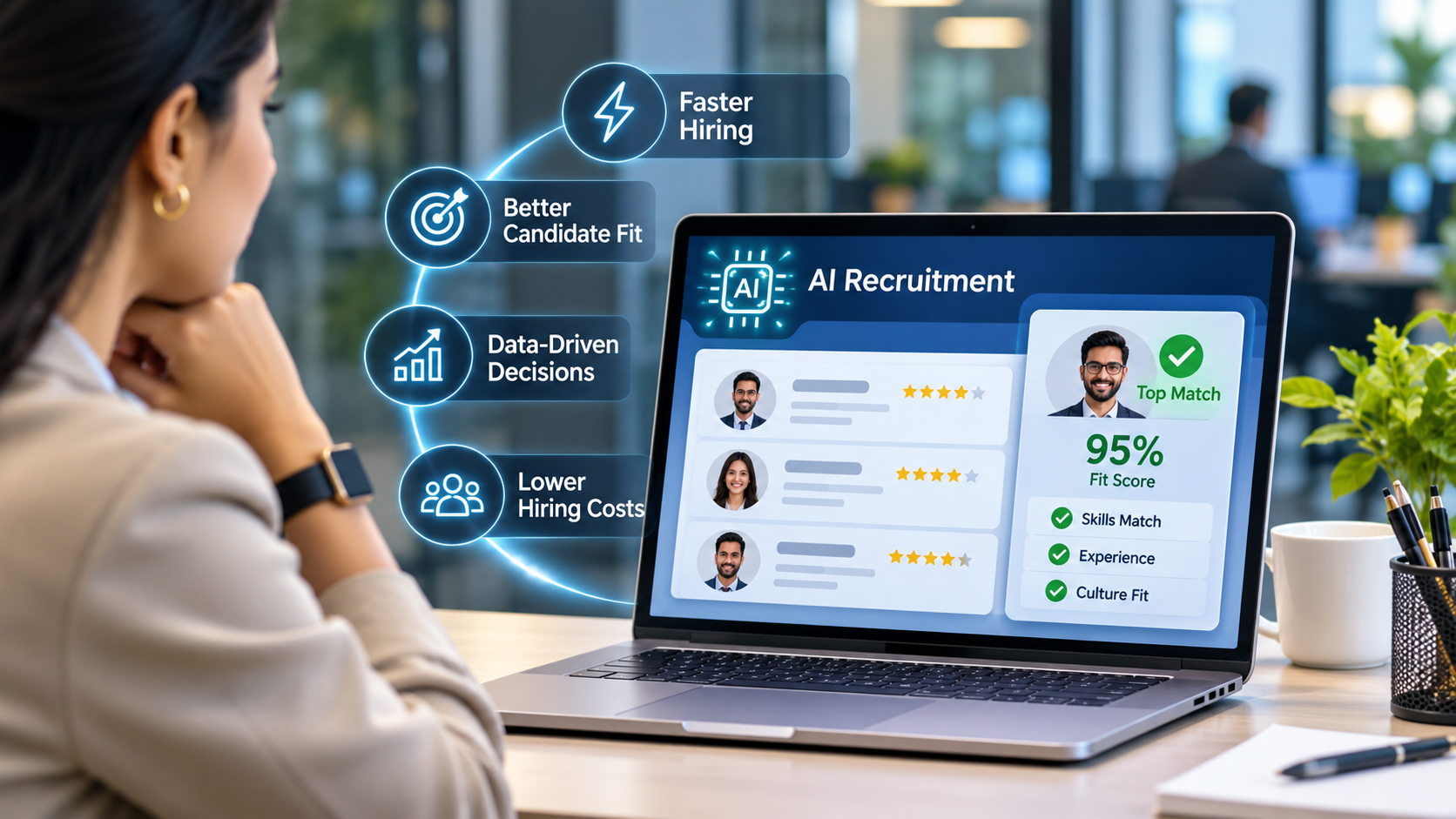
Recruitment is an essential part of business growth, but finding the right candidates can be challenging and time-consuming. Traditional hiring methods often involve manually reviewing hundreds of resumes, scheduling interviews, screening applications, and coordinating with hiring teams. These processes can slow down recruitment and increase operational costs. To overcome these challenges, many organisations are adopting AI-powered recruitment platforms to make hiring faster, smarter, and more efficient.
An AI recruitment platform uses artificial intelligence, automation, and data-driven tools to support different stages of the hiring process. From candidate screening to interview management, these platforms help recruiters make informed decisions while improving the overall hiring experience.
1. Faster Candidate Screening
One of the biggest reasons businesses are switching to AI-powered recruitment platforms is faster candidate screening. Traditional resume screening requires recruiters to review applications individually, which can take considerable time.
AI-powered systems can analyse resumes, identify relevant skills, evaluate experience, and compare candidate profiles against job requirements. This helps recruitment teams shortlist suitable applicants more efficiently.
By reducing repetitive screening tasks, recruiters can dedicate more time to interacting with qualified candidates and evaluating their suitability for specific roles.
2. Improved Hiring Efficiency
Managing multiple job openings simultaneously can become difficult for growing organisations. Recruitment teams must handle applications, interview schedules, candidate communication, and hiring updates.
AI recruitment platforms help automate several administrative activities. They can organise candidate information, support interview scheduling, track application progress, and streamline recruitment workflows.
This automation allows HR professionals to manage multiple recruitment activities with greater efficiency while reducing manual workload.
3. Better Candidate Matching
Finding candidates with the right qualifications is important for successful recruitment. A candidate may have an impressive resume but might not possess the specific skills required for a particular position.
AI-powered recruitment solutions can analyse job descriptions and candidate profiles to identify relevant qualifications, experience, and skills. Some platforms also support skills-based assessments to provide additional information about candidate capabilities.
Better candidate matching can help businesses focus on applicants who meet their actual hiring requirements rather than relying only on traditional resume-based screening.
4. Reduced Recruitment Costs
Hiring involves several expenses, including advertising job vacancies, recruiter salaries, administrative work, and interview coordination.
An AI-powered recruitment platform can help reduce some of these costs by automating repetitive activities and improving recruitment efficiency. Faster screening and organised workflows may also reduce the time required to fill open positions.
For businesses with frequent hiring requirements, these improvements can contribute to better resource management and more efficient recruitment operations.
5. Enhanced Candidate Experience
Candidate experience plays an important role in building a positive employer reputation. Delayed responses, complicated application processes, and poor communication can discourage talented professionals.
AI recruitment platforms can support timely communication through automated notifications, application updates, and interview scheduling. Candidates can receive clearer information about their recruitment progress, making the process more organised.
A smoother application experience can help businesses maintain better relationships with potential employees.
6. Data-Driven Recruitment Decisions
Recruitment decisions should be based on relevant information rather than assumptions. AI-powered platforms can provide useful recruitment insights through reports and analytics.
Businesses can monitor important metrics such as:
- Time-to-hire
- Candidate application rates
- Screening performance
- Interview conversion rates
- Recruitment pipeline progress
These insights help HR teams identify hiring bottlenecks, evaluate recruitment strategies, and improve future hiring decisions.
However, AI recommendations should always be reviewed by qualified recruiters to ensure that candidates are evaluated fairly and appropriately.
7. Support for Growing Businesses
As businesses expand, their recruitment requirements often become more complex. Hiring for multiple departments, locations, and job roles requires organised processes and effective coordination.
AI-powered recruitment platforms offer scalable solutions that can support growing hiring needs. Businesses can manage larger candidate databases, standardise recruitment workflows, and improve collaboration between hiring managers and HR teams.
This makes AI recruitment technology valuable for startups, growing companies, and established organisations.
Conclusion
Businesses are switching to AI-powered recruitment platforms because they offer faster candidate screening, improved hiring efficiency, better candidate matching, and data-driven recruitment insights. While artificial intelligence can automate repetitive tasks, human involvement remains essential for evaluating talent, understanding candidate potential, and making final hiring decisions.
For organisations looking to modernise their recruitment processes, Harjai AI provides AI-based recruitment solutions designed to support smarter candidate screening and more efficient hiring workflows. Adopting the right AI recruitment technology can help businesses build stronger teams and prepare for the future of talent acquisition.