




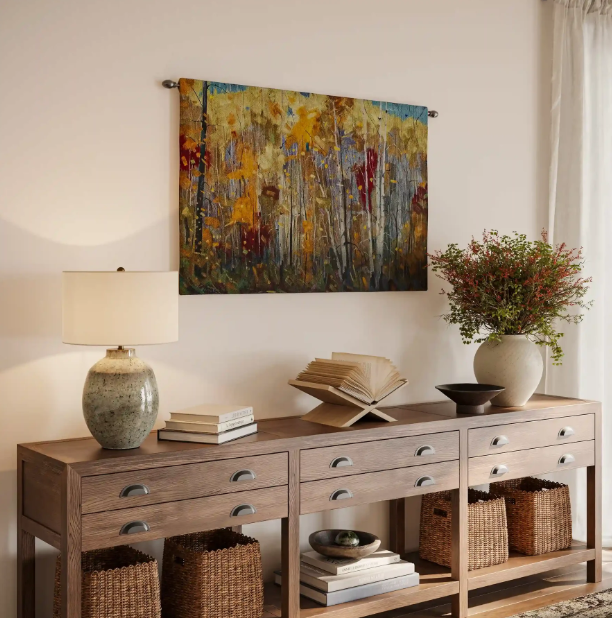
Wall décor can influence the atmosphere of a room by introducing colour, texture, pattern, and visual depth. While framed artwork and prints remain common choices, woven pieces offer a different way to decorate large areas of a wall. Tapestries combine artistic imagery with textile construction, creating surfaces that can feel warmer and more dimensional than conventional flat artwork. Exploring woven wall art can therefore be useful for anyone looking to add character to a living room, bedroom, office, or other interior without relying solely on traditional framed pieces.
What Makes Woven Wall Art Different?
Woven wall art is created by incorporating an image or pattern into fabric through weaving rather than simply printing it onto a surface. This construction gives the finished piece a tactile quality that can contribute texture as well as visual interest.
The combination of textile texture and detailed imagery can make a tapestry function as both decorative artwork and a substantial furnishing element.
Choose a Style That Complements the Room
Woven wall art is available in a broad range of artistic styles, making it possible to select a design that works with an existing interior. The current collection includes landscapes, floral imagery, historical designs, abstract compositions, maps, animals, and reproductions of recognised artwork.
A detailed tapestry can become the main visual feature of an otherwise understated room, while a simpler pattern may work as a supporting decorative element. Looking at the existing furniture, wall colour, flooring, and lighting can help determine how prominent the tapestry should be.
Consider Size Before Selecting a Design
Scale is an important part of wall décor. A tapestry that is too small can appear disconnected from the surrounding furniture, while an oversized piece can dominate a compact room.
The collection includes a variety of dimensions and orientations, including horizontal, square, and vertical designs. Some individual pieces are also offered in multiple sizes.
Before selecting a tapestry, measure the wall area and consider the furniture positioned beneath or around it. Leaving enough surrounding space can help the artwork remain visually distinct.
Texture Can Add Depth to Interior Design
One advantage of textile artwork is its ability to introduce physical texture into a room. Woven surfaces can soften an arrangement dominated by hard materials such as wood, glass, metal, and painted walls.
This quality can be particularly useful in bedrooms and living areas where a warmer, more layered appearance is often desirable. A tapestry can also provide visual continuity by repeating colours already present in cushions, rugs, curtains, or furniture.
Pay Attention to Material and Construction
Material composition can affect the appearance, weight, texture, and durability of a tapestry. For example, one current woven design is listed as 70% cotton and 30% polyester, while another is made from 100% cotton.
Some USA-made designs are woven in North Carolina and hand-finished by skilled artisans. These construction details can be relevant when comparing different pieces and considering how the artwork will fit into a particular room.
Think About How the Tapestry Will Be Hung
The hanging method should be considered before purchasing a tapestry. Rods and tassels are sold separately on the referenced product pages.
The hanging hardware can also influence the finished appearance. Decorative rods and tassels may complement traditional designs, while a simpler hanging approach can work better with contemporary artwork.
Custom Designs Offer Greater Flexibility
Standard collections are not the only option for textile wall decoration. Custom woven tapestries can be created from personal photographs, artwork, landscapes, portraits, or other suitable images.
This approach can be useful when a particular image, dimension, or design concept is needed for a residential, commercial, or hospitality space.
Consider the Room’s Overall Balance
A tapestry should work with the rest of the interior rather than competing with every other decorative feature. If the artwork contains several strong colours or an elaborate pattern, surrounding furnishings can be kept comparatively restrained. More neutral interiors may provide an opportunity for a highly detailed tapestry to become the main focal point.
The most effective placement also depends on viewing distance. Large pieces can work well above sofas, beds, dining areas, or substantial empty walls where their details can be appreciated without appearing crowded.
Conclusion
Woven artwork provides a distinctive way to introduce colour, texture, and artistic detail into an interior. Material, size, subject, construction, and hanging method all contribute to how a tapestry works within a room. From traditional European designs to contemporary woven compositions and custom Jacquard pieces, Quality Tapestries offers a broad selection of textile artwork that can suit different decorative approaches. Considering the room’s scale and existing furnishings can help ensure the chosen tapestry becomes a cohesive part of the overall space.