








A box may seem simple, but the wrong one can cause problems you won’t spot until an order reaches your customer. Maybe it’s too big, the corners get crushed in delivery, or the product slides around because there’s too much space. That’s where custom cardboard packaging helps. Instead of forcing every product into a standard box, you pick one that suits its size, weight and handling needs. Whether you ship clothing, electronics, food, or industrial components, the right design makes packing easier and protects your goods throughout transit. So what should you think about before choosing a custom box? Let’s go through it.
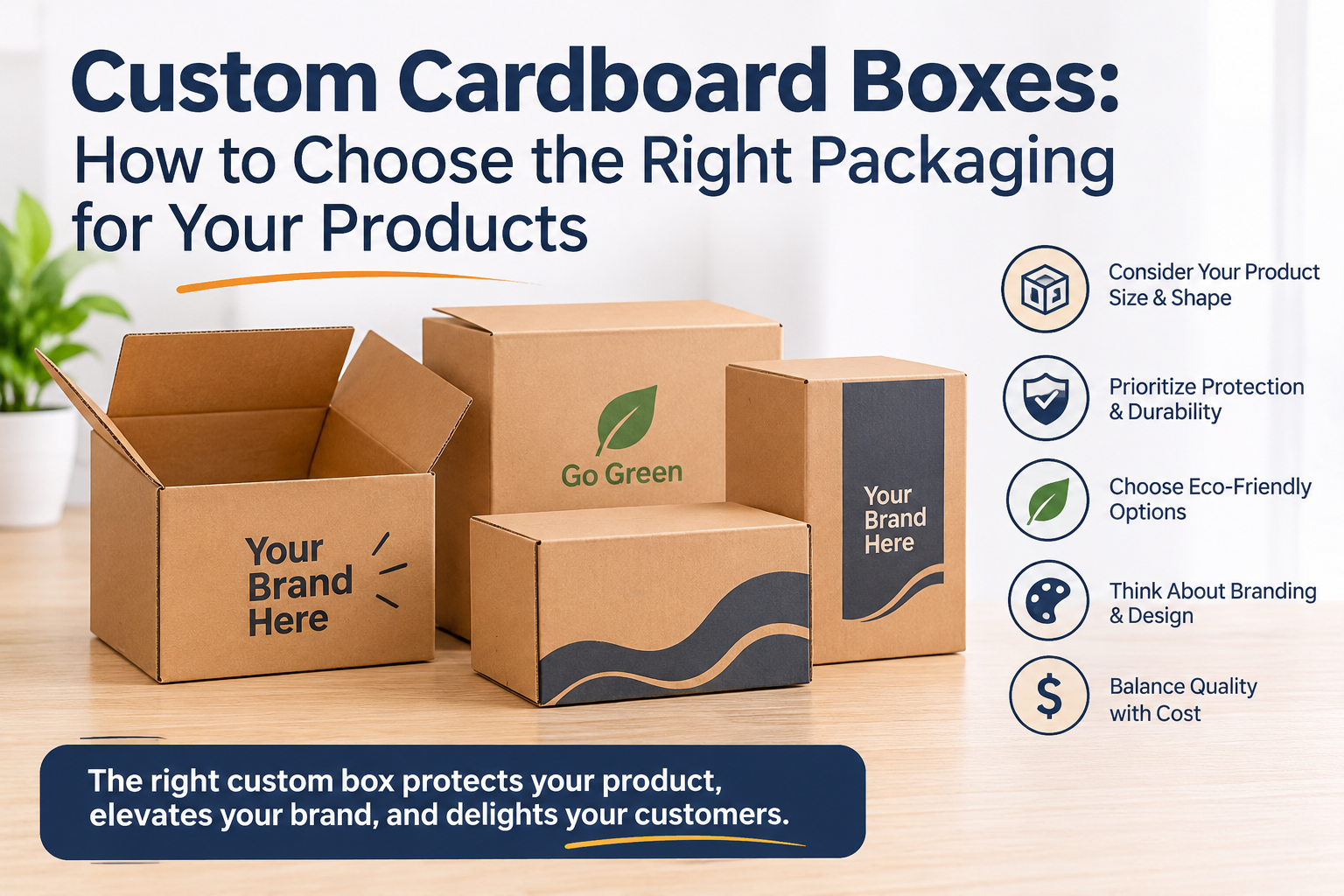
What Should You Consider When Choosing Custom Boxes?
- Measure your products before you settle on box dimensions
- Pick a cardboard strength that suits the product’s weight
- Choose single-wall or double-wall construction based on how it’ll be handled
- Think about inserts, dividers and cushioning for fragile products
- Consider storage, shipping costs and how your customers will open the box
Why Should You Choose Custom Cardboard Packaging Instead Of Standard Boxes?
Standard boxes are fine for everyday shipping, but they don’t always fit properly. A product that’s too small for its box can rattle about, while an oversized one needs extra void fill and makes the parcel bigger than it needs to be.
With Custom packaging in the West Midlands, businesses can choose packaging that matches their products, storage space and delivery process more closely.
A few practical advantages:
- Better product fit: less space and less movement inside the box
- Improved protection: the right board thickness and internal fittings help prevent transit damage
- Efficient storage: consistent dimensions make stacking and warehouse organisation easier
- Professional presentation: neat, well-fitted packaging makes opening an order a better experience
For example, an online electronics retailer shipping headphones could use a compact box with a cardboard insert, rather than filling a big standard carton with loose cushioning.
Which Types of Custom Cardboard Boxes Should You Consider?
The best box depends on what you’re packing, how heavy it is and how it’ll get to the customer. Here are the common options.
1. Custom Single-Wall Cardboard Boxes
Single-wall boxes have one layer of fluting between two flat liners. They’re a practical choice for everyday shipping when the contents don’t need heavy-duty protection.
- Suitable for clothing, stationery, accessories and lightweight household products
- Available in different dimensions to fit individual product sizes
- Easy to store, assemble and handle during regular packing
Example: a small Birmingham-based stationery business could use custom-sized single-wall cartons for notebooks, diaries and desk accessories.
2. Double-Wall Cardboard Boxes
Some products need more support than a standard carton gives. Double-wall boxes have two layers of fluting, which makes them a good choice for heavier goods and shipments likely to see rougher handling.
- Suitable for heavier equipment, tools and bulkier household items
- Resist compression better than comparable single-wall cartons
- Work well for products that need extra support when stacked or transported
Example: an automotive parts supplier sending metal components to customers across the West Midlands may benefit from properly sized double-wall cartons.
3. Die-Cut Cardboard Boxes
If your product has an unusual shape or needs a particular presentation, die-cut boxes are worth a look. They’re cut into specific shapes and designs rather than the usual rectangular carton.
- Useful for retail products, gift sets and subscription boxes
- Can include locking tabs, folding sections and customised openings
- Give a closer fit for products with distinctive dimensions
Example: a cosmetics business could use a die-cut box with separate compartments to keep skincare bottles and accessories organised.
4. Corrugated Cardboard Boxes with Inserts and Dividers
Sometimes the outer box isn’t the problem. It’s how the products sit inside it. Inserts and dividers keep multiple items apart and cut the risk of them knocking together.
- Cardboard dividers separate glass bottles, jars and other individual products
- Custom inserts hold electronics and accessories in place
- Layered fittings organise several products within one carton
These are especially useful for businesses shipping ceramics, glassware and product bundles.
5. Custom Postal and Mailing Boxes
Not every product needs a large shipping carton. Postal boxes are made for smaller orders and work well for businesses with regular e-commerce deliveries.
- Self-locking designs make assembly and closing easier
- Compact dimensions cut down on wasted packaging space
- Suitable for books, clothing accessories, stationery and small retail products
If you’re sourcing Cardboard Boxes in the West Midlands, postal-style packaging can simplify packing for smaller orders.
What Should You Check Before Ordering Custom Boxes?
Before you settle on a design, look past appearance. A box has to work in your warehouse just as well as it does on the road.
| What To Check | Why It Matters |
| Product dimensions | Makes sure the contents fit without excessive space |
| Board strength | Helps the box cope with product weight and stacking |
| Box construction | Decides how much support the packaging can give |
| Internal cushioning | Stops movement and contact between products |
| Storage requirements | Makes cartons easier to stack and organise |
Think about the courier you’ll use too. Check parcel size and weight limits before you finalise dimensions, especially if you’re sending orders in large quantities.
How Can You Add Extra Protection to Custom Boxes?
Even a strong carton can need extra help, depending on what’s inside. Pairing suitable Protective Packaging with the right box construction can cut down damage during handling and transport.
Here are some options:
- Bubble wrap: cushions fragile items like glassware, ceramics and electronic accessories
- Kraft paper: fills small gaps and stops products shifting
- Foam inserts: give delicate or high-value components a snug fit
- Corrugated rolls: add a protective wrapping layer around products with sensitive surfaces
For instance, a business shipping ceramic tableware could wrap each piece individually, separate the items with cardboard dividers and pack everything into a double-wall carton.
Where Can You Find the Right Cardboard Boxes for Your Business?
When you compare Cardboard Boxes from different suppliers, don’t choose on price or looks alone. Check the available sizes, board construction, customisation options and how well they suit your products.
Businesses in Birmingham, Dudley, Wolverhampton, and the wider West Midlands should also consider delivery arrangements and whether the supplier can handle regular stock requirements. Ordering the right specifications in sensible quantities can improve both packing efficiency and storage costs.
Conclusion
Choosing custom cardboard boxes isn’t just about finding a carton that fits your product. You need to consider weight, shape, fragility, storage, and the journey to the customer. Single-wall cartons, double-wall boxes, die-cut designs, and postal boxes all serve different purposes. Add suitable internal protection where you need it, and you’ll have packaging that works for your products, not against them. A bit of planning before you order can help reduce damage, avoid wasted space and make everyday dispatch much easier.
FAQs
-
What are custom cardboard boxes used for?
They’re used to package, store, and transport products whose dimensions and protection needs standard boxes can’t always meet.
-
Are double-wall boxes better than single-wall boxes?
Double-wall boxes give extra structural support and generally suit heavier products or tougher shipping conditions.
-
Can cardboard boxes be made in custom sizes?
Yes. Custom boxes can be made to fit specific product dimensions, reducing space and unnecessary cushioning.
-
Which cardboard boxes are best for fragile products?
Sturdy corrugated boxes combined with bubble wrap, foam inserts or cardboard dividers suit many fragile products.
-
What should businesses consider before ordering custom packaging?
Check product dimensions, weight, board strength, internal protection, storage requirements and courier restrictions before you place an order.