




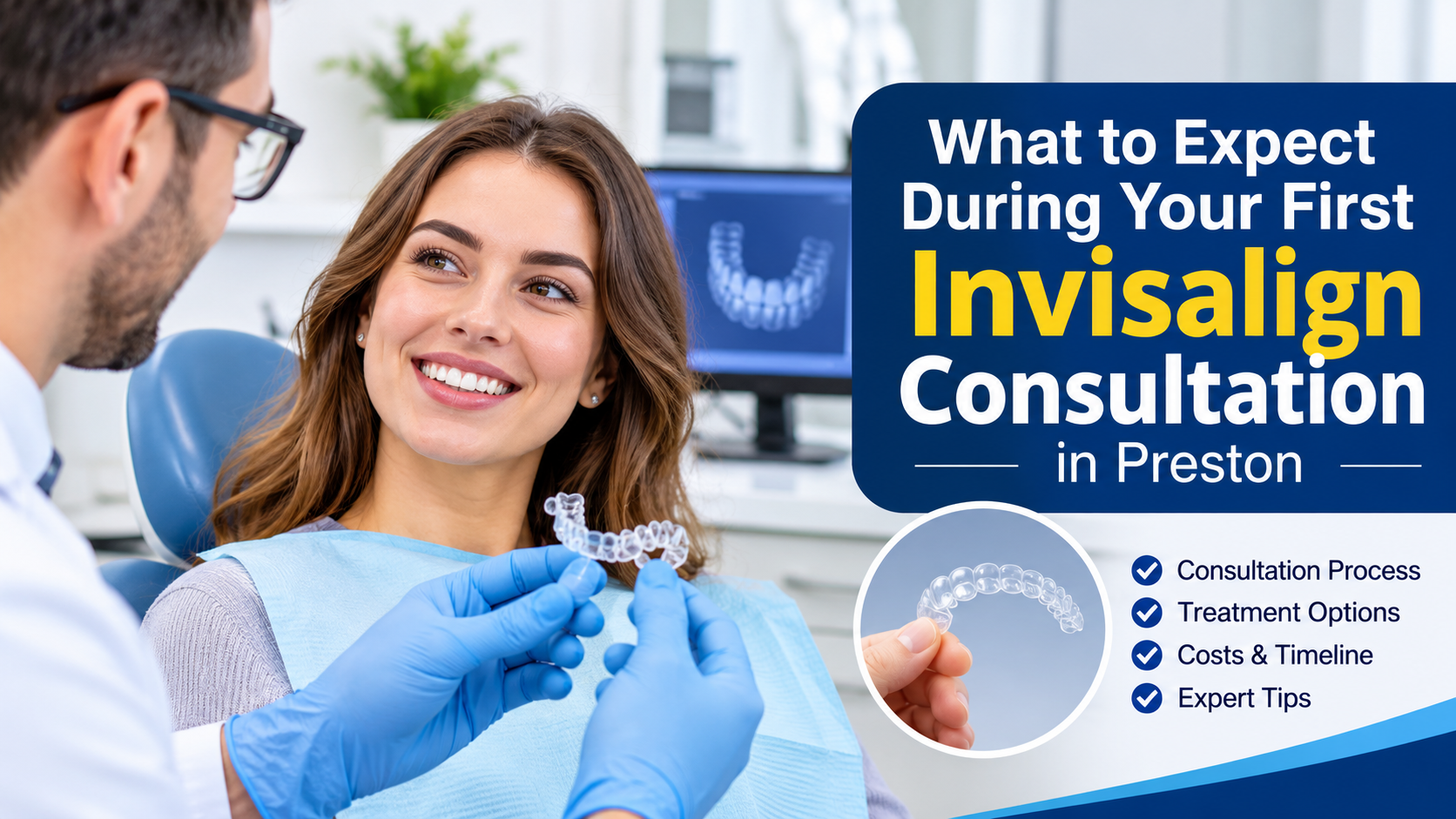
Understanding the consultation process of Invisalign Preston can make the experience less intimidating. Your dentist will typically assess your teeth, discuss your smile goals, explain available treatment options, and outline the practical considerations involved in wearing clear aligners. Preparing a few questions beforehand can help you get more value from the appointment.
Whether you have minor crowding, gaps between your teeth, or concerns about your bite, knowing what happens during the initial assessment allows you to approach treatment with realistic expectations.
What Happens During an Invisalign Consultation?
An Invisalign consultation is an initial dental assessment designed to determine whether clear aligners are an appropriate option for your teeth. It is more than a brief conversation about appearance. Your dentist needs to understand your oral health, tooth alignment, bite position, and treatment expectations before recommending a suitable approach.
The appointment usually begins with a discussion about what you would like to change. For example, you might be unhappy with overlapping front teeth, noticeable gaps, or teeth that have shifted after previous orthodontic treatment.
Your dentist will then examine your mouth to identify any issues that could affect treatment. This may include checking your gums, existing dental restorations, tooth condition, and how your upper and lower teeth meet when you bite.
Not every patient is automatically suitable for Invisalign. Some orthodontic problems are more complex and may require alternative treatment or additional dental procedures before aligners can be considered.
The main purpose of the consultation is to establish a clear starting point and explain your options.
Step-by-Step Guide to Your First Invisalign Consultation
Although individual dental practices may follow slightly different procedures, most initial appointments cover several important stages.
1. Discuss Your Smile Goals and Dental Concerns
Your consultation will generally start with a conversation about your expectations.
Your dentist may ask questions such as:
-
What aspects of your smile would you like to improve?
-
Have you previously worn braces or clear aligners?
-
Are you experiencing difficulty cleaning crowded teeth?
-
Do you have concerns about gaps, overbites, or underbites?
-
Are you looking for a discreet alternative to traditional braces?
Be specific when describing what bothers you. If your front teeth overlap, explain whether the issue affects your appearance, confidence, or ability to clean between them.
It is also helpful to mention any previous orthodontic treatment. Teeth can gradually move after braces, particularly if retainers are not worn as recommended. This information helps your dentist understand your dental history.
2. Receive a Comprehensive Dental Examination
The next stage usually involves examining your teeth and gums.
Your dentist will assess tooth alignment, spacing, bite relationships, and general oral health. They may also check for cavities, gum inflammation, damaged teeth, or other conditions that need attention.
This step matters because moving teeth safely requires a healthy foundation. For instance, if you have untreated gum disease, beginning orthodontic treatment without addressing it could create additional complications.
Depending on your circumstances, your dentist may recommend treating existing dental problems before proceeding with aligners.
3. Digital Scans and Dental Records
Many Invisalign treatment plans use digital scanning technology to create a detailed three-dimensional representation of your teeth.
Instead of relying exclusively on traditional impression materials, an intraoral scanner can capture the shape and position of individual teeth. The resulting digital model helps your dentist evaluate alignment and plan potential tooth movements.
Additional photographs or dental X-rays may also be required.
Each record serves a different purpose:
-
Digital scans: Show the current position and shape of your teeth.
-
Photographs: Document your smile and facial appearance.
-
X-rays: Help assess tooth roots, bone structure, and underlying dental conditions.
Not every patient needs identical records. Your dentist will determine which assessments are appropriate for your case.
4. Review Your Potential Treatment Plan
Once the necessary information has been collected, your dentist can explain how Invisalign might address your concerns.
If you are a suitable candidate, you may be shown a digital treatment simulation illustrating how your teeth could move throughout treatment.
This can help you understand the proposed changes and visualize a possible outcome.
However, remember that digital simulations are planning tools, not guaranteed predictions. Actual results depend on several factors, including biological response, treatment complexity, and how consistently you wear your aligners.
Ask your dentist to explain any limitations or uncertainties before making a decision.
5. Discuss Treatment Duration and Costs
Practical details are another important part of the consultation.
Your dentist should explain the estimated treatment duration, appointment schedule, expected costs, and what is included in the proposed treatment package.
Treatment length varies considerably. A relatively minor alignment issue may require less time than a complicated case involving significant crowding or bite correction.
You should also ask whether the quoted price includes replacement aligners, refinements, retainers, and follow-up appointments.
Understanding the complete financial commitment helps prevent unexpected expenses later.
Important Questions to Ask Your Dentist
A consultation is a two-way conversation. You are not simply there to receive instructions; you should also evaluate whether the proposed treatment suits your lifestyle and expectations.
Consider asking these questions:
-
Am I a suitable candidate for Invisalign?
-
What dental problems will the treatment address?
-
How long might my treatment take?
-
How many hours daily must I wear the aligners?
-
Will I need attachments or other orthodontic accessories?
-
What happens if an aligner becomes damaged or lost?
-
How frequently will I need checkup appointments?
-
What retention options will I need after treatment?
Understanding Daily Wear Requirements
One particularly important topic is compliance. Invisalign aligners generally need to be worn for approximately 20–22 hours daily, depending on your dentist’s instructions.
You remove them when eating, drinking anything other than water, and cleaning your teeth.
For someone who regularly attends business meetings or social events, this flexibility can be appealing. However, it requires discipline. Frequently leaving aligners out can delay progress and interfere with the planned tooth movements.
Discuss your daily routine honestly so your dentist can help you determine whether this approach is practical.
Common Mistakes to Avoid Before Starting Invisalign
Patients sometimes focus so heavily on achieving straighter teeth that they overlook important treatment considerations.
Ignoring existing dental problems: Starting orthodontic treatment without addressing cavities or gum disease can compromise oral health. Make sure your dentist evaluates these concerns first.
Expecting immediate results: Tooth movement takes time. Even when early improvements are noticeable, completing treatment requires patience and consistent wear.
Underestimating daily responsibilities: Aligners need regular cleaning, proper storage, and consistent use. Forgetting to wear them after meals can disrupt your routine.
Choosing treatment based only on price: The cheapest option is not necessarily the most appropriate. Consider the dentist’s experience, treatment planning process, monitoring arrangements, and aftercare.
Overlooking retainers: Teeth can move again after orthodontic treatment. Retainers help maintain the results, so ask about long-term retention before beginning.
Practical Tips for Getting the Most From Your Consultation
A little preparation can make your first appointment considerably more productive.
First, write down your main concerns. Patients sometimes forget important questions once the appointment begins, particularly when they receive a lot of new information.
Second, bring details of previous orthodontic treatment and any relevant dental history. If you currently wear a retainer, mention how frequently you use it.
Third, be realistic about your lifestyle. If your work involves frequent travel, irregular meal breaks, or long periods away from home, discuss how these factors could affect aligner wear.
Finally, avoid feeling pressured to make an immediate decision. Take time to review the proposed treatment plan, understand the financial commitment, and consider whether the expected benefits justify the investment.
A good consultation should leave you feeling informed, not rushed.
Conclusion
Your first Invisalign consultation in Preston is an opportunity to understand your dental condition, explore suitable treatment options, and establish realistic expectations before beginning orthodontic treatment. From the initial examination and digital scans to treatment estimates and aftercare discussions, each stage helps determine whether clear aligners are appropriate for your needs.
The best approach is to arrive prepared, communicate your concerns openly, and ask questions about anything you do not understand. With a clear treatment plan and a realistic understanding of daily responsibilities, you can make a confident decision about improving your smile.