






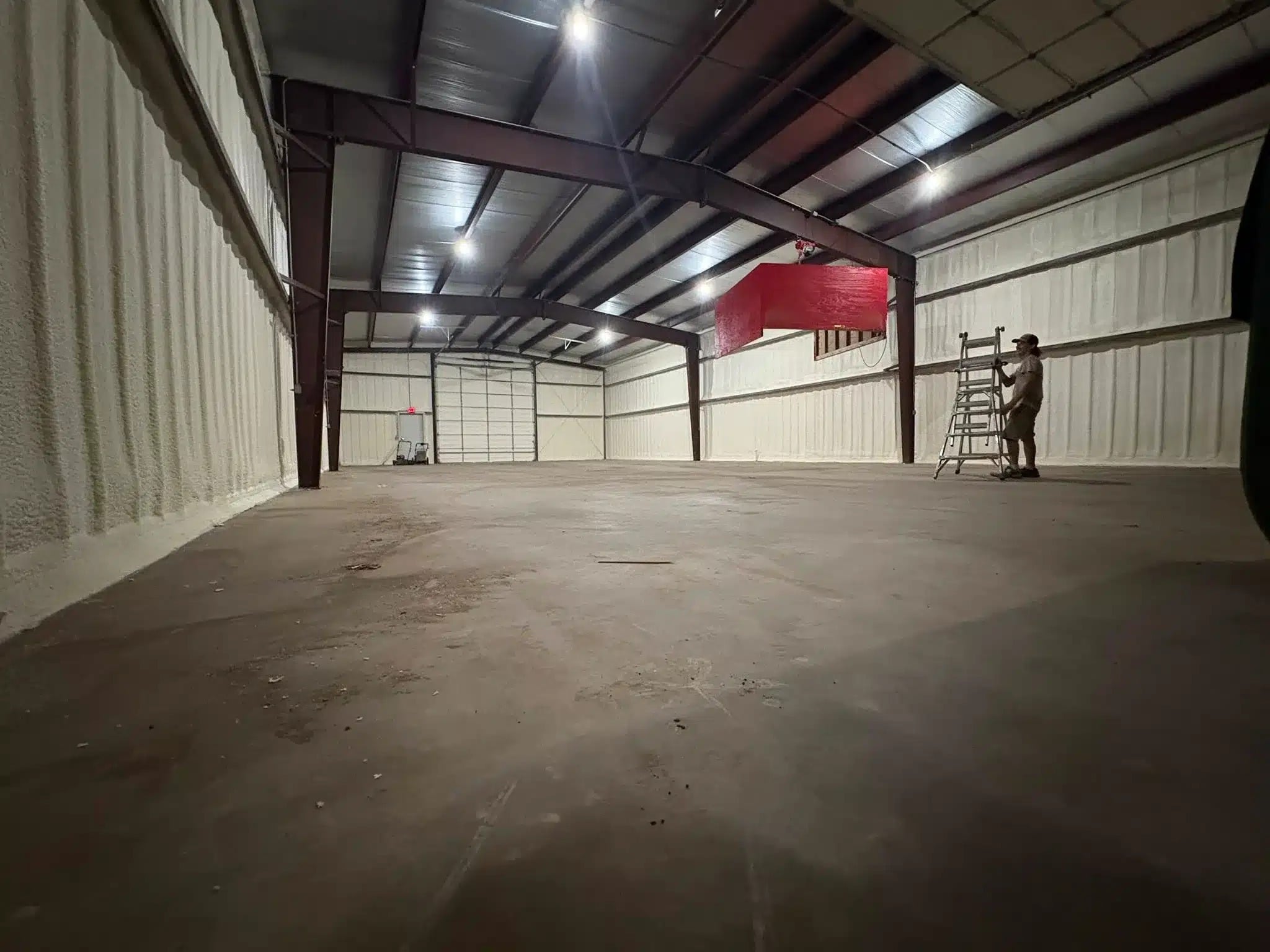
Our approach to spray foam services starts with understanding the building, its insulation needs, and the problems the owner wants to solve. At Proseal Spray Foam, we consider the structure, existing materials, air leakage, moisture conditions, and project goals before recommending an insulation system for a home or commercial property in Waupaca, WI.
This guide explains how we assess projects, compare open-cell and closed-cell spray foam with other building insulation solutions, and plan the spray foam installation process. We also cover R-value, Wisconsin weather, practical limitations, and the questions property owners should ask before work begins.
Why Our Approach Matters
Every building has different insulation needs. A homeowner may want to reduce cold drafts, while a business owner may need more consistent indoor temperatures in a workshop, office, or storage building.
We look at the cause of the problem before recommending a solution. Adding insulation without addressing air leaks, water intrusion, or damaged materials may leave important issues unresolved.
Our assessment considers:
- Building use: Homes, offices, workshops, and commercial spaces have different heating, cooling, and operating needs.
- Existing conditions: We consider the current insulation, accessible framing, visible moisture concerns, and areas where outside air may enter.
- Project priorities: Budget, available space, planned renovations, and desired thermal performance help guide material selection.
- Installation requirements: The chosen product must suit the surface, application conditions, and building assembly.

Benefits of a Planned Spray Foam Installation
A well-planned installation can help improve comfort and control unwanted air movement. The actual results depend on the material, installation quality, and condition of the building.
Our approach focuses on practical benefits rather than assuming spray foam is the right answer for every project.
- Reduced drafts: Spray foam can seal suitable gaps around framing and other building components, helping limit unwanted air movement.
- More consistent temperatures: Insulation reduces heat transfer, which can help rooms maintain more stable temperatures during cold and warm weather.
- Support for energy efficiency: Improving insulation and air sealing can reduce heating and cooling demand, although actual savings vary by building and energy use.
- Options for different properties: We offer residential and commercial spray foam services, along with other insulation materials for projects that need a different approach.
How We Choose the Right Insulation
The right material depends on where it will be installed and what the building needs. We consider spray foam alongside options such as blown-in insulation, fiberglass, and dense-pack cellulose rather than recommending one product for every situation.
Open-Cell vs. Closed-Cell Spray Foam
Open-cell and closed-cell foam differ in density, moisture behavior, and insulating performance per inch. The correct choice depends on the building assembly and installation requirements.
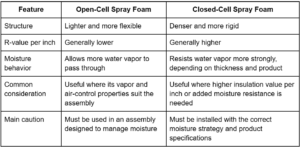
Neither type automatically solves every moisture problem. We consider how water vapor moves through the full wall or roof assembly before recommending a product.
Our Spray Foam Installation Process
A clear process helps property owners understand what will happen before, during, and after installation. We plan the work around the building’s condition, product requirements, and safe access to the installation area.
1. Assess the Property
We begin by discussing the areas that need attention and reviewing accessible surfaces, existing insulation, and visible concerns. Signs of water intrusion or damaged materials need attention before they are covered.
2. Recommend a Suitable System
We recommend open-cell foam, closed-cell foam, or another insulation material based on the building’s needs and intended use.
3. Prepare the Work Area
Preparation may include protecting nearby surfaces, checking substrate conditions, and making sure the installation area meets the product’s temperature and moisture requirements. Any necessary repairs should be addressed before the foam is applied.
4. Apply the Material Correctly
Spray foam needs the right equipment settings, material proportions, application thickness, and surface conditions. We plan the application according to the product instructions and the requirements of the project.
5. Follow Safety and Completion Requirements
During installation, occupants and unprotected workers must stay out of the restricted area. Ventilation, cleanup, curing, and re-entry must follow the product manufacturer’s guidance. The U.S. Environmental Protection Agency explains these precautions in its guidance on spray foam ventilation and safe re-entry.
Pros and Cons of Spray Foam Services
Spray foam can be a useful solution, but property owners should understand both its advantages and limitations before approving the work.
Pros
- It can insulate and air-seal suitable gaps in a single application.
- It can fit around irregular framing and difficult-to-reach areas.
- Closed-cell foam provides a higher R-value per inch than open-cell foam in typical applications.
- It can suit a range of residential and commercial building designs when the assembly is appropriate.
Cons
- Professional installation can cost more upfront than some traditional insulation options.
- Incorrect application or poor curing can affect performance and create health concerns.
- Covering wet materials or failing to manage moisture can contribute to building problems.
- Future electrical, plumbing, or renovation work may be more difficult when foam covers concealed components.
These limitations are why we consider preparation, application conditions, and future access when planning a project.
Common Problems We Consider Before Installation
Identifying insulation problems helps us recommend the right solution instead of treating symptoms alone.
- Cold rooms and drafts: Air leaks around framing and openings may cause discomfort. Air sealing and insulation can help reduce unwanted air movement.
- Uneven temperatures: Large spaces and frequent door openings can affect comfort in commercial buildings.
- Damp insulation or musty smells: Leaks and excess humidity should be addressed before installing new insulation.
- Older buildings: Existing materials and hidden cavities need assessment before applying foam.
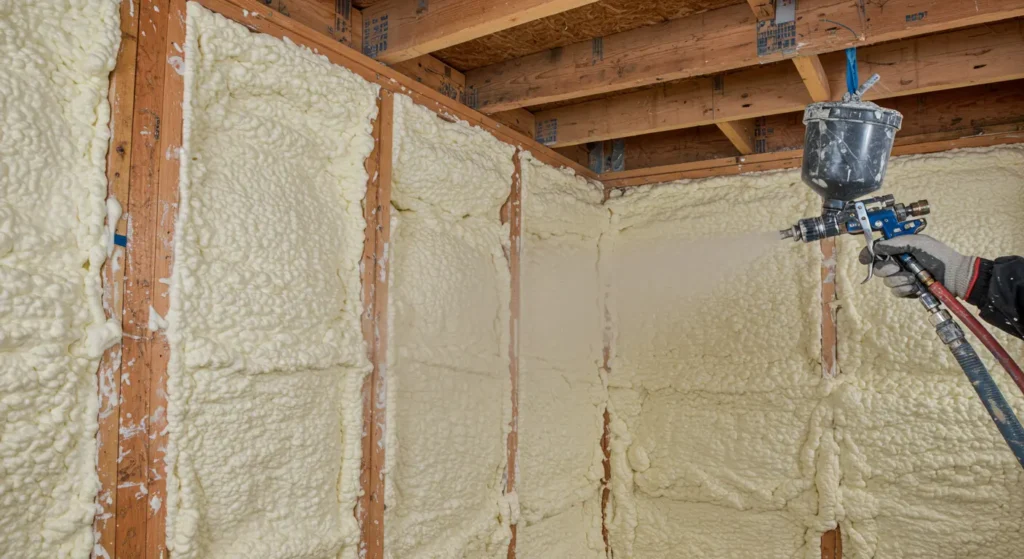
How Wisconsin Weather Affects Installation
Waupaca’s cold winters and warm summers make year-round insulation and moisture control important. NOAA climate records show the area’s seasonal temperature changes.
Installation depends on the product, surface temperature, humidity, and manufacturer requirements, not just the season. Commercial projects must also follow applicable building codes. See the Wisconsin Department of Safety and Professional Services for commercial building information.
Understanding R-Value
R-value measures how well insulation resists heat flow. Higher values generally mean better resistance, but performance also depends on material type, thickness, and installation quality.
When comparing estimates, check:
- Thickness: Confirm the planned installed depth.
- R-value: Ask for the expected value at that thickness.
- Coverage: Verify which areas are included.
- Air sealing and moisture control: Confirm whether these needs are addressed separately.
The U.S. Department of Energy’s insulation guide explains insulation performance and selection.
Why Consider Proseal Spray Foam?
We offer residential and commercial insulation, including open-cell and closed-cell spray foam, fiberglass, blown-in insulation, dense-pack cellulose, air sealing, and crawl space solutions.
We assess each building’s condition and insulation needs before recommending a suitable option. Our approach also considers proper preparation, product requirements, ventilation, curing, and safe re-entry.
Plan Your Insulation Project
Choosing insulation is easier when you understand the building’s needs and the trade-offs between available materials. A suitable plan considers thermal performance, air leakage, moisture conditions, installation requirements, and long-term access to building components.
If you are planning residential or commercial insulation work in Waupaca, WI, contact us to discuss your property and the areas you want to improve.
Proseal Spray Foam
- Email: info@prosealsprayfoam.com
- Phone: (715) 227-6295
- Location: View our Google Maps listing
Frequently Asked Questions
Can Spray Foam Be Used in Metal Buildings?
Yes, if the building structure, surface condition, and moisture needs are suitable.
Does Spray Foam Keep Pests Away?
No. Pests can still enter through gaps or damage materials, so pest control may still be needed.
Can Spray Foam Be Painted or Covered?
Yes, but the required coating or thermal barrier depends on the location and building codes.
How Can I Spot Poor Spray Foam Installation?
Look for gaps, uneven coverage, or foam pulling away from surfaces. A professional can assess suspected defects.
Author & Reviewer
Author: I’m Dan Passarella, owner of Proseal Spray Foam. I’ve led this local insulation company for 2 years, since July, serving residential, commercial, and industrial properties across Wisconsin. I focus on professional spray foam installation, customized insulation solutions, and quality workmanship. I’m committed to helping property owners improve energy efficiency, comfort, and long-term building performance through reliable insulation services. My approach centers on providing insulation solutions tailored to each property’s needs while maintaining a professional standard of service and workmanship for every residential, commercial, and industrial project we handle.
Reviewer: With 7 years in the spray foam insulation business, Ella Adams offered useful feedback on this post, helping make sure the tips were both realistic and easy to apply.