




Selling an old, damaged, or unwanted vehicle to a cash for cars company is often a convenient way to dispose of a car that is no longer needed. However, many vehicle owners are unaware of what happens to their cars after the sale is completed. Some vehicles are repaired and resold, while others are dismantled for reusable parts or processed for metal recycling.
The journey of a vehicle after being sold depends on its condition, age, mechanical performance, and market demand. Understanding this process helps car owners make informed decisions and appreciate how the automotive recycling industry reduces waste while recovering valuable materials.
1. Initial Vehicle Inspection and Assessment
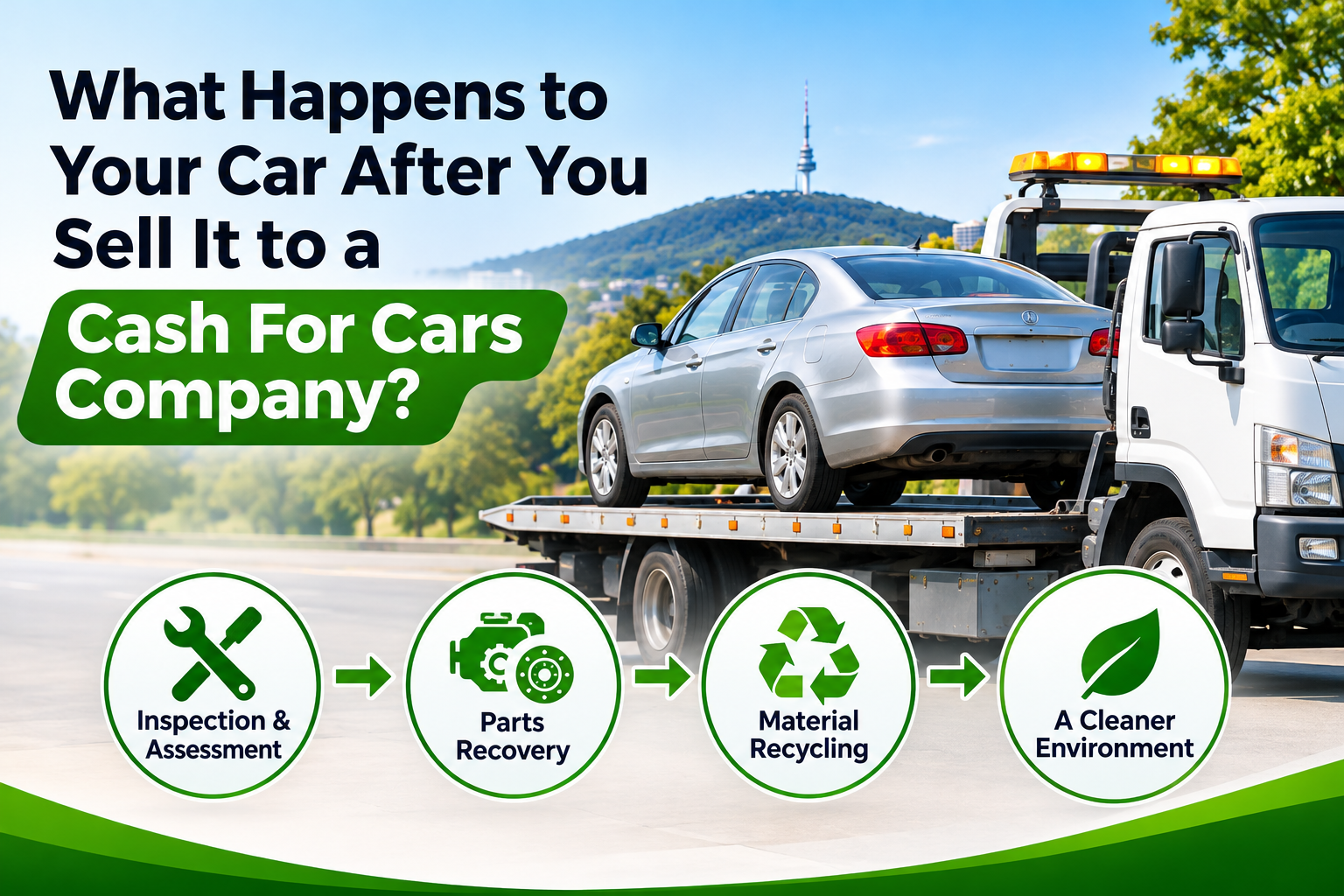
The first step after a cash for cars company receives a vehicle is a detailed inspection. The purpose is to determine whether the car can be repaired, dismantled, or recycled.
During the inspection, automotive professionals examine the engine, transmission, suspension, body panels, electrical systems, and overall structural condition. They also assess the vehicle’s age, make, model, and potential resale value.
Vehicles in relatively good condition may be suitable for repairs and resale. However, cars with extensive accident damage, severe mechanical problems, or significant corrosion are more likely to be dismantled.
The inspection helps determine the most practical and environmentally responsible way to process the vehicle.
2. Vehicle Valuation and Market Assessment
Before a vehicle enters the recycling or resale process, its estimated market value plays an important role in determining its future.
Many vehicle owners begin by requesting a free car valuation Canberra service to understand how much their unwanted vehicle may be worth. The assessment generally considers the vehicle’s condition, age, model, demand for spare parts, and current scrap metal prices.
A vehicle with a working engine and transmission may have greater value because these components can potentially be reused. Similarly, certain models attract higher offers when their replacement parts are in demand.
Even vehicles that cannot be driven may retain considerable material value. Steel, aluminium, copper, and other recyclable materials contribute to their overall worth.
Understanding these valuation factors explains why two vehicles of similar age can receive significantly different offers.
3. Ownership Verification and Documentation
Once the sale is completed, the company checks the relevant ownership and transaction documents. This process helps establish that the vehicle has been transferred through a legitimate transaction.
Depending on local requirements, the seller may need to provide identification, proof of ownership, registration information, or other supporting documentation.
In Canberra, vehicle owners should also understand the applicable ACT requirements for registration cancellation, number plates, and disposal notifications.
Completing the necessary paperwork helps prevent future complications involving registration records, fines, or ownership disputes.
Sellers should retain a receipt or written record of the transaction, including the vehicle identification details and the date of sale.
4. Vehicle Transportation to the Processing Facility
After collection, the vehicle is transported to a designated storage yard, dismantling facility, or automotive recycling centre.
Cars that remain roadworthy may be moved using appropriate transport arrangements. However, damaged, unregistered, or nonoperational vehicles are generally transported using tow trucks or specialised recovery equipment.
Once the vehicle reaches the facility, workers assess its condition and assign it to the appropriate processing area.
Vehicles suitable for resale may be separated from those intended for dismantling. This sorting process allows the company to manage its inventory efficiently and identify valuable components before recycling begins.
Proper transportation also helps prevent additional damage and reduces the risk of leaking automotive fluids during handling.
5. Removal of Hazardous Fluids and Materials
One of the most important stages of automotive recycling involves removing substances that could harm the environment.
Vehicles contain several fluids and materials that require careful handling. These include engine oil, transmission fluid, brake fluid, coolant, fuel, refrigerants, and batteries.
Trained workers drain or recover these substances using suitable equipment. Recovered fluids may be sent to authorised facilities for treatment, recycling, or disposal.
Batteries are removed because they contain materials that require specialised recycling processes. Airbags and other potentially hazardous components are also managed according to applicable safety procedures.
This stage helps prevent soil contamination, water pollution, and unnecessary environmental damage.
Responsible fluid removal is essential before a vehicle can safely proceed to dismantling or crushing.
6. Dismantling and Recovery of Reusable Car Parts
After hazardous materials are removed, the vehicle enters the dismantling stage. During this process, workers identify components that remain functional and suitable for reuse.
Commonly recovered parts include engines, transmissions, alternators, starters, doors, mirrors, headlights, wheels, and suspension components.
These parts are inspected and may undergo testing or cleaning before being offered for resale. Components that meet suitable quality standards can be supplied to repair workshops, mechanics, and individual vehicle owners.
Reusing automotive parts reduces demand for newly manufactured components and helps extend the useful life of existing materials.
Not every component can be reused. Severely damaged, worn, or unsafe parts are directed toward appropriate recycling or disposal processes.
7. Crushing and Recycling the Remaining Vehicle Body
Once reusable components have been removed, the remaining vehicle shell is prepared for metal recycling.
Specialised machinery compresses the body to reduce its size and make transportation easier. The compressed metal may then be delivered to a shredding facility.
During shredding, machinery breaks the vehicle body into smaller pieces. Magnetic and other separation systems help recover steel, aluminium, copper, and additional valuable metals.
These recovered materials are transported to metal processing facilities, where they can be refined and used in manufacturing.
Recycled automotive metals may eventually become construction materials, industrial equipment, household appliances, or components for new vehicles.
This process demonstrates how an unwanted car can continue contributing to manufacturing long after it stops operating.
8. What Happens to Unregistered or Nonworking Vehicles?
Vehicles without valid registration can still have value because their mechanical components and recyclable materials remain useful.
Companies offering Cash for Unregistered Cars Canberra may purchase vehicles that have expired registration, mechanical failures, accident damage, or other problems preventing normal road use.
Since these vehicles cannot simply be driven on public roads, suitable towing arrangements are generally necessary.
In the ACT, owners selling a vehicle without registration must cancel any existing registration before the sale and surrender the number plates as required.
Once collected, unregistered vehicles undergo the same general inspection, dismantling, and recycling procedures as other unwanted cars.
Their ultimate destination depends on whether they are suitable for repair, spare parts recovery, or complete material recycling.
Conclusion
Selling a vehicle to a cash for cars company does not necessarily mean it will immediately be destroyed. Depending on its condition, the vehicle may be repaired, resold, dismantled for spare parts, or recycled into valuable raw materials.
From initial assessment and ownership verification to hazardous fluid removal, component recovery, and metal recycling, each stage serves a practical purpose.
For vehicle owners, understanding these processes highlights the importance of choosing a responsible buyer and completing the necessary paperwork.
Ultimately, proper automotive recycling helps recover valuable resources, reduce environmental contamination, and give unwanted vehicles a useful purpose beyond their original lifespan.