







When a tooth becomes damaged or loses a significant amount of its natural structure, chewing may become uncomfortable. A dental crown can help restore the tooth’s original shape and improve its contact with opposing teeth. This may support a more comfortable and balanced bite when the problem is caused by damage to an individual tooth.
Dental Crown Treatment in Islamabad can be a suitable restorative option for patients whose damaged or weakened teeth interfere with normal chewing. Understanding how crowns work, which bite problems they can address, and what happens during treatment can help patients make informed decisions.
1. How Does a Dental Crown Help Restore a Damaged Bite?
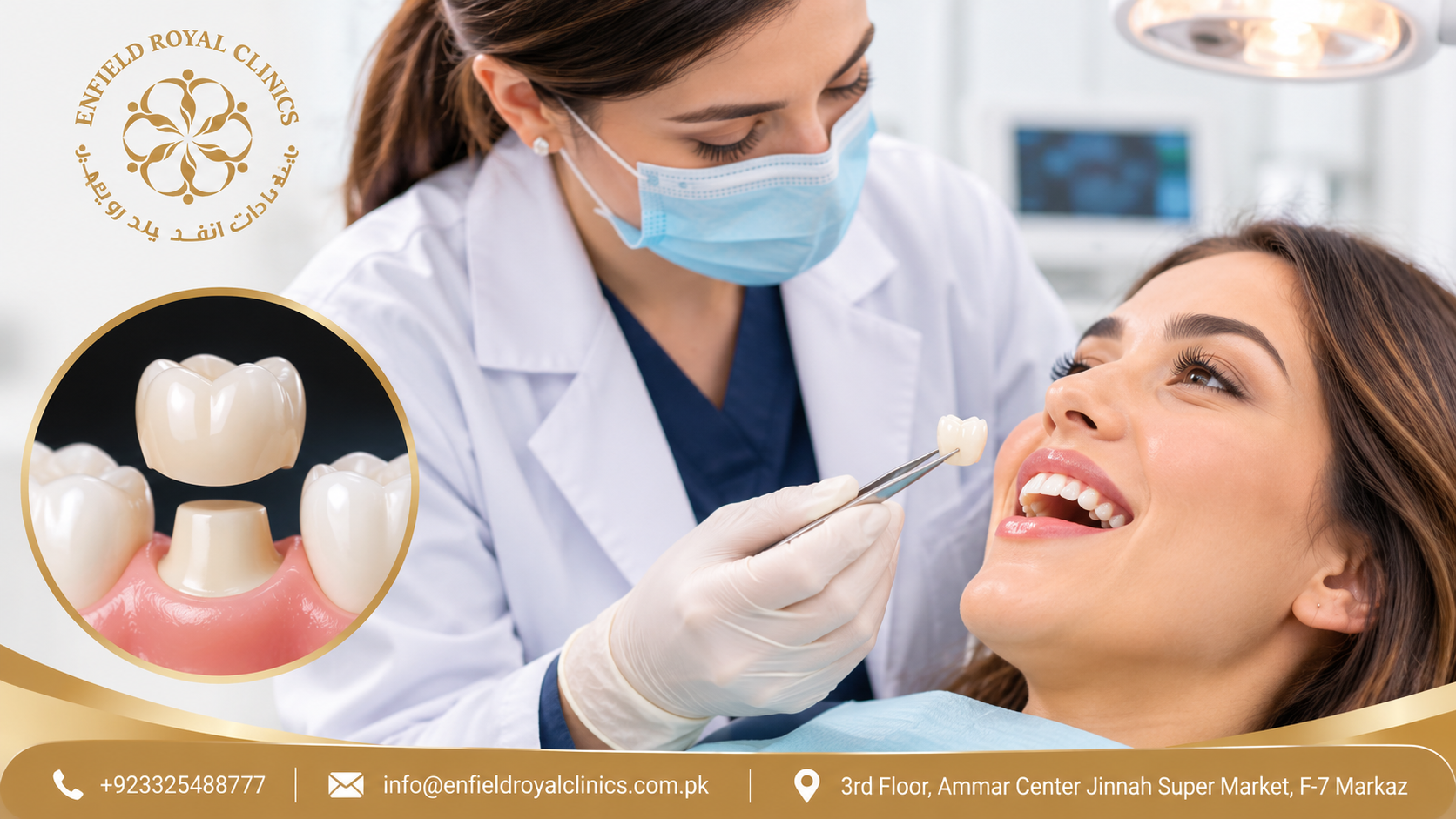
A dental crown is a custom-made covering that fits over a prepared tooth. It restores the tooth’s visible shape, size, and chewing surface while protecting the remaining natural structure.
When a tooth becomes cracked, broken, or severely worn, its original shape may change. As a result, it may no longer make proper contact with the opposing tooth. This can create uneven pressure during chewing and make biting uncomfortable.
A properly designed crown rebuilds the damaged portion and helps restore appropriate contact between the upper and lower teeth.
The treatment may help by:
- Rebuilding the natural height and shape of a damaged tooth.
- Restoring the chewing surface of worn molars.
- Improving contact with the opposing tooth.
- Supporting more comfortable chewing.
- Protecting weakened tooth structure from certain further fractures.
The dentist carefully checks the bite after crown placement to make sure the restoration does not create excessive pressure. The aim is to restore comfortable function rather than unnecessarily change the patient’s natural bite.
2. Can Dental Crowns Correct Uneven Tooth Contact?
Uneven tooth contact can occur when a tooth has lost part of its natural structure. For example, a broken molar may have a reduced chewing surface, while a severely worn tooth may become shorter than its neighbouring teeth.
These changes can affect how the teeth meet during biting. Some teeth may receive excessive pressure, while others may make less contact than they should.
A dental crown can help when the imbalance is related to the damaged shape or height of an individual tooth. By rebuilding the affected area, it may restore more appropriate contact with the opposing tooth.
During fitting, the dentist may use special marking paper to identify how the upper and lower teeth meet. These markings help locate areas of excessive contact that may need adjustment.
A crown should not feel as though it touches first whenever the patient closes the mouth. If it feels too high or creates discomfort while chewing, the restoration may need professional adjustment.
Patients exploring Dental Crown Treatment in Islamabad should understand that proper bite assessment is an essential part of achieving comfortable results.
3. How Can Crowns Improve Chewing Function?
Chewing involves coordinated contact between several teeth. Molars and premolars perform much of the grinding, while front teeth help bite into food. When one of these teeth becomes damaged, the overall chewing process may become less comfortable.
A dental crown can restore the affected tooth’s surface and help it perform its usual function. This is particularly useful when a molar has lost a large portion of its chewing surface due to decay, fracture, or excessive wear.
The functional benefits may include:
Restoring Tooth Shape: A crown rebuilds the missing external contours, allowing the tooth to participate more effectively in chewing.
Supporting Normal Biting Pressure: Properly adjusted contact helps distribute ordinary chewing forces across the teeth.
Reducing Discomfort From Structural Damage: When pain is caused by a weakened or fractured tooth, appropriate crown coverage may help make chewing more comfortable.
Protecting the Remaining Tooth: Full coverage can support weakened areas and reduce the risk of certain additional fractures.
However, a crown does not automatically eliminate every type of chewing pain. An infected tooth, inflamed gums, jaw joint problems, or other dental conditions may require separate treatment.
4. Which Dental Problems Can Affect the Bite and Benefit From Crowns?
Several dental conditions can change the way teeth meet. A crown may be recommended when the main problem involves the damaged structure or shape of an individual tooth.
Severely Worn Teeth: Grinding, clenching, and acid erosion can gradually reduce tooth height. A crown may rebuild a tooth that has lost substantial structure.
Broken Molars: A fractured molar may have an uneven biting surface. A crown can restore its shape when enough healthy tooth remains.
Large Fillings: Teeth with extensive restorations may have weakened walls and altered chewing surfaces. A crown may provide additional coverage when another filling is not suitable.
Cracked Teeth: Certain cracks can affect biting comfort. A crown may cover and support the remaining structure when the crack does not extend too deeply.
Teeth After Root Canal Treatment: Some root canal-treated back teeth lose considerable structure and may need crowns to reduce their risk of fracture during chewing.
Not every bite problem requires a crown. Conditions such as significant overbite, underbite, crossbite, overcrowding, or open bite often involve the position of several teeth or the relationship between the jaws. These problems may need orthodontic treatment or specialist assessment rather than individual crowns.
5. What Happens During Dental Crown Treatment?
The process begins with a consultation and examination. The dentist checks the affected tooth, surrounding gums, and the way the upper and lower teeth come together. Dental X-rays may be recommended to assess the roots, surrounding bone, and any hidden decay.
If the tooth has decay or infection, the necessary treatment must be completed before the permanent crown is placed. A root canal procedure may be needed if the dental pulp is irreversibly inflamed or infected and the tooth can be saved.
Once the tooth is suitable, the preparation process begins.
- Tooth Preparation: Damaged areas are removed, and the tooth is reshaped to create space for the crown. Local anaesthesia is generally used to keep the procedure comfortable.
- Impression or Digital Scan: The prepared tooth is recorded so a custom restoration can be designed with the correct shape and dimensions.
- Temporary Crown: In traditional treatment, a temporary covering may be fitted while the permanent restoration is being made.
- Permanent Crown Placement: The dentist checks the crown’s fit, contact with neighbouring teeth, and bite alignment before securing it.
- Final Bite Adjustment: Special marking materials may be used to check the contact points and identify any areas that need minor adjustment.
Some suitable cases can be completed in one appointment using digital dental technology, while many laboratory-made crowns require multiple visits.
6. How Can Patients Maintain a Comfortable Bite After Crown Placement?
A properly fitted crown can restore the function of a damaged tooth, but maintaining comfortable chewing also depends on good oral hygiene and healthy daily habits.
Patients should follow a few important precautions:
- Brush twice daily with fluoride toothpaste.
- Clean between teeth every day.
- Avoid chewing ice, hard candies, and other very hard objects.
- Do not use teeth to open packages or bite non-food items.
- Manage teeth grinding or clenching with professional guidance.
- Attend regular dental check-ups to monitor the crown and bite.
Patients who grind their teeth may benefit from a custom nightguard when recommended. This can help reduce excessive pressure on the crown and surrounding natural teeth.
Many dental crowns last around 5 to 15 years or longer, although their lifespan varies according to material, fit, oral hygiene, and chewing habits.
After placement, mild temporary sensitivity may occur. However, persistent pain, discomfort when biting, swelling, or a feeling that the crown is too high should be assessed by a dental professional.
For individuals considering Dental Crown Treatment in Islamabad, the main goal is to restore a damaged tooth so that it works comfortably with the rest of the teeth. A crown can improve bite function when structural damage is the cause, but broader alignment problems may require a different treatment approach.
For more information visit Enfield royal clinic in islamabad
Frequently Asked Questions
1. Can a dental crown restore a normal bite?
A crown can help restore comfortable biting when an individual tooth has become damaged, worn, or misshapen. It rebuilds the tooth’s surface and improves contact with opposing teeth when properly fitted.
2. Can a dental crown fix an overbite or underbite?
Usually, no. Overbites and underbites often involve the position of several teeth or the relationship between the jaws. These conditions may require orthodontic or specialist treatment.
3. Why does a new dental crown sometimes feel too high?
A crown may feel too high when it makes excessive contact with the opposing tooth. A dental professional can check the bite and make appropriate adjustments.
4. Can a damaged molar affect the way someone chews?
Yes. A cracked, broken, or severely worn molar can have an altered chewing surface, making biting uncomfortable. Restoring its shape with a suitable crown may improve chewing function.
5. Does dental crown treatment improve chewing on both sides of the mouth?
It may help patients use the affected side more comfortably when an individual damaged tooth is causing the problem. The result depends on the condition of the other teeth and the overall bite.
6. How long does it take to adjust to a new dental crown?
Many patients become comfortable with a new crown within a few days. Mild sensitivity may temporarily occur, but persistent discomfort or an uneven bite should be checked.