








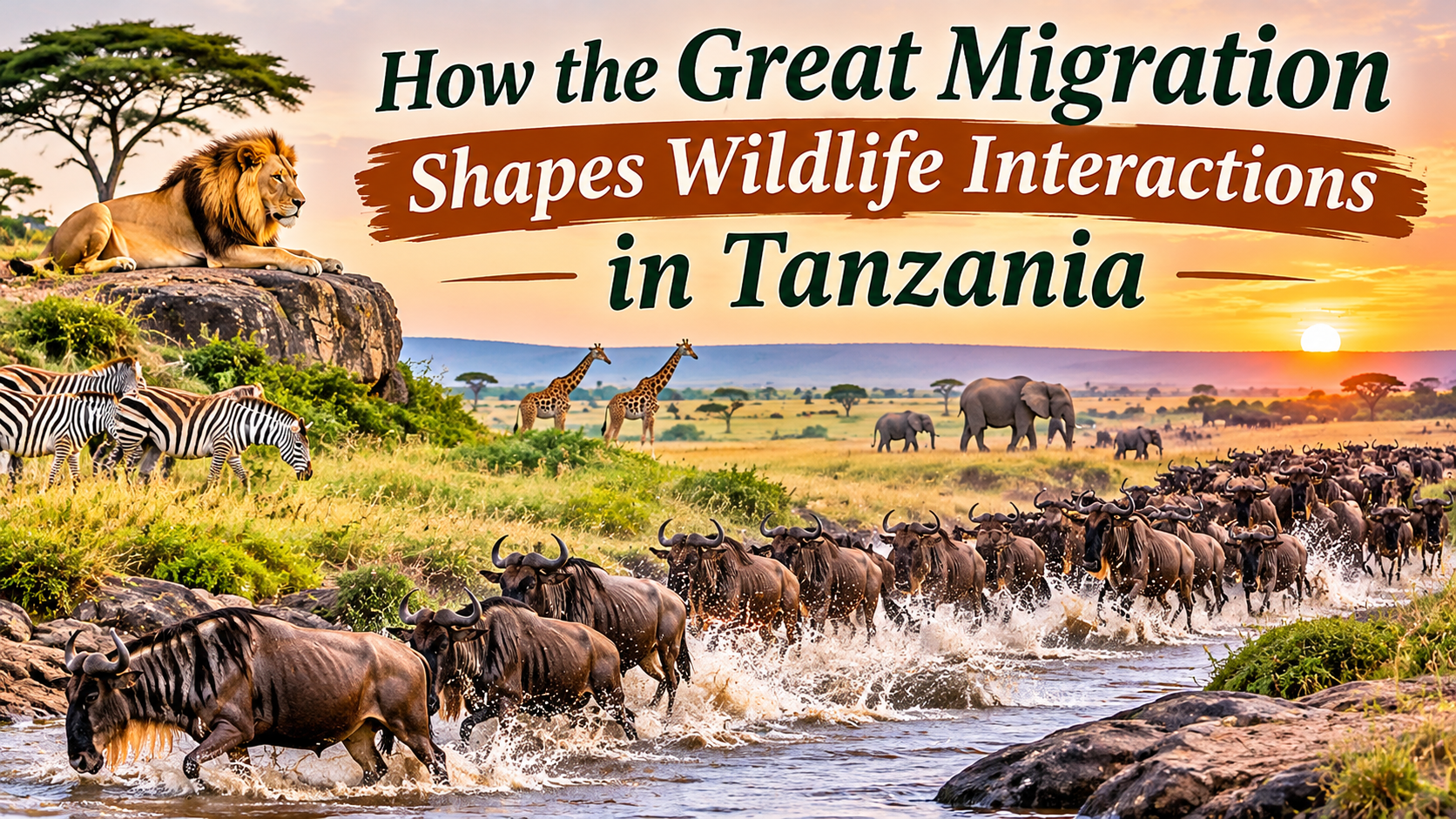
The Great Migration is one of the most remarkable wildlife events in Africa, bringing together millions of wildebeest, zebras, and other grazing animals across the Serengeti ecosystem. The seasonal movement creates a dynamic environment where different species interact through feeding patterns, predator-prey relationships, and competition for natural resources. Observing wildebeest migration Tanzania provides valuable insight into how wildlife populations depend on one another and how the natural environment influences their behavior. Beyond the movement of large herds, the migration plays an important role in shaping the ecological relationships that sustain Tanzania’s diverse wildlife.
1. The Relationship Between Wildebeest and Zebras
Wildebeest and zebras are among the most recognizable animals participating in the Great Migration. Although they travel through similar landscapes, their feeding habits are different, which allows them to share grazing areas.
Zebras generally consume taller, coarser grasses, while wildebeest prefer shorter grasses that become available after the taller vegetation has been grazed. This feeding relationship helps both species use the available grassland resources efficiently.
Their movement together also offers certain advantages. Zebras have strong eyesight and can help detect potential dangers, while wildebeest benefit from traveling in large groups. These interactions demonstrate how different herbivore species can share habitats while following their individual feeding requirements.
2. How Predators Follow the Migrating Herds
The Great Migration also influences the movement and hunting behavior of predators. Lions, cheetahs, leopards, hyenas, and other carnivores depend on healthy prey populations for survival.
As large herds move across the Serengeti, predators often concentrate their activities in areas where grazing animals are abundant. This creates opportunities for hunting and influences where predators spend their time.
Lions may hunt near grasslands where wildebeest gather, while cheetahs often use open terrain to pursue individual animals. Hyenas can also take advantage of opportunities created by the movement of large herds.
These predator-prey relationships are an essential part of the ecosystem. They help regulate herbivore populations and contribute to the natural balance of wildlife communities.
3. The Importance of River Crossings
River crossings are among the most dramatic moments of the Great Migration. During certain stages of their journey, wildebeest herds encounter rivers that they must cross to reach new grazing areas.
These crossings create interactions between migrating herbivores and aquatic predators, particularly Nile crocodiles. Crocodiles may wait near crossing points where animals enter the water, creating a challenging situation for the migrating herds.
The behavior of wildebeest during crossings is influenced by herd movement, environmental conditions, and the presence of potential threats. Animals may hesitate at riverbanks before following others into the water.
Although river crossings receive considerable attention from wildlife enthusiasts, they are only one part of a much larger seasonal movement. The migration also includes grazing, calving, resting, and traveling across different habitats.
4. How Grazing Patterns Influence the Serengeti Ecosystem
The movement of millions of grazing animals has a considerable influence on the grasslands of Tanzania. As wildebeest and other herbivores feed, they affect vegetation growth, grass availability, and the distribution of nutrients.
Wildebeest typically prefer short, nutrient-rich grasses. Their grazing activities can help maintain certain grassland conditions and influence how vegetation develops over time.
Their movement also helps distribute nutrients across the landscape. Animal waste returns organic matter to the soil, supporting nutrient cycling and contributing to ecosystem processes.
These natural interactions demonstrate why the Great Migration is more than a visual wildlife spectacle. It is an ecological process that connects animal behavior with vegetation, soil conditions, and the wider environment.
5. The Role of Scavengers in Wildlife Interactions
Predators are not the only animals that benefit from the migration. Scavengers also play an important role in the ecosystem by feeding on animal remains.
Vultures, jackals, and hyenas help consume carcasses left behind by predation or natural causes. This activity supports nutrient recycling and reduces the accumulation of animal remains across the landscape.
Different scavenger species may feed on different parts of a carcass, depending on their physical characteristics and feeding habits. For example, vultures are particularly adapted to locating and consuming animal remains.
These interactions show how the migration supports a network of wildlife relationships. Even after an animal dies, it continues to contribute to the ecosystem by providing food for other species.
6. How Seasonal Rainfall Influences Wildlife Movement
Rainfall is one of the major factors influencing the movement of migrating animals. Seasonal precipitation affects grass growth, water availability, and the location of suitable grazing areas.
As rainfall patterns change, wildebeest move through different parts of the Serengeti ecosystem in search of fresh vegetation. Their movement also influences where other herbivores and predators are likely to gather.
The timing and route of the migration can vary from year to year because rainfall does not follow an identical pattern every season. This makes each migration period different and creates changing opportunities for wildlife observation.
Understanding the connection between rainfall and animal movement helps explain why the Great Migration should not be viewed as a single event occurring at one fixed location.
7. The Influence of Migration on Other Herbivore Species
The wildebeest migration affects more than the animals directly involved in the large herds. Other herbivores, including gazelles, giraffes, and buffalo, also share parts of the Serengeti ecosystem.
These species have different feeding preferences and habitat requirements. Some may use the same grasslands, while others depend on shrubs, trees, or different vegetation types.
The presence of large migrating herds can influence the availability of food and the distribution of grazing animals. As vegetation conditions change, different species may adjust their feeding locations and movement patterns.
This creates a connected wildlife community in which the behavior of one group can influence the opportunities available to another.
8. Why Wildlife Conservation Matters
The Great Migration depends on healthy habitats and connected landscapes. Grasslands, rivers, seasonal water sources, and wildlife corridors all contribute to the ability of animals to move across the Serengeti ecosystem.
Habitat fragmentation, human-wildlife conflict, climate variability, and pressure on natural resources can affect wildlife movement and ecological relationships.
Conservation initiatives help protect important habitats and maintain the natural routes used by migrating animals. Responsible tourism can also contribute by supporting protected areas, conservation awareness, and local communities.
Visitors should observe animals from appropriate distances, follow guide instructions, and avoid activities that disturb wildlife. Respecting natural behavior helps protect the experience for both animals and future visitors.
9. Experiencing the Great Migration Through Wildlife Observation
Watching the Great Migration offers an opportunity to understand wildlife interactions beyond simply observing large herds. Visitors can notice how zebras and wildebeest share grazing areas, how predators respond to changing prey availability, and how different animals use the same landscapes.
A knowledgeable safari guide can explain seasonal movements, animal behavior, and the ecological relationships visible during a safari. Choosing the right location and travel period can also improve opportunities for observing different stages of the migration.
Because wildlife movement changes with environmental conditions, travelers should keep their itineraries flexible and understand that specific animal sightings cannot be guaranteed.
Conclusion
The Great Migration plays a significant role in shaping wildlife interactions throughout Tanzania’s Serengeti ecosystem. From the relationship between zebras and wildebeest to predator-prey dynamics, river crossings, and natural nutrient cycling, each interaction contributes to the region’s ecological balance. Understanding these connections makes a safari experience more meaningful and highlights the importance of protecting natural habitats. For travelers interested in learning more about seasonal wildlife movements and planning memorable safari experiences, Wildebeest Sightings offers a relevant starting point for exploring the fascinating world of the Great Migration.