







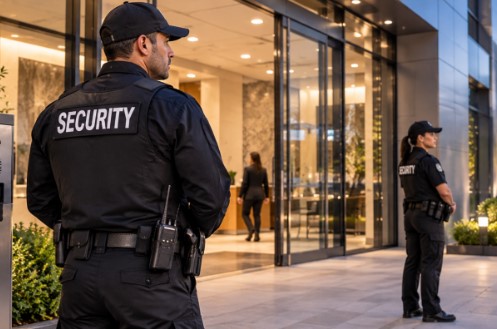
Every property, whether an office tower, a school campus, or a construction yard, faces risks that no camera or alarm can fully manage alone. Theft, trespassing, and safety hazards often need a person who can notice details, make decisions, and respond right away. That is why many owners rely on on-site security guards as a constant, visible layer of protection. A guard stationed at the property understands its layout, its routines, and its regular visitors, which makes unusual activity far easier to recognize. Knowing what these professionals handle each day, and how to set them up for success, helps managers get real value from the investment.
Daily Duties Beyond Simple Patrols
Guards do far more than walk a route. They control entry points, verify visitors, monitor camera feeds, and respond to alarms. Many also manage key control, escort staff to parking areas after dark, and document every notable event in shift logs. These records help managers spot patterns, such as repeated after-hours entry or recurring damage in one area. Guards also act as a first point of contact for tenants and guests, offering directions, answering questions, and enforcing house rules politely. This mix of security and service is what makes a stationed presence so effective compared with remote monitoring alone.
Why a Fixed Presence Deters Crime
Visibility changes behavior. People considering theft or vandalism usually look for easy, unobserved targets, and a uniformed guard at the entrance signals the opposite. Having on site security guards also shortens response time dramatically, since problems are addressed within minutes rather than after a remote operator calls someone. Guards can intervene early in disputes, stop unauthorized access at the door, and secure the scene while emergency responders travel to the location. Employees and residents also tend to feel calmer when someone trained is close by, which supports morale and retention.
Matching Coverage to the Property
No two sites need the same setup. A residential building may need a lobby guard around the clock, while a warehouse might focus on gate control and overnight rounds. Commercial offices often want daytime reception security with lighter evening coverage, and event venues need temporary staffing that scales with attendance. A site survey helps identify blind spots, high-traffic entrances, and times of greatest risk. Post orders, which are written instructions describing duties for each position, should then be tailored to those findings. Clear expectations prevent confusion and keep guards focused on the tasks that matter most.
Training, Licensing, and Reliability
Qualified guards hold the proper state licensing and complete training in report writing, emergency procedures, first aid, and de-escalation. Ask providers about background checks, supervision, and how absences are covered so posts are never left empty. Dependable on site security guards should also understand the property’s specific rules, from access protocols to emergency contacts, because generic knowledge is not enough during a real incident. Regular supervisor visits and performance reviews help keep standards consistent over time.
Working With Technology
Modern security blends people with tools. Guards may use patrol tracking software, digital reporting apps, access control panels, and two-way radios to stay coordinated. Technology captures timestamps and photos that strengthen incident reports, while human judgment interprets what the data means. Neither replaces the other; cameras record events, but guards prevent them from escalating. Reviewing how these systems connect can reveal gaps, such as unmonitored doors or outdated alarm settings.
Measuring Results and Adjusting
Security plans should evolve. Review incident reports monthly, gather feedback from tenants or staff, and meet with the provider to discuss trends. If problems cluster at certain hours, adjust schedules accordingly. If the site expands or changes use, update post orders promptly. Small, regular adjustments keep coverage efficient and prevent both overspending and dangerous gaps.
Conclusion
Strong protection comes from a clear understanding of your property, careful selection of personnel, and steady review. Trained guards bring awareness, quick response, and a professional presence that technology alone cannot match. Safety planning also extends beyond crime prevention, so many property managers pair guard coverage with fire safety services such as extinguisher checks, evacuation drills, and alarm monitoring. Whatever mix you choose, verify credentials, set clear expectations, and revisit the arrangement regularly to keep every visitor and employee protected.