




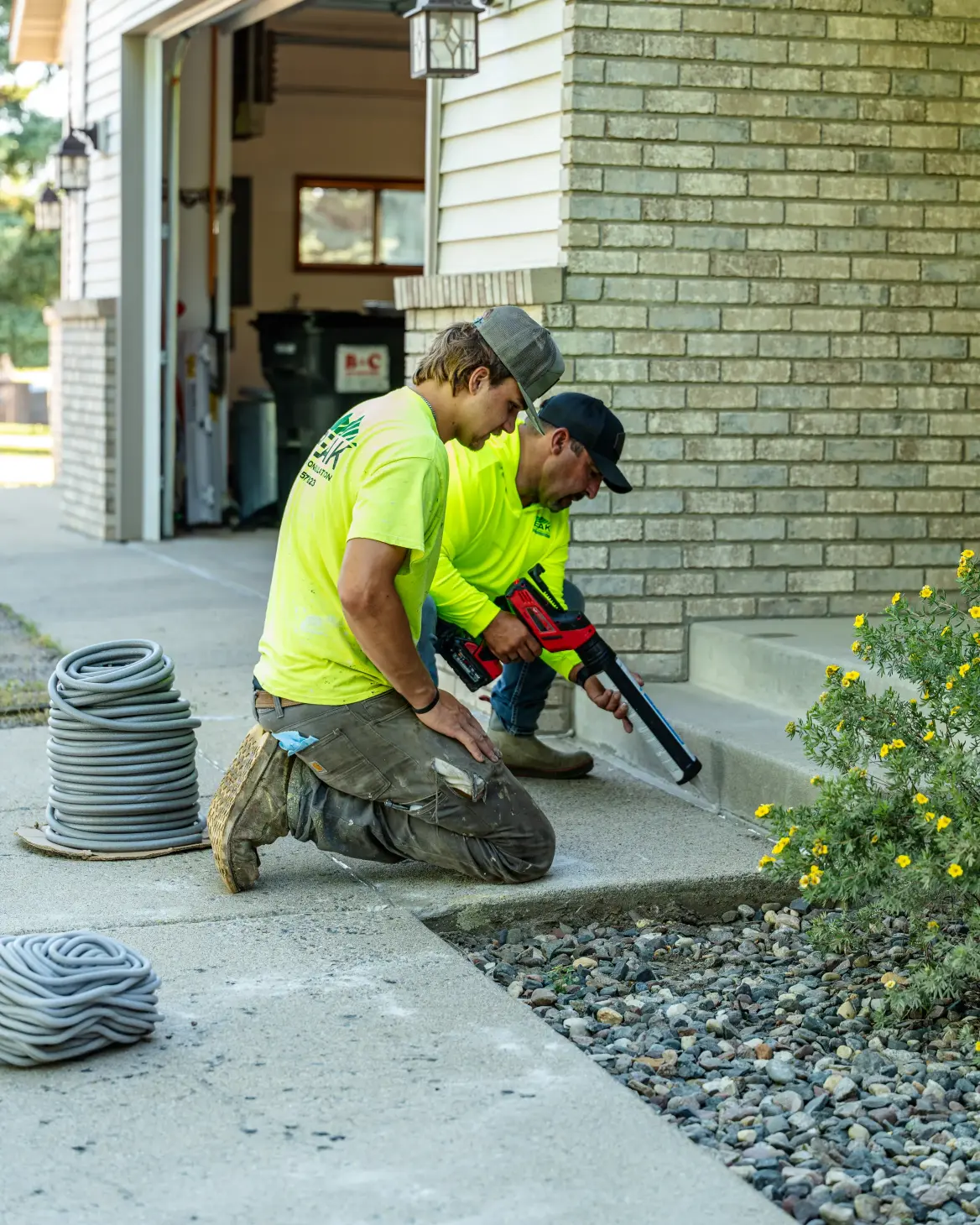
Concrete lifting is a repair method that raises sunken concrete slabs by filling gaps beneath them with an injected material. In Annandale, MN, it may help restore uneven driveways, sidewalks, patios, garage floors, and other concrete surfaces without removing the entire slab. The right repair depends on the slab’s condition, the cause of settlement, and the stability of the soil underneath.
This guide explains how concrete lifting works, the main lifting techniques, their benefits and limitations, and how Minnesota’s weather can affect settled concrete. It also covers when lifting may work and when replacing the damaged slab is the better choice.
Why Is Concrete Lifting Useful?
Uneven concrete can create trip hazards, collect water, and make driveways or walkways harder to use. Concrete lifting solutions in Annandale, MN can correct some of these problems by restoring support beneath a settled slab.
The American Concrete Institute explains in its slabjacking repair guide that lifting methods can raise slabs or fill voids caused by settlement, erosion, flooding, or changes in the soil below the concrete.
Concrete lifting may be worth considering when:
- A driveway has sunk: Raising a settled section may improve the transition between concrete panels and reduce an uneven driving surface.
- A sidewalk has become uneven: Lifting may reduce a height difference that creates a tripping risk.
- A patio slopes the wrong way: Correcting a settled section may help improve the surface, although drainage problems may need separate attention.
- A garage floor has lost support: Filling gaps below a suitable slab may help restore contact with the supporting base.
Lifting does not fix every cause of settlement. The underlying soil and drainage conditions must be assessed before choosing a repair.

How Does Concrete Lifting Work?
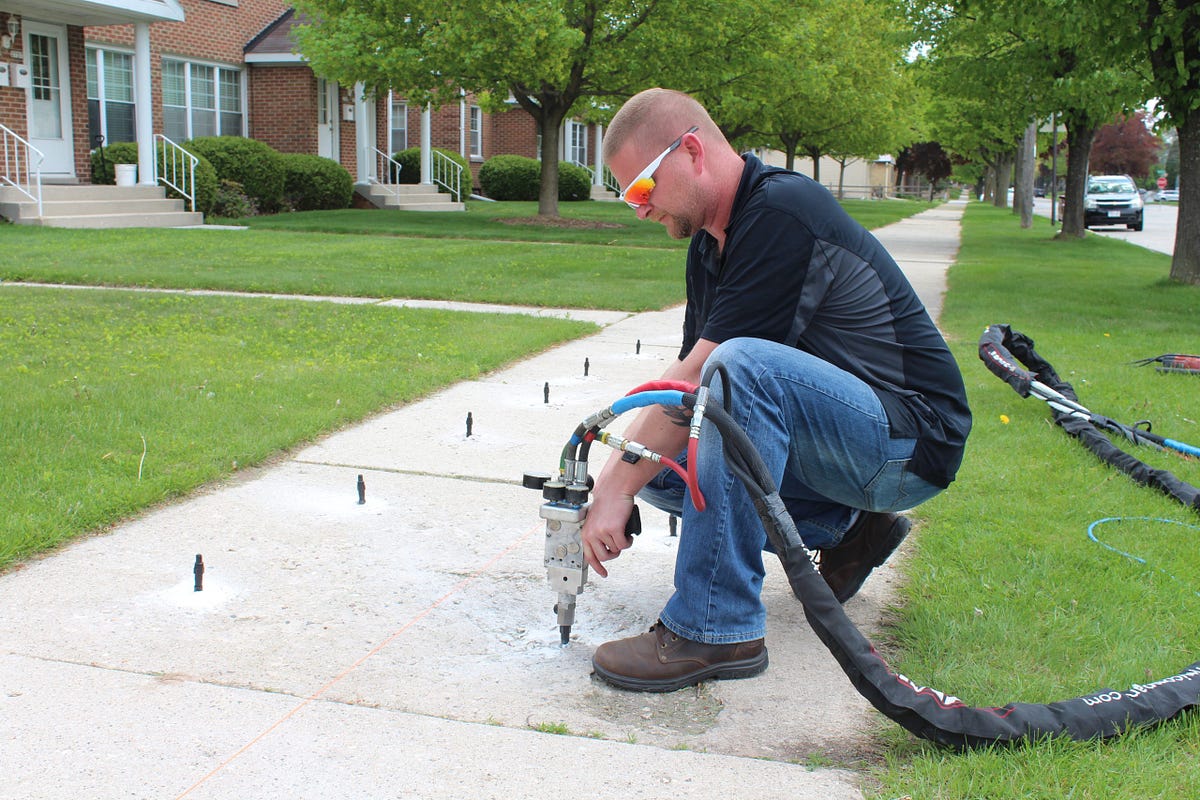
Concrete lifting, also called slabjacking or concrete raising, involves injecting material beneath a settled slab to fill empty spaces and raise the surface in a controlled way. The exact steps depend on the lifting method and the condition of the concrete.
1. Inspect the Concrete
The contractor checks where the slab has settled, the size and pattern of cracks, and whether the concrete is still suitable for lifting. They should also look for possible causes such as water erosion, poor support, or continuing soil movement.
2. Drill Small Access Holes
Small holes are drilled through selected areas of the slab. Their size and placement depend on the material being injected and the lifting plan.
3. Inject the Lifting Material
The material is pumped through the holes and spreads into gaps beneath the concrete. As the voids fill, controlled pressure can raise the slab toward the intended level.
Common Concrete Lifting Techniques
Different methods use different materials. The best option depends on the slab, access conditions, the size of the voids, and the repair goals.
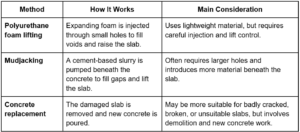
The American Concrete Institute’s slabjacking guide describes cement-based and polymer foam grouts as options. No single technique is right for every repair.
Benefits and Limitations of Concrete Lifting
Concrete lifting can be a practical alternative to removing and replacing a slab, but it has limits.
Potential benefits
- Less demolition: A suitable slab can often be raised without removing the whole section.
- Restored support: Injected material can fill voids beneath settled concrete.
- Improved usability: Leveling may reduce uneven transitions on walkways, driveways, and patios.
- Targeted repair: Work can focus on areas that have settled instead of replacing every connected slab.
Possible limitations
- Existing damage remains: Lifting does not automatically repair deep cracks, surface deterioration, or broken concrete.
- Settlement may continue: If the soil keeps moving or water keeps washing material away, further repairs may be needed.
- Appearance may change: Injection holes are patched, but the repaired areas may still be visible.
- Not every slab can be lifted: Severely damaged concrete or slabs with ongoing structural problems may need replacement or further evaluation.
Real Problems Homeowners May Face
Uneven concrete often points to a problem below or around the slab. Identifying that cause helps prevent a repair from addressing only the visible symptom.
For example, a driveway panel may sink after water runs beneath it and carries away supporting soil. A sidewalk section may settle where the base was not adequately compacted. A patio may become uneven as the supporting ground changes.
In each case, lifting may restore the slab’s position if the concrete remains suitable and the underlying conditions can support the repair. The University of Minnesota Extension’s soil compaction guidance explains how soil moisture and compaction affect soil structure and drainage.
Before lifting, the contractor should consider drainage, downspout discharge, surface slope, and signs of continuing erosion. If the cause remains active, leveling alone may not provide a lasting correction.
How Minnesota Weather Affects Concrete Lifting
Annandale’s freeze-thaw cycles can affect soil support beneath concrete. Water erosion and frozen ground may also complicate repairs. Spring is a good time to inspect winter damage, but lifting depends on suitable ground, surface, and weather conditions.
Does Concrete Lifting Work for Every Uneven Slab?
No. Lifting works best on slabs that remain structurally sound. Severely cracked concrete or ongoing soil movement may require replacement or additional repairs.
Is R-Value Relevant to Concrete Lifting?
No. R-value measures insulation’s resistance to heat flow. Concrete lifting depends on slab condition, soil stability, drainage, and the lifting method.
What to Check Before Hiring a Concrete Lifting Contractor
Before agreeing to a repair, homeowners should ask the contractor to explain the proposed method and the expected outcome.
Useful questions include:
- What is causing the slab to settle, and can that cause be addressed?
- Is the concrete strong enough to lift, or is replacement more appropriate?
- Which material will be injected, and why is it suitable for this slab?
- How will the contractor monitor the lift and protect nearby areas?
- What conditions could cause the slab to settle again?
Clear answers help homeowners compare repair options and understand what the work can realistically achieve.
Conclusion
Concrete lifting can restore some uneven concrete surfaces by filling voids beneath a suitable slab and raising it toward the correct level. Foam lifting and mudjacking are two common methods, while severely damaged concrete may need replacement.
In Annandale, MN, the repair should account for soil support, drainage, and seasonal weather. A proper inspection helps determine whether lifting is suitable and whether other problems need attention first.
Contact Peak Spray Foam Insulation
Property owners considering concrete repairs should first confirm that Peak Spray Foam Insulation offers concrete lifting and has the right experience to handle the job.
- Email: info@peaksprayfoamllc.com
- Phone: (612) 482-4742
- Location: View the business on Google Maps
Contact the company to confirm service availability and discuss the condition of the concrete before arranging an inspection.
FAQs About Concrete Lifting
What Is Concrete Lifting?
Concrete lifting raises a settled concrete slab by injecting material beneath it. The material fills gaps and helps move the slab toward its intended position.
How Does Concrete Lifting Work?
A contractor drills access holes in the slab, injects foam or grout beneath it, monitors the lift, and patches the holes after the desired position is reached.
Does Concrete Lifting Work on Cracked Concrete?
It can work on some cracked slabs, but the amount and type of damage matter. Severely broken or unstable concrete may be better suited to replacement.
How Long Does Concrete Lifting Last?
There is no single lifespan for every repair. Longevity depends on the slab, the lifting method, soil stability, drainage, and whether the cause of settlement continues.
Is Concrete Lifting Better Than Replacing Concrete?
Lifting may be less disruptive when the slab is still in good condition. Replacement may be the better option for badly damaged concrete or when lifting cannot provide a suitable repair.
Author & Reviewer
Author: Wayne Dearing is the Owner and President of Peak Spray Foam Insulation, a family-owned insulation contractor based in Annandale, Minnesota, established on March 23, 2020. With years of experience in the insulation industry, Wayne has built his career on quality workmanship, strong relationships, and a commitment to raising industry standards. Under his leadership, Peak has grown into one of Minnesota’s qualified insulation contractors, with multiple SPFA PCP-certified Master Installers and a Certified Project Manager on staff. Wayne also serves on the Spray Polyurethane Foam Alliance Board, supporting education, safety, and contractor development.
Reviewer: Charlotte King reviewed this article based on her 7 years of spray foam experience, contributing thoughtful advice about building customer relationships and improving local visibility.