




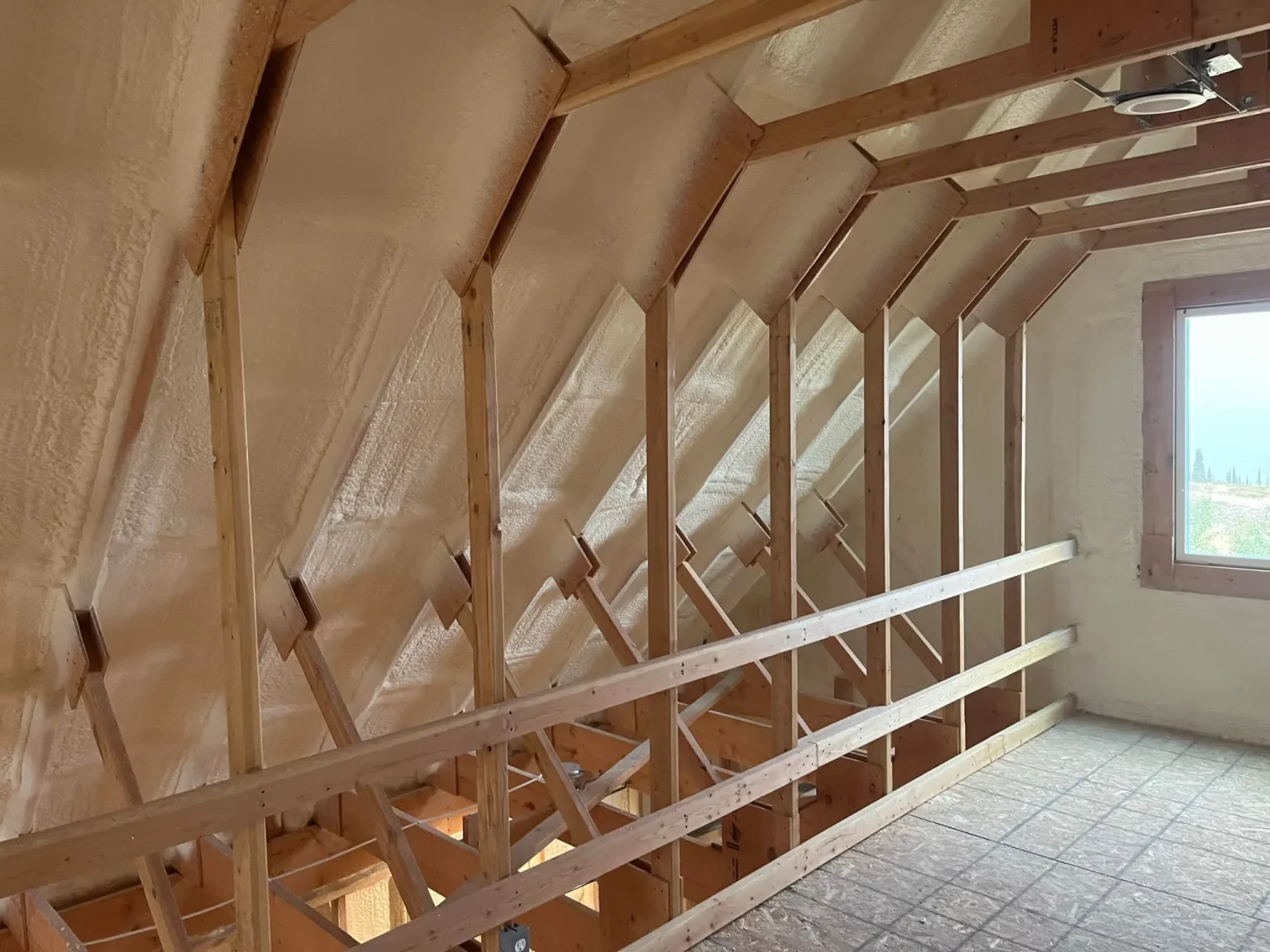
Closed-cell spray foam services in Alpine, WY, can help homeowners reduce air leaks, slow heat transfer, and keep indoor temperatures more consistent through cold winters and warmer summer days. When installed in suitable areas, closed-cell foam combines insulation with air sealing in one layer.
Results depend on the home’s existing insulation, construction, moisture conditions, and where the foam is installed. This guide explains the main benefits, how closed-cell foam compares with other insulation options, what R-value means, and how local weather affects installation decisions.
Why Closed-Cell Spray Foam Is Useful for Alpine Homes
Alpine homes need insulation that suits their building design and seasonal weather. Gaps in walls, roof assemblies, and rim joists can let heated air escape during winter, making rooms harder to keep comfortable.
Closed-cell foam expands against suitable surfaces and helps seal small openings while adding thermal resistance. We assess the area before recommending it, since not every cavity needs the same insulation material.
Reduce Drafts and Uneven Temperatures
Cold floors, drafty rooms, and chilly areas above garages may point to insulation gaps or air leakage. Properly installed foam can help reduce these problems by sealing openings around framing, wiring, and other penetrations.
Insulate Where Space Is Limited
Closed-cell foam has a relatively high R-value per inch, making it useful where a wall or roof assembly has limited room for insulation. The required thickness depends on the product, building design, and applicable code.

Manage Moisture Carefully
Closed-cell foam can slow water vapor movement at sufficient thickness. However, it cannot repair roof leaks, correct poor drainage, or replace proper flashing. The building assembly must be checked so existing moisture problems are not hidden behind the foam.
Benefits of Closed-Cell Spray Foam Services
Closed-cell foam can address several building-envelope concerns in one application. Its value depends on correct product selection, preparation, and installation.
- Improved thermal performance: Adds insulation that slows heat transfer through suitable walls, rooflines, and other areas.
- Reduced air leakage: Helps seal gaps that contribute to drafts and uneven temperatures.
- Moisture vapor resistance: Can limit vapor diffusion when installed at the required thickness.
- Space-saving insulation: Provides a high R-value per inch compared with many common insulation materials.
- Multiple applications: May suit residential walls, rim joists, roof assemblies, and selected foundation areas when the assembly is designed for it.
The U.S. Department of Energy explains that insulation and air sealing can improve comfort and reduce heating and cooling needs. Actual energy savings depend on the home and the work completed. Read the Department of Energy’s insulation and air-sealing guidance.
Closed-Cell Foam vs. Other Insulation Options
Closed-cell foam is not automatically the best choice for every project. Comparing it with open-cell foam and traditional insulation helps homeowners match the material to the space, budget, and moisture requirements.
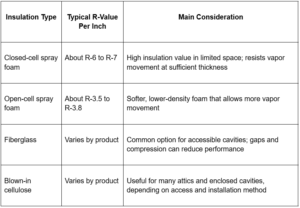
These R-value ranges are approximate and vary by product. The right option depends on the assembly, available space, air-sealing needs, and moisture behavior.
Pros and Cons of Closed-Cell Foam
Closed-cell foam offers strong insulation performance, but homeowners should understand its limitations before scheduling installation.
Advantages
- Provides a high R-value in a relatively thin layer.
- Helps reduce air leakage through treated gaps.
- Can resist vapor diffusion at the correct thickness.
Disadvantages
- Often costs more than traditional insulation materials.
- Can make hidden framing or leaks harder to inspect.
- Requires controlled application, ventilation, and curing.
- May be unsuitable for assemblies that need to dry in a particular direction.
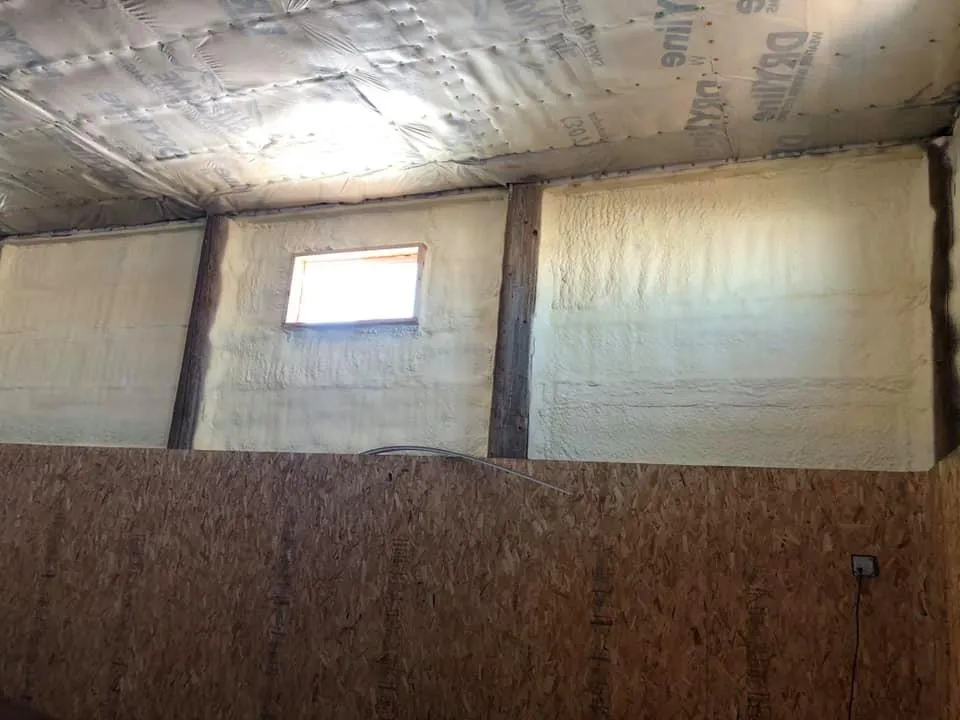
Common Home Insulation Problems in Alpine, WY
Some comfort problems look like insulation failures but have other causes. Identifying the source first helps avoid paying for foam in the wrong place.
- Cold rooms or drafts: Gaps around rim joists, wall penetrations, or framing may allow unwanted air movement.
- Cold attic rooms: The roofline or attic floor may have insufficient insulation or air leaks that need attention.
- High heating demand: Poor insulation and air leakage can increase heat loss, but equipment efficiency and thermostat settings also matter.
- Damp framing or musty odors: These may point to leaks, condensation, or drainage problems that should be corrected before insulation is installed.
We recommend checking the building conditions before choosing a material. Adding foam over damp surfaces can conceal a problem instead of solving it.
What Is the R-Value of Closed-Cell Spray Foam?
R-value measures how well insulation resists heat flow. A higher value means greater resistance, but the performance of a complete wall or roof also depends on framing, air leaks, and installation quality.
Closed-cell spray foam commonly provides around R-5.8 to R-6.9 per inch, depending on the product. For example, 2 inches of foam rated at R-6.5 per inch would provide a nominal R-13.
We recommend selecting the thickness based on the building assembly, available space, and applicable energy-code requirements rather than R-value alone. The Spray Polyurethane Foam Alliance’s technical FAQs offer further information about typical foam performance.
How We Handle Closed-Cell Foam Installation
At High Country Solutions, we focus on choosing the right application for the building instead of treating every space the same way. Our planning should account for insulation needs, moisture conditions, and the requirements of the selected product.
Our process includes:
- Assessing the area: Identify insulation gaps, air leaks, and visible moisture concerns.
- Preparing the site: Protect nearby surfaces and confirm that application conditions meet product instructions.
- Applying the foam: Install it at the specified thickness using suitable equipment and safety procedures.
- Checking coverage: Review the work for missed areas or defects that need correction.
- Confirming protection: Determine whether the installed foam needs a thermal or ignition barrier under the applicable code.
Spray foam application requires proper training and site controls. The EPA advises isolating and ventilating the work area and keeping occupants away until product-specific re-entry conditions have been met.
Why Work With High Country Solutions?
Choosing insulation involves more than picking a product with a high R-value. The installation should suit the building, address the actual problem, and follow product and code requirements.
We offer professional insulation services for residential, commercial, agricultural, and new construction projects. Our services include closed-cell and open-cell spray foam, blown-in insulation, fiberglass, mineral wool, dense-pack cellulose, air sealing, and foundation insulation.
We can help you consider which option fits your property’s insulation needs and available space.
Conclusion
Closed-cell spray foam can help Alpine, WY, homeowners improve indoor comfort and reduce unwanted heat transfer when installed in suitable areas. Proper moisture control, material selection, and application conditions all affect performance.
We help property owners evaluate their insulation needs and consider practical options for their buildings.
Contact High Country Solutions in Alpine, WY
If you’re considering closed-cell spray foam for your home or building, contact us to discuss your project and insulation requirements.
- Phone: (307) 248-9063
- Email: admin@highcountrysol.com
Frequently Asked Questions
Can Closed-Cell Spray Foam Be Applied Over Old Insulation?
Sometimes, but existing insulation should be checked for moisture, damage, and mold before work begins. Some materials may need to be removed first.
Will Closed-Cell Spray Foam Make My Home Too Airtight?
It can reduce air leakage, but proper ventilation is still important for indoor air quality and humidity control.
Can Spray Foam Cause Problems With Roof or Wall Sheathing?
Yes, if moisture becomes trapped or the wrong application method is used. Check for leaks and assess the building assembly before installation.
What Should I Ask a Spray Foam Contractor Before Hiring?
Ask about the product, planned thickness, moisture control, ventilation, re-entry time, and how the contractor checks installation quality.
Author & Reviewer
Author: I’m Skeeter Aimone, owner of High Country Solutions in Alpine, Wyoming. I’ve led this locally owned spray foam insulation company since 2019. I focus on quality workmanship, proper installation practices, and building science to deliver reliable insulation solutions suited to Wyoming and eastern Idaho’s harsh winters, temperature swings, and high-altitude conditions. I’m committed to honest service and lasting results for residential and commercial properties.
Reviewer: Samuel Harris has worked across various roles in spray foam insulation over 11 years. His review focused on how businesses can better present their services to both new and returning clients.