





When choosing the right tarpaulin for camping, you need to consider the size of the tarpaulin. Choosing the right tarpaulin will help keep your tent, camping kit, food and seating safe from the rain, sun and damp. The size you would need will depend on the use of the tarpaulin, the number of campers and how much coverage you want. Choosing the right tarpaulin will help give more protection depending on whether you need a ground sheet, shelter from the rain or coverage for cooking.
What will you use the tarpaulin for?
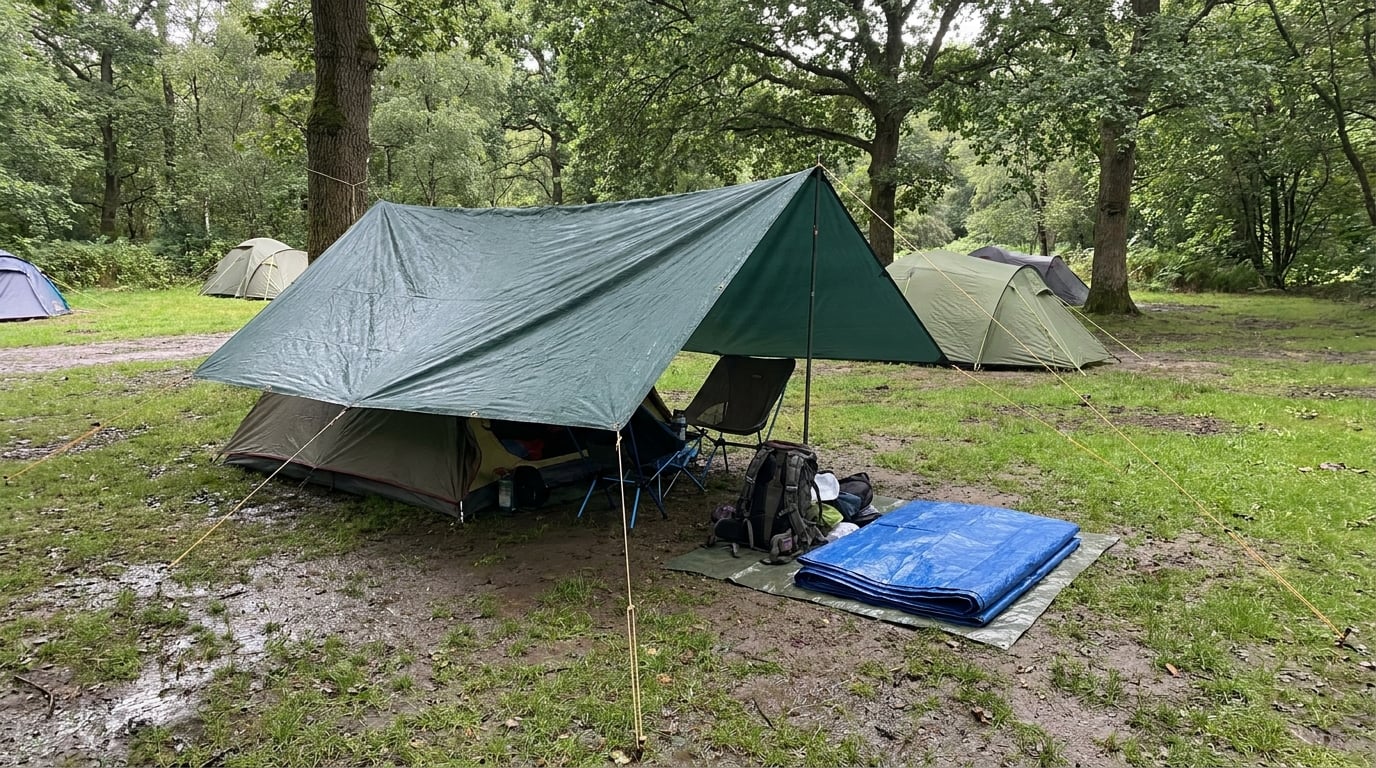
Firstly decide what you are going to use your camping tarpaulin for. Depending on what activity you will be doing whilst camping, you may need different sized tarpaulins. If you want to use it as a ground sheet, you should use a tarpaulin slightly smaller than your tent floor so rain doesn’t pool underneath. For a shelter from rain, a larger sheet will be needed to provide good coverage over your tent or seating. If you want to use it for cooking, choose a size that covers your cooking kit. For covering your equipment, a smaller sheet may be sufficient.
Measure the area you want to cover
Measure the area you want to cover. Take note of how long and wide your tent, seating or equipment is. If using your tarpaulin as a ground sheet, you should choose a tarpaulin that fits underneath your tent. This means there will not be any excess hanging over the edge of your tent so rain will not run down onto it. However, if you are using it as overhead shelter, you will want extra material to cover the area. This will help keep you safe from rain being blown by the wind and direct sunlight. Also, bear in mind that once the tarpaulin has been folded, tied and secured it will not provide as much coverage.
Different shapes and styles
There are different shapes and sizes. Depending on your set-up, choose a tarpaulin that will suit. Rectangular tarpaulins are great for covering your tent, cooking and seating. Square tarpaulins can provide more flexibility. Lightweight tarpaulins will be much easier to fold, carry and store. Consider how many eyelets or reinforced corners there are. This will make it much easier to tie with ropes, poles or the right fixings.
Weather conditions
Weather conditions will affect what size you may need. If there is going to be heavy rain, you want a tarpaulin that will give enough coverage over your tent or area. For sunny weather, a larger tarpaulin will provide more shade to sit and store your equipment. However, take into consideration if there will be much wind. Large tarps can be affected by strong winds so it is important to secure them properly. Don’t set up in an open area during severe weather.
Choose a tarpaulin that is waterproof and UV resistant.
- Material and thickness
Alongside the size of tarpaulin, the material and thickness will affect how durable, heavy and easy to carry it is. Polyethylene (PE) tarpaulins are a popular choice due to them being light, affordable and water resistant. PVC tarpaulins are stronger and more durable but usually heavier. Choose a material that will provide a good balance between protection and ease of carrying. If it is very heavy it may be difficult to carry on long hikes. However, a light tarpaulin may be a good choice for short camping trips and simple coverage.
- Check the finished size
An important thing to consider is how big the tarpaulin actually is. Some companies will state the size before hemming whilst others will state the finished size. Check the specifications of the product. Also, take into consideration if the edges are reinforced, how many eyelets there are and how much space you will need to secure it. This simple tip can help you avoid getting a tarpaulin that is too small.
Conclusion
The size of tarpaulin you need for camping will depend on how many people are camping, how much coverage you want and what you intend to use it for. Smaller tarpaulins can be used to protect equipment or as a ground sheet. Larger tarpaulins can provide shelter for groups of people. Before buying, measure your camping area, consider the weather conditions and choose a durable yet easy to carry material. Choosing the right size and installing it properly can provide useful protection whilst camping.