




Alcoholic Beverages Market to Reach USD 6.10 Trillion by 2034, Driven by Premiumization and Product Innovation
The global alcoholic beverages market is undergoing significant transformation as evolving consumer preferences, premium product demand, changing lifestyles, and expanding distribution networks reshape the industry. Manufacturers are increasingly focusing on product diversification, ready-to-drink (RTD) beverages, low-alcohol alternatives, and advanced production technologies to capture emerging opportunities. At the same time, regulatory requirements and growing awareness of responsible drinking are influencing product development and marketing strategies.
1. Market Estimation, Growth Drivers, and Opportunities
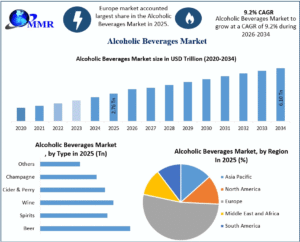
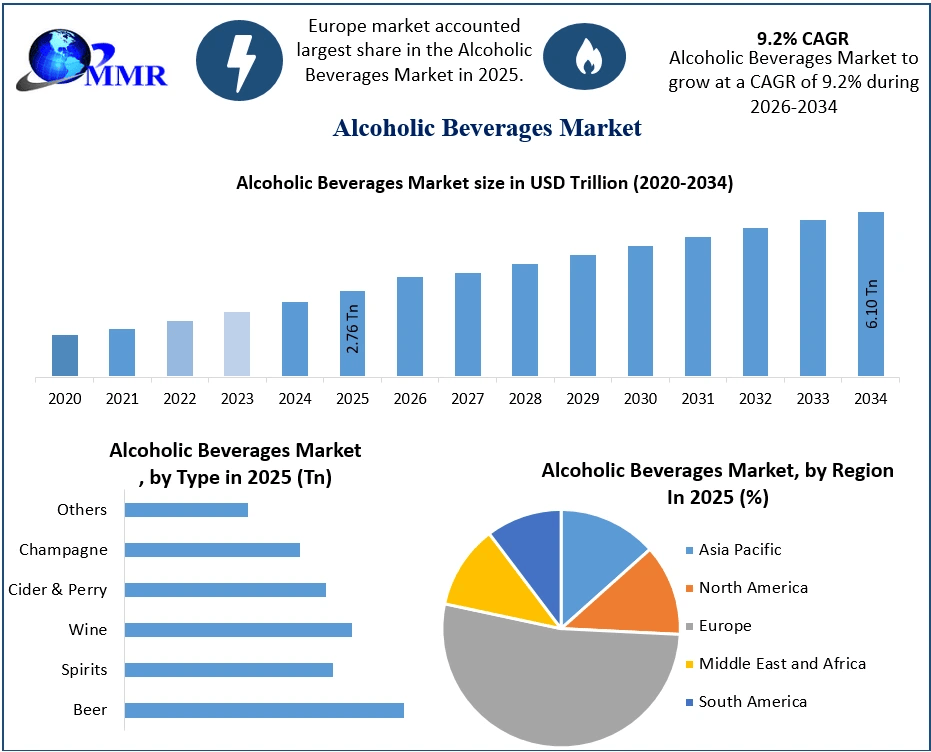
The global Alcoholic Beverages Market was valued at approximately USD 2.76 trillion in 2025 and is anticipated to reach nearly USD 6.10 trillion by 2034, growing at a CAGR of 9.2% during the forecast period of 2026–2034. Alcoholic beverages encompass a wide range of products, including beer, wine, spirits, cider, champagne, and other fermented or distilled drinks. Market growth is primarily driven by rising disposable incomes, changing consumer lifestyles, evolving social preferences, and the expanding availability of alcoholic products across supermarkets, retail stores, restaurants, bars, and online platforms. The increasing preference for premium-quality beverages is further accelerating market expansion, as consumers show greater interest in craft beers, high-end spirits, distinctive flavors, and exclusive drinking experiences. In response, manufacturers are expanding their premium product portfolios and introducing innovative offerings to attract diverse consumer groups. Additionally, the rising popularity of ready-to-drink (RTD) cocktails, flavored alcoholic beverages, and low-alcohol alternatives is creating new revenue opportunities. Advancements in digital marketing, e-commerce platforms, production processes, and packaging technologies are also helping companies improve distribution efficiency and strengthen customer engagement. However, stringent government regulations, high taxation, advertising limitations, and growing awareness of alcohol-related health concerns may restrain market development. Despite these challenges, significant opportunities are emerging in premium spirits, craft beverages, convenient RTD products, low-alcohol formulations, sustainable packaging solutions, and developing economies with increasing demand for diversified beverage options.
To know the most attractive segments, click here for a free sample of the report: https://www.maximizemarketresearch.com/market-report/global-alcoholic-beverages-market/27601/
2. United States Alcoholic Beverages Market: Latest Trends and Investments in 2024
The United States alcoholic beverages market witnessed significant shifts in 2024, driven by growing consumer demand for convenience, premium-quality products, distinctive drinking experiences, and responsible consumption. Ready-to-drink (RTD) cocktails, flavored malt beverages, tequila-based drinks, and non-alcoholic alternatives gained popularity as changing preferences influenced traditional beer, wine, and spirits consumption. NielsenIQ’s 2024 industry review highlighted the continued growth of RTD beverages and increasing consumer interest in moderation, with non-alcoholic beverage sales approaching USD 1 billion across the categories tracked. The craft beer sector also maintained positive momentum, recording an estimated retail dollar value of USD 28.8 billion, reflecting 3% growth compared with the previous year. These evolving trends are creating investment opportunities in innovative beverage formulations, alcohol-free brewing technologies, premium spirits, and advanced manufacturing facilities. Industry participants are also increasing investments in digital distribution channels, sustainable packaging solutions, and product innovation to address changing market expectations. Furthermore, rising demand for convenient beverage formats and differentiated product offerings is encouraging manufacturers to diversify their portfolios and expand their presence across retail outlets and hospitality channels.
3. Alcoholic Beverages Market Segmentation: Leading Segments
Based on type, the beer segment dominated the global alcoholic beverages market in 2025. Its leading position is supported by widespread consumption across different countries, established drinking traditions, broad product availability, and a diverse range of flavors and styles. Beer remains popular among consumers because it is available across multiple price categories, from mass-market products to premium and craft varieties. Manufacturers are further strengthening this segment through product innovation, premium beer launches, and the introduction of low- and no-alcohol alternatives.
Based on packaging, the bottles segment held the largest market share. Bottles remain a preferred packaging format because of their durability, premium appearance, and ability to preserve the quality, flavor, and characteristics of alcoholic beverages. They are particularly important for wine, champagne, and premium spirits, where packaging contributes to brand identity and consumer perception. Although cans are gaining popularity due to convenience and portability, bottles continue to maintain their leading position.
4. Competitive Analysis: Key Companies and Strategic Developments
The global alcoholic beverages market features major international companies competing through brand expansion, acquisitions, premium product launches, and technological innovation. According to the companies listed in the market report, five prominent players include:
- Anheuser-Busch InBev: The company continues to focus on product development, packaging improvements, and production efficiency. In 2024, it invested approximately USD 222 million in research and development, supporting innovations in beverages, packaging, and draught systems. These activities are intended to improve product quality and consumer experiences while strengthening competitiveness.
- Diageo plc: Diageo is emphasizing premium spirits, digital transformation, and data-driven marketing. Its 2024 strategy included increased investment in digital capabilities and brand development. The company also introduced digital tools, including a generative AI-based cocktail recommendation platform, to improve consumer engagement and encourage new product experiences.
- Pernod Ricard: The company is strengthening its premium spirits portfolio through strategic investments, brand development, and technology adoption. In 2024, Pernod Ricard announced investment plans of up to EUR 200 million in India, including the development of a major malt distillery in Maharashtra. The project is expected to strengthen production capabilities and support the company’s long-term international growth strategy.
- China Resources Snow Breweries: The company is focusing on premiumization, production modernization, and product diversification. In 2024, it established two intelligent factories in China and introduced new premium beer products, including Nong Li and Ken 14. Its continued investment in smart manufacturing and premium product development is expected to support operational efficiency and strengthen its competitive position.
- Heineken N.V.: Heineken is expanding its premium beer and low- and no-alcohol beverage portfolios. In 2024, Heineken 0.0 recorded strong growth, while the company increased investment in marketing, digitalization, and sustainability. Its focus on reusable packaging, recycled materials, and advanced digital systems is helping improve operational performance and respond to changing consumer preferences.
These strategies demonstrate how product innovation, production modernization, premiumization, and sustainability initiatives are shaping competition across the alcoholic beverages industry.
5. Regional Analysis: Major Country Markets
United States: The United States remains an important market, supported by a large consumer base, established beer and spirits industries, premium product demand, and a strong craft beverage ecosystem. The Alcohol and Tobacco Tax and Trade Bureau (TTB) regulates the production, distribution, and labeling of alcoholic beverages, providing a structured regulatory framework for industry participants. Growth opportunities are emerging in RTD cocktails, craft beer, tequila, and non-alcoholic alternatives.
United Kingdom: The UK market benefits from established beer, whisky, gin, and cider industries, along with a strong hospitality and pub culture. The government’s alcohol duty reforms introduced a system that links taxation more closely to alcohol strength. In October 2024, the government announced a reduction in duty rates for qualifying draught products, effective February 2025, supporting pubs and hospitality businesses.
Germany: Germany has a well-established beer industry supported by long-standing brewing traditions, domestic consumption, and international exports. Government tax provisions offer reduced beer duty rates for qualifying smaller breweries, helping independent producers maintain competitiveness and preserve employment. Demand for premium, regional, and craft beer varieties also contributes to market development.
France: France is internationally recognized for its wine, champagne, and spirits industries. Its established vineyards, protected geographical indications, export networks, and premium product reputation support market demand. However, the Loi Évin imposes strict restrictions on alcohol advertising, requiring manufacturers to follow specific promotional and public health communication rules.
Japan: Japan’s alcoholic beverages industry is supported by established beer, sake, whisky, and RTD categories. Changes to liquor taxation have influenced consumer preferences and product pricing, while growing demand for convenient and lower-alcohol beverages is encouraging product diversification. In 2024, Japan introduced its first health-focused drinking guidelines, further highlighting the importance of responsible consumption and creating opportunities for non-alcoholic beverage innovation.
China: China’s market benefits from a large consumer base, established beer and baijiu industries, and increasing demand for premium products. Domestic manufacturers are investing in production modernization, brand development, and higher-value beverage categories. China Resources Snow Breweries’ expansion of intelligent manufacturing facilities and premium beer offerings reflects the industry’s focus on quality improvement and operational efficiency.
The market report identifies Europe as the leading regional market in 2025. However, it does not provide separate global market-share percentages for the six countries discussed above; therefore, individual country shares have not been estimated.
6. Conclusion
The global alcoholic beverages market is expected to maintain substantial growth through 2034, supported by premiumization, product diversification, expanding distribution networks, and changing consumer preferences. Beer currently leads the market by type, while bottled products remain the preferred packaging format. Companies that invest in premium beverages, RTD products, low- and no-alcohol alternatives, sustainable packaging, and advanced manufacturing technologies are likely to strengthen their competitive positions. At the same time, responsible marketing, regulatory compliance, and transparent product information will remain essential for sustainable business development. In the coming years, innovation in beverage formulations, digital consumer engagement, and expansion into emerging markets are expected to create significant growth opportunities for manufacturers and investors worldwide.
To know the most attractive segments, click here for a free sample of the report: https://www.maximizemarketresearch.com/request-sample/27601/
About us
Maximize Market Research publishes sector forecasts, competitive analysis, and consulting insight for teams evaluating demand, competition, pricing, and growth strategy across high-value industries.
MAXIMIZE MARKET RESEARCH PVT. LTD.
2nd Floor, Navale IT Park Phase 3
Pune Banglore Highway, Narhe
Pune, Maharashtra 411041, India
+91 9607365656
sales@maximizemarketresearch.com