







Choosing the right dining table material comes down to four things: how it looks, how it holds up, how much maintenance it needs, and whether it suits your lifestyle. Marble offers timeless elegance but requires sealing and care. Wood brings warmth and character with moderate upkeep. Sintered stone is the most durable and low-maintenance of the three, making it increasingly popular in modern homes.
If you are exploring a marble dining table in Singapore, you are likely weighing it against other popular options. This guide breaks down the real differences so you can make a confident, informed choice for your home.
Why Material Choice Matters More Than You Think
A dining table is one of the most used pieces of furniture in a home. It handles daily meals, homework sessions, work-from-home setups, and weekend gatherings. The material you choose determines how the table ages, how much effort you put into upkeep, and whether it still looks good five years down the line.
In Singapore’s humid tropical climate, these factors carry extra weight. Heat, humidity, and frequent cleaning can accelerate wear on materials that are not suited to local conditions.
Marble Dining Tables: Beauty With Responsibility
Appearance and Appeal
Marble is arguably the most visually striking of the three. Its natural veining patterns are unique to every slab, making each table genuinely one of a kind. It suits classical, Mediterranean, and contemporary luxury interiors particularly well. In Singapore’s interior design scene, marble remains a go-to choice for those wanting a statement piece that elevates the entire dining space.
Durability and Maintenance
Here is where honesty matters. Marble is a porous stone. Without regular sealing typically once a year it absorbs liquids and stains. Acidic substances like lemon juice, vinegar, and even certain sauces can etch the surface and leave dull marks that are difficult to reverse.
That said, a well-maintained marble table can last decades. The key is treating it with the right products and being mindful of what you place on the surface. Using coasters, placemats, and trivets goes a long way.
Heat Resistance
Marble handles heat better than wood but can still crack under sudden thermal shock. Placing a very hot pan directly on marble is not recommended. Always use a trivet or heat pad.
Wooden Dining Tables: Warmth and Versatility
Appearance and Interior Fit
A wooden dining table in Singapore fits a broader range of interior styles than marble from Scandinavian minimalist to rustic, japandi, or even mid-century modern. Solid wood carries a warmth and texture that no engineered material fully replicates. Over time, wood develops a natural patina that many homeowners actually appreciate.
Durability and Maintenance
Solid hardwoods like teak, oak, and walnut are genuinely durable. Teak, in particular, is naturally resistant to moisture and insects, which makes it well-suited for Singapore’s humid environment. However, wood is susceptible to scratches, water rings, and warping if exposed to prolonged moisture or direct sunlight.
Annual oiling or waxing helps preserve the finish and extend the life of the table significantly. Engineered wood or veneer options are more affordable but do not age as gracefully as solid hardwood.
Heat Resistance
Wood is the least heat-resistant of the three materials. Hot dishes, pots, or cups placed directly on the surface can leave permanent burn marks or white rings. Protective table mats and trivets are essential.
Sintered Stone Dining Tables: The Modern Workhorse
What Is Sintered Stone?
Sintered stone is an engineered material made by compressing and heating natural minerals at extreme temperatures. The result is an ultra-dense, non-porous surface that mimics the appearance of marble, concrete, or natural stone without the vulnerabilities. It has gained significant traction among homeowners and interior designers looking for high-performance surfaces with a premium aesthetic.
Durability and Everyday Usability
This is where sintered stone genuinely shines. It is scratch-resistant, stain-resistant, and non-porous meaning spills sit on the surface and wipe away cleanly. There is no need for sealing, oiling, or specialist cleaning products. For busy households with children or frequent entertaining, this practical advantage is hard to overstate.
A sintered stone dining table in Singapore is increasingly popular for exactly this reason. It handles the demands of daily life without complaint.
Heat Resistance
Sintered stone outperforms both marble and wood when it comes to heat resistance. It can typically withstand temperatures up to 300°C, making it safe for placing hot cookware directly on the surface — though using trivets remains a good habit regardless of material.
Side-by-Side Comparison
| Feature | Marble | Wood | Sintered Stone |
|---|---|---|---|
| Appearance | Luxurious, natural veining | Warm, organic texture | Sleek, contemporary, versatile |
| Durability | Moderate (prone to etching) | Good (varies by wood type) | Excellent |
| Maintenance | High (annual sealing required) | Moderate (oiling/waxing) | Low (wipe clean) |
| Heat Resistance | Moderate | Low | High |
| Scratch Resistance | Moderate | Low to moderate | High |
| Best Interior Styles | Luxury, classical, contemporary | Rustic, Scandi, japandi | Modern, minimalist, industrial |
| Price Range (SG) | Mid to high | Mid range | Mid to high |
Which Material Is Right for Your Home?
There is no universal right answer but there are clear patterns based on lifestyle and priorities.
- Choose marble if aesthetics are your top priority, you entertain occasionally rather than daily, and you are willing to invest in proper care. A marble coffee table in Singapore also pairs beautifully with a marble dining table for a cohesive living and dining aesthetic.
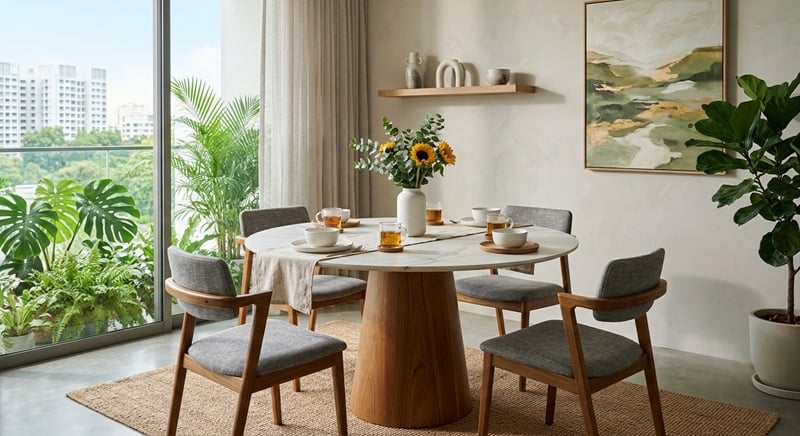
- Choose wood if you prefer a warmer, more relaxed atmosphere and want a table that feels inviting rather than formal. A round dining table in Singapore crafted from solid teak or oak works particularly well in compact HDB dining spaces where conversation flow matters.
- Choose sintered stone if you have a busy household, young children, or simply want a table that demands almost nothing of you maintenance-wise while still looking refined.
A Note on Table Shape
Material aside, shape plays a significant role in how a dining table functions in a space. Round tables encourage conversation and work well in square rooms or open-plan layouts. Rectangular tables suit longer, narrower dining areas and seat more guests. Oval designs offer a middle ground the length of a rectangle with the soft edges of a round format.
If you are furnishing a new home or refreshing your dining space, Modena Furnishing offers a curated range of dining tables across all three material categories with options to suit varied interior styles, budgets, and spatial requirements. Their collection is worth exploring whether you are set on marble or still deciding between materials.
Frequently Asked Questions
Is marble a good choice for a dining table in Singapore?
Marble is a beautiful choice but requires regular sealing to prevent staining in Singapore’s humid environment. It suits low-traffic households or those committed to proper upkeep. For everyday family dining, sintered stone may offer better long-term practicality with a similar premium look.
How do I maintain a marble dining table?
Seal the surface once a year using a stone-specific sealant. Wipe spills immediately, especially acidic liquids like citrus juice or wine. Avoid abrasive cleaners, and always use coasters and placemats to prevent etching and water rings on the surface.
What is the most durable dining table material?
Sintered stone is currently the most durable dining table material. It is scratch-resistant, stain-resistant, heat-tolerant, and non-porous. It requires minimal maintenance and performs well in high-use environments making it particularly practical for families and households that use the dining table daily.
Is sintered stone better than marble for a dining table?
For everyday usability, yes. Sintered stone is harder, less porous, and far easier to maintain than natural marble. However, marble holds a distinct aesthetic appeal and natural uniqueness that engineered stone cannot fully replicate. The better choice depends on whether you prioritise beauty or practicality.
What dining table material works best for small Singapore homes?
Round wooden or sintered stone tables work well in compact HDB flats and condominiums. Round shapes maximise seating without sharp corners, and lighter wood tones or white sintered stone surfaces can make a small dining area feel more open and airy.
Can I place hot items directly on a sintered stone dining table?
Sintered stone can generally withstand temperatures up to 300°C, making it the safest surface for hot cookware among the three materials. However, using trivets and heat pads as a standard habit is still advisable to preserve the finish and avoid any thermal stress over time.