






Utility-scale solar projects require significant investment, careful engineering, and coordination between multiple stakeholders. While construction is an important milestone, completing the installation does not automatically mean a solar plant is ready to operate. Before connecting a facility to the electrical grid and beginning commercial operations, developers must ensure that every major system performs safely, reliably, and according to its design requirements.
Commissioning plays a critical role in this process. It verifies that equipment has been installed correctly, electrical systems operate as intended, and the facility can deliver the expected power output. Proper preparation also helps identify technical problems before they become expensive operational issues. Understanding the essential requirements before starting utility-scale solar commissioning can help developers reduce delays, protect their investment, and achieve long-term project reliability.
1. Understand the Project Design and Engineering Requirements
Before commissioning begins, developers should confirm that the completed solar facility matches its approved engineering design. Even small differences between construction documents and installed equipment can affect electrical performance, system protection, and operational safety.
The review should cover major project components, including photovoltaic (PV) modules, inverters, DC collection systems, transformers, medium- and high-voltage equipment, switchgear, transmission connections, and grounding infrastructure.
Developers should also verify that equipment ratings match the project’s electrical requirements. For example, inverter capacity, transformer specifications, cable ratings, and protection settings must be coordinated to support the intended operating conditions.
Updated as-built drawings are equally important. These documents should reflect actual field installations rather than outdated design assumptions. Having accurate single-line diagrams, equipment layouts, cable schedules, and protection documentation gives commissioning teams a reliable foundation for testing.
2. Verify Equipment Installation and Electrical Safety
Equipment inspection should take place before energization. The objective is to identify installation defects, damaged components, incorrect connections, and potential safety hazards before the facility enters operation.
For PV systems, inspections typically include module condition, mounting structures, cable routing, connector compatibility, polarity, and string configuration. Loose connections, poor cable management, or incorrect polarity can create performance problems and electrical hazards.
Inverters and transformers require additional attention. Commissioning teams should inspect grounding connections, insulation condition, cooling systems, control wiring, protective devices, and manufacturer-recommended installation requirements.
Grounding and lightning protection systems are especially important for large solar installations. Developers should ensure that grounding infrastructure has been installed according to the approved design and that appropriate testing has been completed. Ground potential rise, step and touch voltages, and fault-current paths may also require engineering evaluation.
A documented inspection process helps establish that the plant is physically ready for electrical testing and eventual energization.
3. Plan Grid Interconnection and Protection Testing
A utility-scale solar plant must operate in coordination with the electrical grid. Therefore, grid interconnection requirements should be addressed well before the commissioning date.
Developers need to understand the applicable utility and transmission operator requirements, including voltage control, frequency response, reactive power capability, power factor requirements, and fault ride-through performance.
Protection and control systems also need thorough verification. Protective relays, circuit breakers, instrument transformers, communication interfaces, and trip circuits must function correctly under normal and abnormal operating conditions.
Depending on project requirements, testing may include relay injection tests, breaker timing tests, interlock verification, transformer protection checks, and end-to-end communication testing.
Power system studies can provide important information during this stage. Load-flow analysis, short-circuit studies, and protection coordination assessments help confirm that the facility can connect safely without creating unacceptable operating conditions.
Developers should coordinate testing schedules with the utility, independent engineers, equipment manufacturers, and commissioning contractors. Early coordination helps avoid delays caused by unavailable personnel, incomplete documentation, or outstanding interconnection approvals.
4. Evaluate Plant Capacity and Expected Performance
One of the most important commissioning objectives is confirming that the solar plant can achieve its intended electrical output. Installed equipment capacity alone does not guarantee that the facility will deliver its expected generation.
A comprehensive solar plant capacity testing program helps determine whether the plant performs according to its design and contractual requirements.
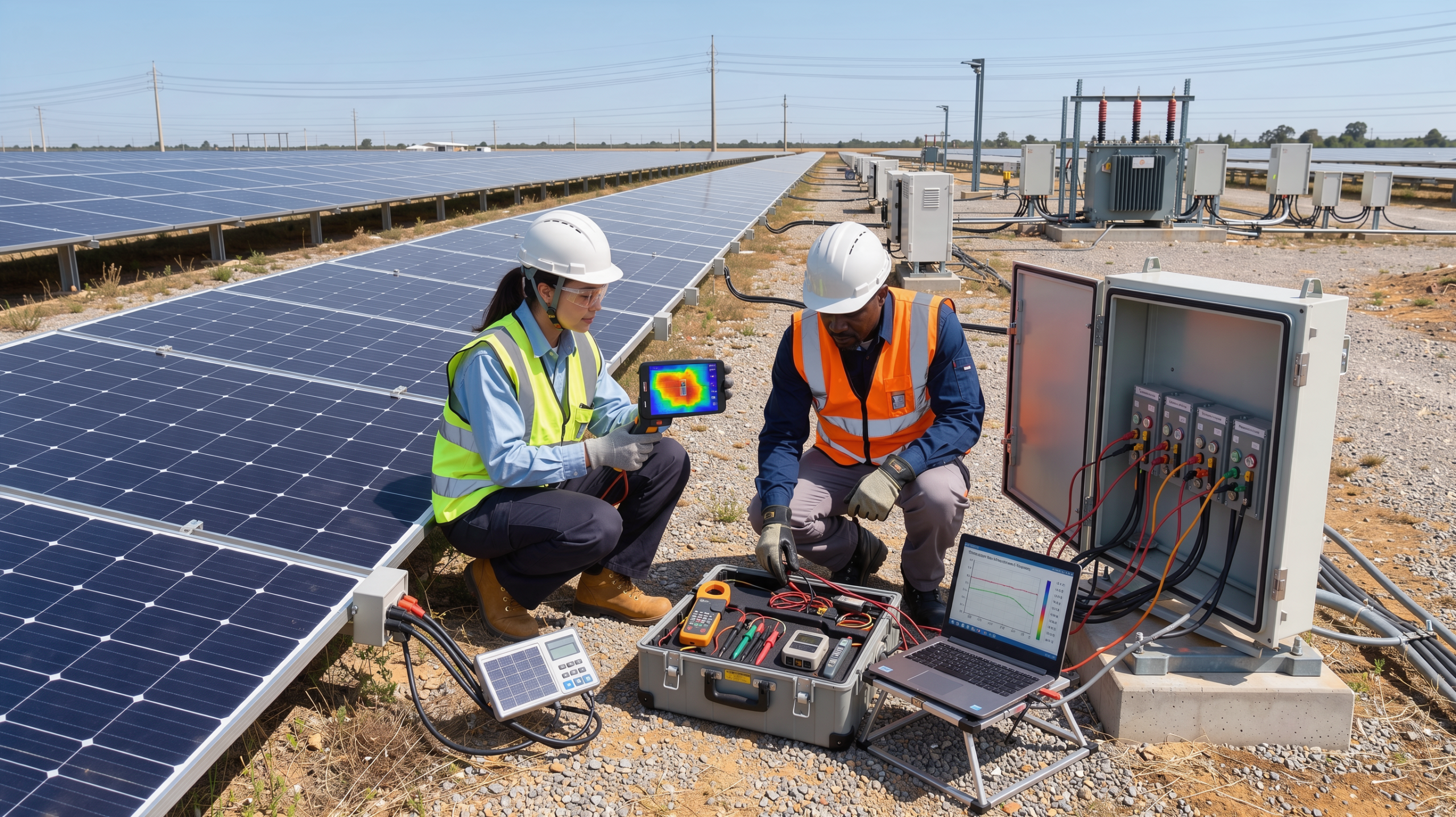
Testing may include inverter output verification, DC string measurements, AC power measurements, transformer performance checks, and plant-level power output assessments. Environmental conditions, including solar irradiance, ambient temperature, and module temperature, should also be considered when interpreting results.
Developers should establish clear acceptance criteria before testing begins. These criteria may be based on equipment specifications, engineering calculations, contractual performance guarantees, and applicable industry standards.
Performance ratio (PR) is another useful measurement. It compares actual energy production with the theoretical energy available from the solar resource after accounting for system losses. It can help identify issues involving module performance, inverter efficiency, wiring losses, and other operational factors.
Accurate measurements and properly documented test conditions are essential. Without reliable data, developers may struggle to distinguish between genuine equipment deficiencies and normal variations caused by weather conditions.
5. Prepare Monitoring, Controls, and Operational Systems
A solar plant needs more than functioning electrical equipment to operate successfully. Developers must also confirm that monitoring, communication, automation, and control systems are ready before commercial operation.
The supervisory control and data acquisition (SCADA) system provides operators with visibility into plant performance and equipment status. It typically collects information from inverters, weather stations, meters, protection devices, transformers, and other field equipment.
Commissioning should verify communication between these systems and confirm that alarms, measurements, control commands, and event records are accurate.
Plant controllers may also be responsible for maintaining active power output, voltage, reactive power, and power factor within grid operator requirements. Their functionality should be tested under appropriate operating conditions.
Developers should additionally establish procedures for equipment alarms, fault reporting, emergency shutdowns, and remote access. Reliable monitoring makes it easier to identify abnormal operating conditions and respond before minor problems develop into significant failures.
6. Complete Documentation and Establish Long-Term Operational Readiness
Commissioning should finish with a complete record of inspections, test results, outstanding issues, and formal acceptance activities. Documentation is essential for demonstrating that the facility meets its technical, contractual, and regulatory requirements.
Important records include equipment test certificates, insulation resistance measurements, relay testing reports, grounding test results, inverter commissioning records, SCADA verification reports, and grid interconnection approvals.
Developers should also ensure that all identified deficiencies have been addressed or formally documented with an agreed corrective action plan.
An independent solar project performance evaluation can provide an additional level of confidence by reviewing engineering assumptions, equipment performance, testing results, and operational readiness. This assessment can help identify performance gaps and determine whether the facility is prepared to meet its expected operating objectives.
Before commercial operation, developers should also arrange operator training, maintenance schedules, spare-parts planning, warranty documentation, and emergency response procedures. These activities help ensure that the plant remains reliable long after commissioning is complete.
Conclusion
Successful utility-scale solar commissioning begins long before the first energization activity. Developers must coordinate engineering reviews, equipment inspections, electrical safety checks, grid interconnection testing, capacity verification, and operational system validation.
A structured commissioning strategy reduces technical uncertainty, improves project readiness, and helps protect the long-term value of a solar investment. Working with experienced power engineering professionals can also help developers identify potential problems early and establish confidence in plant performance.
By prioritizing proper testing, accurate documentation, and independent technical evaluation, developers can move from construction completion to commercial operation with greater confidence and a stronger foundation for reliable solar energy generation.