




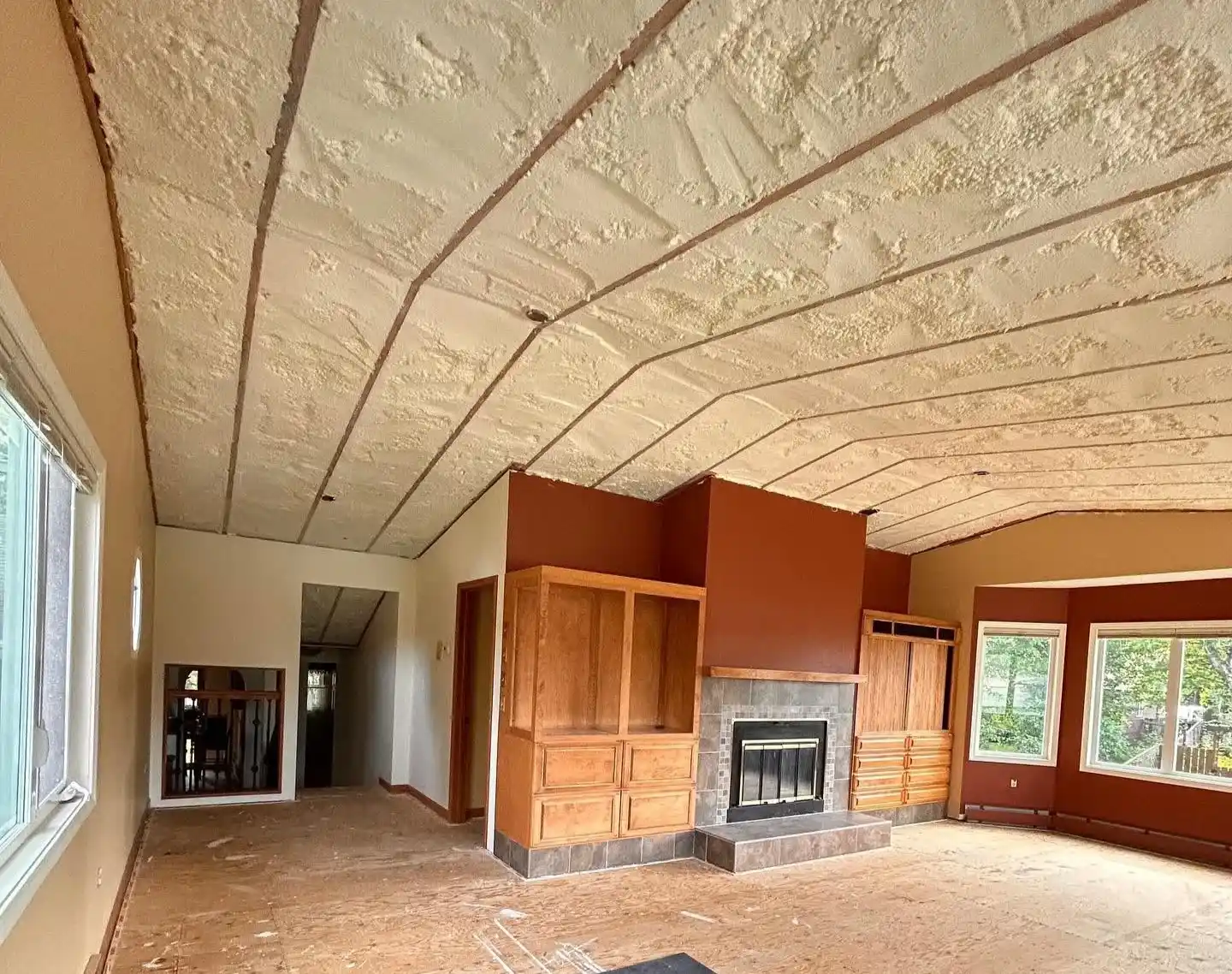
Hiring a spray foam contractor is usually the better choice for large insulation projects, new construction, metal buildings, and areas that need consistent coverage. DIY insulation can be practical for small gaps or simple repairs, but spray foam requires careful handling, suitable application conditions, and proper safety measures. The right option depends on the project’s size, existing insulation, moisture conditions, and the type of foam being used.
This guide compares professional spray foam installation with DIY insulation, including costs, safety, R-value, common application problems, and the situations where professional spray foam services offer better value.
Why Choose Professional Spray Foam Installation?
Spray foam does more than slow heat transfer. When applied correctly, it can also seal gaps that allow unwanted air movement. Professional installation helps ensure the foam suits the building assembly and is applied according to the product manufacturer’s instructions.
A contractor can assess the area before work begins and identify problems that a DIY project might miss.
- Consistent coverage: Professional applicators can control foam thickness and coverage across larger areas, reducing the chance of missed gaps or uneven application.
- Proper preparation: Surfaces need to be clean and dry, and existing leaks or damaged materials should be addressed before installation.
- Suitable equipment: Professional systems require the right equipment, material handling, and application techniques to produce the intended results.
- Safety planning: Contractors should plan work-area isolation, ventilation, protective equipment, and safe re-entry based on the product requirements.
The U.S. Environmental Protection Agency’s spray foam safety guidance explains why training, exposure controls, and manufacturer instructions matter during installation.

When Is DIY Insulation a Practical Option?
DIY insulation may suit small repairs, such as sealing gaps around pipes, when consumer foam is appropriate and safety instructions are followed. Larger projects, such as insulating walls, crawl spaces, or metal buildings, may require professional installation.
DIY may be suitable when:
- The repair is small: Only a limited gap needs sealing.
- The product fits: Check approved uses on the label.
- Safety requirements are met: Follow instructions for protection, ventilation, curing, and cleanup.
The EPA recommends trained applicators for high-pressure, two-component spray foam systems. Consumer products also require proper precautions.
Professional Contractor vs. DIY Insulation
Both options can improve insulation performance, but they differ in equipment, safety requirements, application control, and the amount of work involved.
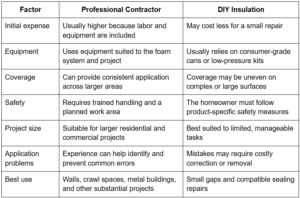
The best option depends on the job, not simply on the price of the foam. The cost of correcting a failed application can outweigh the savings from doing the work independently.
Pros and Cons of Hiring a Contractor
Professional installation can provide better control over a complex project, but homeowners should still compare estimates and check the contractor’s qualifications.
Advantages
- Better application control: An experienced installer can manage foam thickness, coverage, and application conditions across the planned area.
- Project assessment: A contractor can identify moisture concerns, existing insulation problems, and locations that may require separate air sealing.
- Suitable equipment and planning: Larger projects often require specialized equipment, material preparation, ventilation, and a coordinated work schedule.
- Clearer project scope: A detailed estimate can explain the area covered, foam type, target thickness, preparation, and cleanup.
Limitations
- Higher upfront cost: Labor, equipment, preparation, and project size can make professional installation more expensive than a small DIY repair.
- Scheduling requirements: Larger jobs may require planning and temporary relocation of occupants.
- Contractor quality varies: Homeowners should check relevant training, insurance, references, and the proposed installation method before hiring.
Common DIY Insulation Problems
DIY insulation problems often start when the installer overlooks surface conditions, uses an unsuitable product, or assumes that visible foam automatically means the area is insulated correctly.
These mistakes can affect performance and create additional work.
- Uneven foam coverage: Gaps or inconsistent thickness can leave sections with less thermal protection than intended.
- Poor adhesion: Dust, surface moisture, or unsuitable temperatures can interfere with how foam bonds to a surface.
- Excessive application: Applying too much foam in one area can create problems with expansion, curing, or the fit of surrounding materials.
- Unresolved moisture: Covering damp materials can conceal a leak or interfere with the building assembly’s ability to dry.
- Unsafe application: Inadequate protective equipment or ventilation can expose the applicator and others to hazardous chemicals.
The Consumer Product Safety Commission’s spray foam safety recommendations advise homeowners to understand product hazards, follow safety instructions, and confirm safe re-entry requirements.
If foam is poorly applied, removal may be difficult and may require professional assessment. Prevention is generally easier than correcting a failed installation.
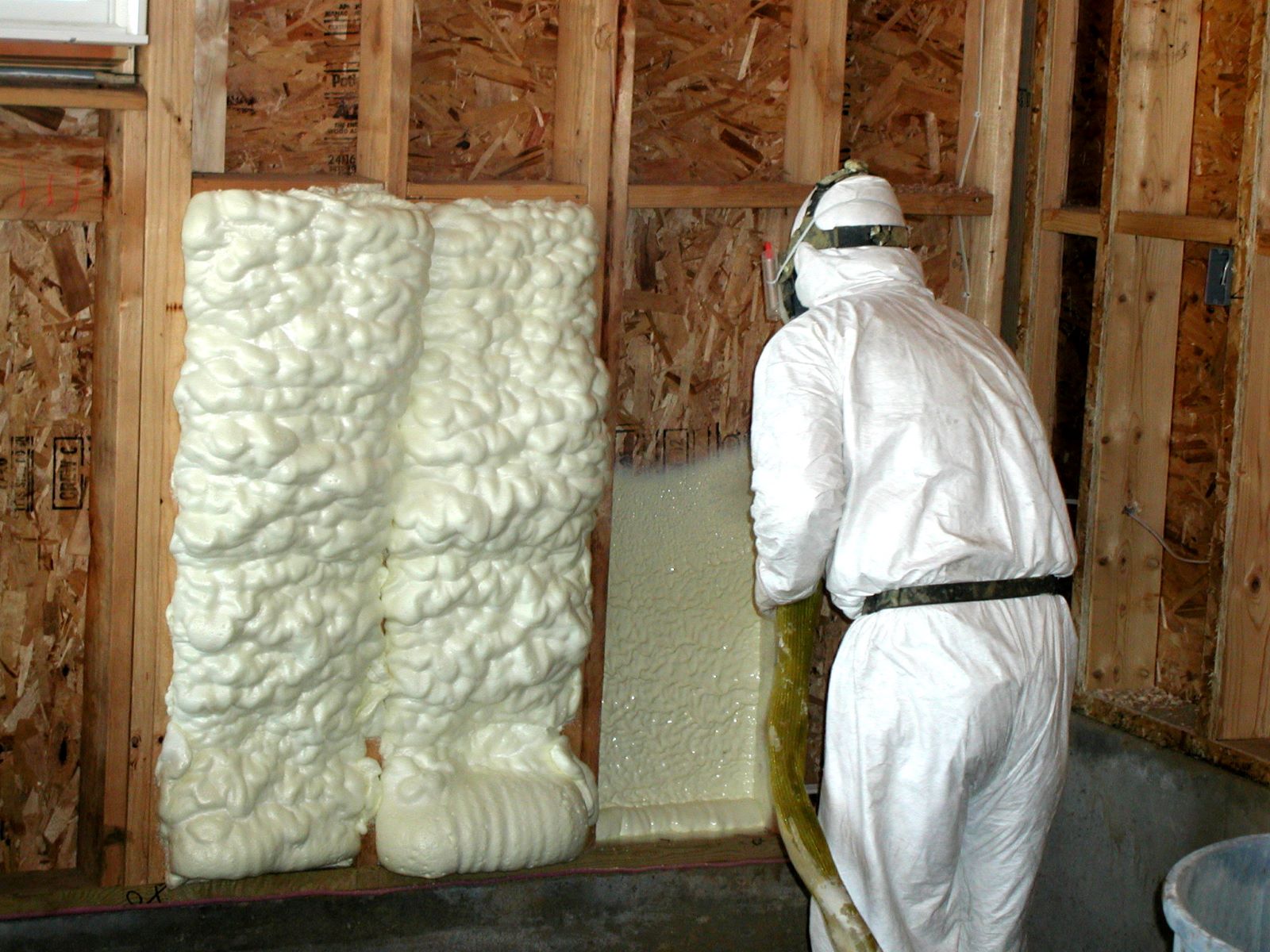
How Weather Affects Spray Foam Installation
Temperature and moisture affect spray foam expansion, adhesion, and curing. Installers must follow the product’s requirements.
- Surface temperature: Must meet the product’s specified range.
- Moisture: Damp surfaces can affect adhesion and foam quality.
- Material storage: Components must be handled according to manufacturer instructions.
- Ventilation and curing: Follow safety and re-entry requirements.
Professional installers can plan around suitable conditions, while DIY users must follow their product guidelines.
Understanding R-Value
R-value measures resistance to heat flow. Higher values generally mean better thermal resistance.
- Open-cell foam: Approximately R-3.5 to R-3.8 per inch.
- Closed-cell foam: Approximately R-6 to R-7 per inch.
Actual values vary by product. The U.S. Department of Energy’s insulation guide explains how R-value and installation affect performance. A contractor can help determine the right insulation level while considering moisture control and building design.
Why Consider Polyseal Insulation?
Polyseal Insulation provides residential and commercial spray foam services, including open-cell and closed-cell foam, new construction, retrofits, metal buildings, crawl spaces, and spray foam roofing. The company also offers foundation repair, concrete lifting, and soil stabilization.
Before starting, property owners should confirm the right foam type, coverage, thickness, surface preparation, moisture checks, safety precautions, and cleanup. A written estimate should clearly explain the work included.
Conclusion
Professional spray foam installation is generally the better choice for large projects, complex spaces, and applications that require consistent coverage and careful control of installation conditions. DIY foam can be useful for small, suitable repairs, but it still requires proper preparation and safety precautions.
The right decision comes down to project size, material requirements, existing moisture conditions, and the risk of application errors. Comparing the full cost of installation and potential corrections can help property owners choose an approach that delivers reliable insulation performance.
Contact Polyseal Insulation
Need help deciding between professional spray foam installation and DIY insulation? Contact Polyseal Insulation to discuss the project, review suitable insulation options, and determine what the property needs.
Polyseal Insulation
- Email: info@polysealinsulation.com
- Phone: (907) 341-4848
Frequently Asked Questions
Is DIY Spray Foam Insulation Worth It?
DIY foam may be worth considering for small gaps and limited repairs. For larger projects, equipment needs, safety precautions, coverage, and the risk of mistakes can make professional installation the better value.
Can DIY Spray Foam Cause Problems?
Yes. Poor surface preparation, unsuitable application conditions, uneven coverage, and inadequate safety precautions can affect results. Moisture problems should be addressed before foam is applied.
Is Professional Spray Foam Installation Safer?
Professional installation allows trained applicators to plan protective equipment, ventilation, work-area isolation, and curing procedures. Homeowners should still confirm the contractor’s safety plan and follow instructions about when occupants can return.
Can a Homeowner Use a Two-Component Spray Foam Kit?
Some low-pressure kits are sold for consumer use, but high-pressure, two-component spray foam systems are intended for trained applicators. Homeowners should follow the product label and safety data sheet and seek professional help when the application exceeds their training or equipment.
Author & Reviewer
Author: Logan Korpela, owner of Polyseal, leads a family-owned insulation company that has served Alaska since January 1, 2003. With more than two decades of experience in the state’s demanding climate, Logan focuses on building durable insulation systems for residential, commercial, and new construction projects. Polyseal’s award-winning work and active SPFA membership reflect its commitment to skilled installation, reliable materials, and long-term building performance. Under Logan’s leadership, the company continues to serve Alaska with a focus on quality insulation and dependable installation for different building projects.
Reviewer: Henry Turner has 9 years of experience in spray foam insulation. He reviewed this article and helped shape it into a clear guide for companies working to build trust in their local market.