







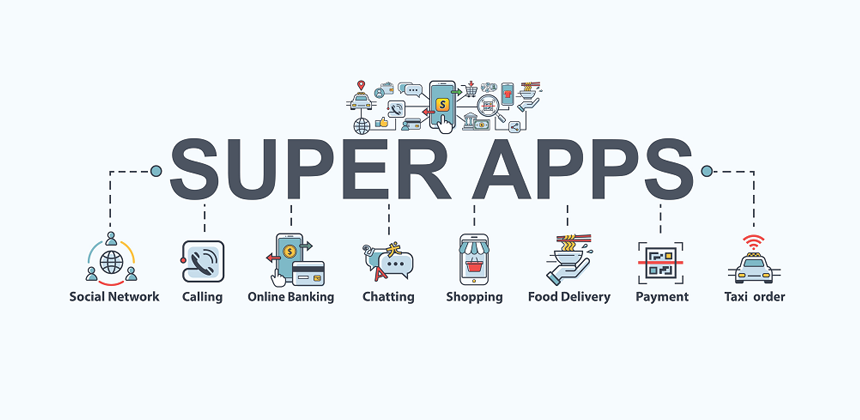
Anyone can build a mobile app. Building a superapp is a different job. A superapp combines chat, payments, bookings, shopping, delivery, and third-party services under one login, and it must run smoothly for thousands or millions of users at once. Many agencies claim they can do it. Few can.
This article explains what separates a strong superapp developer from an average one, which questions buyers should ask, and which warning signs should end a conversation early.
Why Choosing the Right Developer Matters
A superapp is not a single product. It is a platform made of many products that share data, identity, and design. A mistake in the foundation spreads to every module built on top of it. A weak payment system, a slow search engine, or a poor permissions model can force a costly rebuild.
The developer you pick decides four things:
- How fast you reach the market
- How well the platform handles growth
- How safe user data stays
- How easily you add new services later
Because these choices last for years, the selection process deserves more care than a typical software purchase. A top superapp clone development company brings a tested foundation and proven modules, which lowers the risk of early mistakes and makes the platform easier to grow.
Trait 1: Proven Experience With Multi-Service Platforms
The first sign of a strong developer is a portfolio of real, live platforms. Simple apps with one function do not prove anything about superapp skills. Buyers should look for projects that combine several services, such as a ride app that adds food delivery and wallet payments, or a marketplace that adds chat and booking.
Ask the developer to show:
- Live products in app stores, not just design mockups
- The number of active users each product serves
- Which modules the team built and which it licensed
- How the team handled growth after launch
A developer who has shipped a multi-service product can explain what went wrong along the way. That honesty shows real experience.
Trait 2: Strong Architecture Thinking
Superapps need an architecture that supports many services without turning into a tangle. The best developers plan this before they write code.
Good teams usually use a modular or microservices design. Each service, such as payments, messaging, or ordering, runs on its own and talks to the others through clear connections. This setup lets teams update one module without breaking the rest, and it lets the platform scale where demand is highest.
Look for a developer who can explain:
- How the shared login and user profile work
- How the system handles traffic spikes
- How new mini apps plug into the platform
- How data moves between modules
If a developer cannot explain these points in plain language, the plan probably lacks depth.
Trait 3: Real Security and Compliance Skills
Superapps hold payment details, personal data, location history, and private messages. That makes them attractive targets. A standout developer treats security as a core design rule rather than a final checklist.
Strong practices include:
- End-to-end encryption for messages
- Secure payment handling that meets PCI DSS standards
- Two-factor authentication and biometric login
- Role-based access controls
- Regular penetration testing and code reviews
- Compliance support for GDPR and local data laws
Buyers should ask for recent security audit results and details on how the team responds to incidents. A developer who avoids these questions is a risk.
Trait 4: Payments and Wallet Expertise
Payments sit at the center of most superapps. Users expect to top up a wallet, pay in a click, split bills, and receive refunds quickly. Building this well takes more than plugging in a gateway.
A skilled developer knows how to:
- Connect multiple payment providers and local payment methods
- Handle currency conversion and multi-region rules
- Detect fraud in real time
- Keep accurate transaction records
- Meet banking and licensing requirements
Teams that have built wallets before avoid many common errors, such as duplicate charges and slow settlements.
Trait 5: Mini App and Partner Support
One mark of a true superapp is the ability to host outside services. Partners and third-party developers build small apps that run inside the main platform. This feature expands the platform without forcing the owner to build every service alone.
A strong developer builds the tools that make this possible:
- A software development kit for partners
- Clear documentation and test environments
- A review and approval process for new mini apps
- Revenue-sharing and analytics tools
Without these pieces, the platform stays closed and grows slowly.
Trait 6: Smart Use of AI
Modern superapps use AI for personalization, search, fraud detection, and customer support. A standout developer applies AI where it solves a real problem instead of adding it as a label.
Useful examples include:
- Recommendations based on user behavior across services
- Chat assistants that answer questions and complete tasks
- Smart search that finds services, products, and messages in one place
- Fraud scoring for payments and logins
- Demand forecasting for delivery and ride services
Ask how the developer tests AI features, how it controls errors, and how it protects user data when models process it.
Trait 7: A Clear and Honest Process
Process separates professional teams from risky ones. A good developer sets expectations early and keeps them.
Look for these signs:
- A discovery phase that clarifies goals, users, and priorities before pricing the work
- A phased roadmap that launches a core product first and adds modules over time
- Regular demos so you see progress every two weeks
- Fixed milestones with clear deliverables
- Open communication with a named project manager
- Transparent pricing that explains what each phase costs
Developers who promise a full superapp in two months for a tiny budget are setting a trap. Real platforms take time.
Trait 8: Flexible Delivery Models
Different buyers need different starting points. A standout developer offers more than one path and explains which one fits.
Ready-made base. Founders with limited budgets often start with a pre-built platform and customize it. This route shortens development time and lowers early risk. Who want speed often search for the best superapp clone development services for entrepreneurs, because a proven base lets them test the market before they invest heavily.
Fully tailored build. Larger companies with unique workflows may need custom superapp development services that design every module, integration, and user flow from scratch.
Hybrid approach. Some teams begin with a clone base and then replace parts with custom code as the business grows.
A developer who pushes only one model, regardless of your needs, is selling a product rather than solving your problem.
Trait 9: Code Ownership and Long-Term Support
Many buyers forget to ask what happens after launch. A superapp needs constant updates for security patches, operating system changes, new features, and bug fixes.
Check these points before signing:
- Source code ownership. You should own the code, not rent it.
- Documentation. Clear technical documents let other developers take over if needed.
- Support terms. Ask about response times, maintenance plans, and costs.
- Scalability help. The team should guide you through growth, not disappear after delivery.
- Exit options. You should be able to move to another provider without losing your product.
A strong partner earns repeat business through quality rather than lock-in.
Trait 10: Cross-Platform and Performance Skill
Superapp users switch between iOS, Android, and web. The experience must feel consistent and fast on each one. A standout developer chooses the right technology, whether native code or a cross-platform framework, and tests on many devices and network conditions.
Performance matters even more in superapps than in single-purpose apps, because the app carries more features. Slow load times, heavy battery use, and large download sizes drive users away. Good developers use lazy loading, caching, and lightweight mini app delivery to keep the platform quick.
How to Compare Developers Side by Side
Buyers can score each candidate on a simple checklist. Rate each item from one to five:
- Live multi-service projects
- Architecture quality
- Security and compliance record
- Payment and wallet experience
- Mini app tools
- AI capabilities
- Process and communication
- Delivery model fit
- Ownership and support terms
- Performance and design skill
Add up the scores and discuss the gaps with your team. Then run a small paid pilot, such as a prototype or a single module. A short trial shows how the team works under real conditions.
When shortlisting, a top superapp clone development company should welcome this kind of testing. Providers that offer clone development services will share references, show live demos, and answer technical questions without hesitation.
Red Flags to Watch For
Some warning signs appear early in the process:
- No live products. A portfolio of mockups proves little.
- Vague answers about architecture or security. Experts speak clearly about their methods.
- Unrealistic timelines and prices. A low quote often hides extra costs later.
- No code ownership. This leaves you dependent on the vendor.
- Pressure to sign fast. Good partners give you time to decide.
- Reluctance to share references. Happy clients usually speak up.
- One-size-fits-all pitches. A team that ignores your market and users will build the wrong product.
Questions to Ask Before You Hire
Use these questions in your first calls:
- Which superapps have you built, and how many users do they serve?
- How do you design the shared login and data layer?
- How do you handle payment licensing and fraud?
- Can partners build mini apps on your platform?
- How do you test performance under heavy load?
- Who owns the code and the data?
- What does support cost after launch?
- Can I speak with two past clients?
The quality of the answers matters as much as the content. Clear, specific replies signal a team that knows its craft.
Final Thoughts
A standout superapp developer does more than write code. The best teams bring proven multi-service experience, thoughtful architecture, strong security, payment expertise, partner tools, practical AI, honest processes, flexible delivery, fair ownership terms, and fast performance across devices.
Buyers who check these traits, run a small pilot, and watch for red flags give their project a far better chance of success. The right developer will help you launch faster, grow with fewer setbacks, and build a platform that users return to every day.