






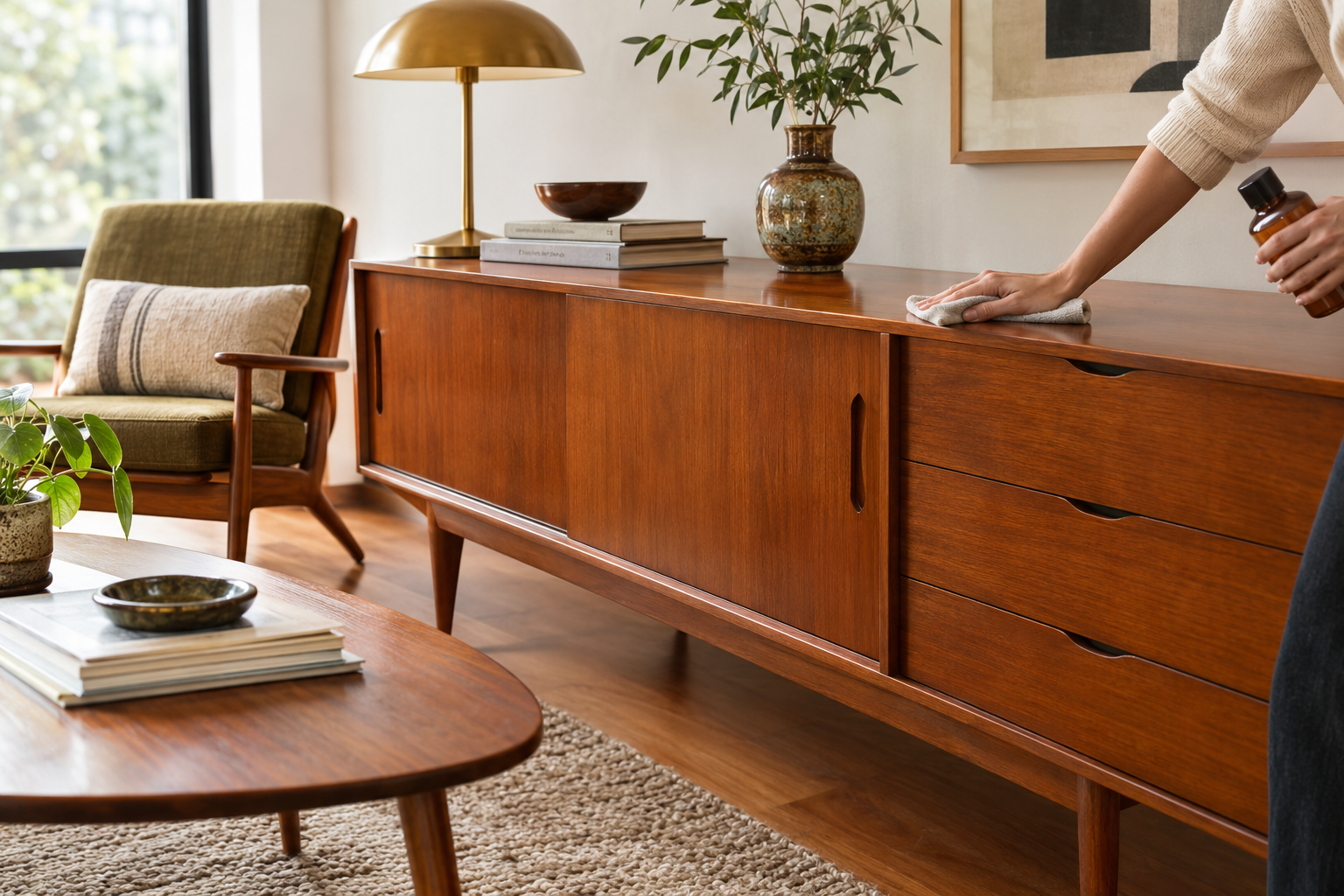
Vintage timber furniture brings warmth, character, and timeless appeal to any interior. From beautifully crafted teak sideboards to elegant mid-century dining tables, these pieces offer something that mass-produced furniture often cannot: a unique history, natural materials, and craftsmanship designed to last. However, age, sunlight, moisture, and everyday use can gradually affect their appearance and structural integrity.
The good news is that preserving vintage timber furniture does not require complicated techniques or expensive products. With consistent maintenance, careful handling, and the right approach to cleaning, you can protect its natural beauty for years to come.
Whether you have inherited a treasured wooden cabinet or recently purchased a mid-century modern piece, this guide explains practical ways to preserve wooden furniture while maintaining its original charm.
1. Understand Your Furniture Before Cleaning It
Before choosing any cleaning product or treatment, take time to understand the timber and finish of your furniture. Different wood species and surface treatments respond differently to moisture, heat, and cleaning solutions.
Teak, for example, is popular in vintage mid-century furniture because of its natural oils, durability, and attractive grain. Other common timbers, including Australian blackwood, oak, and walnut, each have distinctive characteristics that influence their care requirements.
The finish matters just as much as the timber itself. Vintage furniture may have an oil finish, wax coating, lacquer, varnish, or shellac. A product suitable for one finish could damage another, particularly on older pieces with delicate surfaces.
Start by inspecting the furniture for faded patches, scratches, loose joints, water marks, or areas where the finish appears to be lifting. Look underneath drawers and inside cabinets for clues about the original construction and treatment.
If you are unsure which finish is present, avoid experimenting with strong cleaners or applying oil indiscriminately. Test a suitable product on a small, hidden area first, or consult a furniture restoration professional.
Understanding your piece is the foundation of effective vintage timber care essentials and helps prevent avoidable damage.
2. Clean Gently and Avoid Harsh Chemicals
Regular, gentle cleaning is one of the simplest ways to keep vintage timber furniture looking its best. Dust may appear harmless, but accumulated particles can act like a mild abrasive when rubbed across a finished surface.
Use a soft, clean microfibre cloth to remove dust, following the direction of the wood grain where practical. For routine maintenance, dry dusting is usually sufficient.
When a deeper clean is necessary, lightly dampen a cloth with water and wipe the surface carefully. Never soak the timber or allow water to collect around joints, edges, veneer seams, or decorative details. Dry the surface immediately with another soft cloth.
Avoid household sprays containing ammonia, abrasive scouring pads, bleach, and strong multipurpose cleaners unless a qualified professional confirms they are appropriate for the particular finish. These products may dull the surface, strip protective coatings, or leave unwanted marks.
It is also worth remembering that more polish does not necessarily mean better protection. Some commercial products leave silicone or wax residues that accumulate over time and complicate future restoration work.
For care solutions for classic furniture, simplicity is often the best approach: remove dust regularly, clean spills promptly, and use products specifically suited to the furniture’s finish.
3. Protect Timber from Sunlight, Heat, and Moisture
Environmental conditions have a significant influence on the lifespan of vintage wooden furniture. Timber naturally responds to changes in temperature and humidity, expanding and contracting as moisture levels fluctuate.
Direct sunlight is a common cause of fading, uneven colouring, and deterioration of some finishes. Position valuable pieces away from strong sunlight whenever possible, particularly near north- or west-facing windows in Australian homes. Curtains, blinds, and UV-filtering window coverings can help reduce exposure.
Heat also deserves attention. Avoid placing wooden furniture directly beside heaters, fireplaces, radiators, or other strong heat sources. Sudden temperature changes can contribute to drying, cracking, and joint movement.
Moisture presents a different challenge. Use coasters beneath drinks, placemats under hot dishes, and protective mats beneath plant pots. Wipe up spills immediately rather than allowing liquid to penetrate the finish.
For long-term storage, avoid damp garages, poorly ventilated sheds, and areas with significant humidity fluctuations. A stable indoor environment is generally preferable. Where practical, aim for moderate, consistent humidity rather than dramatic seasonal changes.
These simple precautions are among the most effective ways to preserve wooden furniture without altering its original finish or character.
4. Choose the Right Products for Timber Maintenance
Not every wooden surface benefits from the same treatment. Oils, waxes, and furniture polishes serve different purposes, so choosing a product based on the furniture’s actual finish is essential.
Oil-finished timber may benefit from occasional maintenance using an appropriate furniture oil, provided the manufacturer or a restoration specialist recommends it. However, applying oil to lacquered or varnished furniture may leave a sticky residue rather than improve the surface.
Wax can provide a soft sheen and an additional layer of surface protection on compatible finishes. Nevertheless, excessive waxing can build up over time, attracting dust and making later refinishing more difficult.
Avoid using cooking oils as substitutes for furniture products. They may become rancid, attract dirt, or leave an unpleasant residue. Likewise, do not assume that every piece of teak furniture needs regular oiling. Some vintage teak pieces have a sealed finish that should be maintained differently.
Before applying any treatment, clean the surface gently and check the product instructions. Use a small amount, spread it evenly, and remove excess product as directed.
When the finish is unknown or already deteriorating, professional advice is safer than experimenting. Appropriate vintage timber care essentials should support the existing finish rather than cover up problems or change the furniture’s natural appearance unnecessarily.
5. Prevent Scratches and Handle Furniture Carefully
Even durable timber can develop scratches, dents, and loose joints when furniture is handled carelessly. Preventive measures are generally easier and less expensive than repairs.
Place felt pads beneath decorative objects, lamps, and accessories that sit on wooden surfaces. Lift objects instead of dragging them, and use coasters to prevent rings caused by condensation. When moving a cabinet or table, lift it with assistance rather than pulling it across the floor.
Pay particular attention to vintage veneer furniture. Veneer consists of a thin layer of decorative timber applied to a supporting material, making it more vulnerable to chipped edges, lifting sections, and moisture damage than solid timber in certain circumstances.
Check drawers, handles, hinges, and joints periodically. Small issues, such as a loose handle or a slightly unstable leg, should be addressed before they develop into larger problems. Avoid forcing stiff drawers or tightening old fittings aggressively, as aged timber and original hardware can be fragile.
Minor surface marks may be part of a piece’s history and character. Before attempting repairs, consider whether the mark genuinely needs correction. Preserving original materials and finishes is often more valuable than making an antique or vintage piece appear completely new.
6. Build a Simple, Consistent Care Routine
The most effective furniture maintenance plan is one you can follow consistently. A short routine helps identify potential problems early and keeps your furniture looking cared for without unnecessary treatments.
Dust exposed surfaces weekly or as needed, and wipe away spills as soon as they occur. Every few months, inspect the furniture for changes in colour, finish, stability, or joint condition. Check areas that are less visible, including the backs of cabinets, the undersides of tables, and the inside edges of drawers.
Once or twice a year, review the furniture’s placement and consider whether sunlight, heating, or damp conditions are affecting it. Apply wax, oil, or other specialist treatments only when appropriate for the finish and genuinely needed.
For furniture with significant veneer damage, deep scratches, structural instability, or a deteriorating original finish, seek advice from an experienced restorer. Avoid sanding or stripping a valuable vintage piece simply to remove signs of age, as doing so can reduce its originality and value.
Above all, remember that good maintenance is about preservation rather than perfection. Natural patina, subtle colour variations, and small signs of use can contribute to the appeal of well-loved vintage furniture.
Keep Your Vintage Timber Beautiful for Years to Come
Vintage timber furniture deserves thoughtful care because its value extends beyond appearance. Quality craftsmanship, distinctive timber grain, and the history behind each piece make these furnishings worth preserving.
By understanding the original finish, cleaning gently, controlling environmental exposure, selecting suitable products, and preventing everyday damage, you can maintain your furniture’s beauty without unnecessary restoration.
At Fox & Wedge, an appreciation for vintage and mid-century design begins with recognising the enduring appeal of well-made furniture. With a little attention and a consistent maintenance routine, your favourite timber pieces can continue bringing warmth, character, and timeless style to your home for generations.