



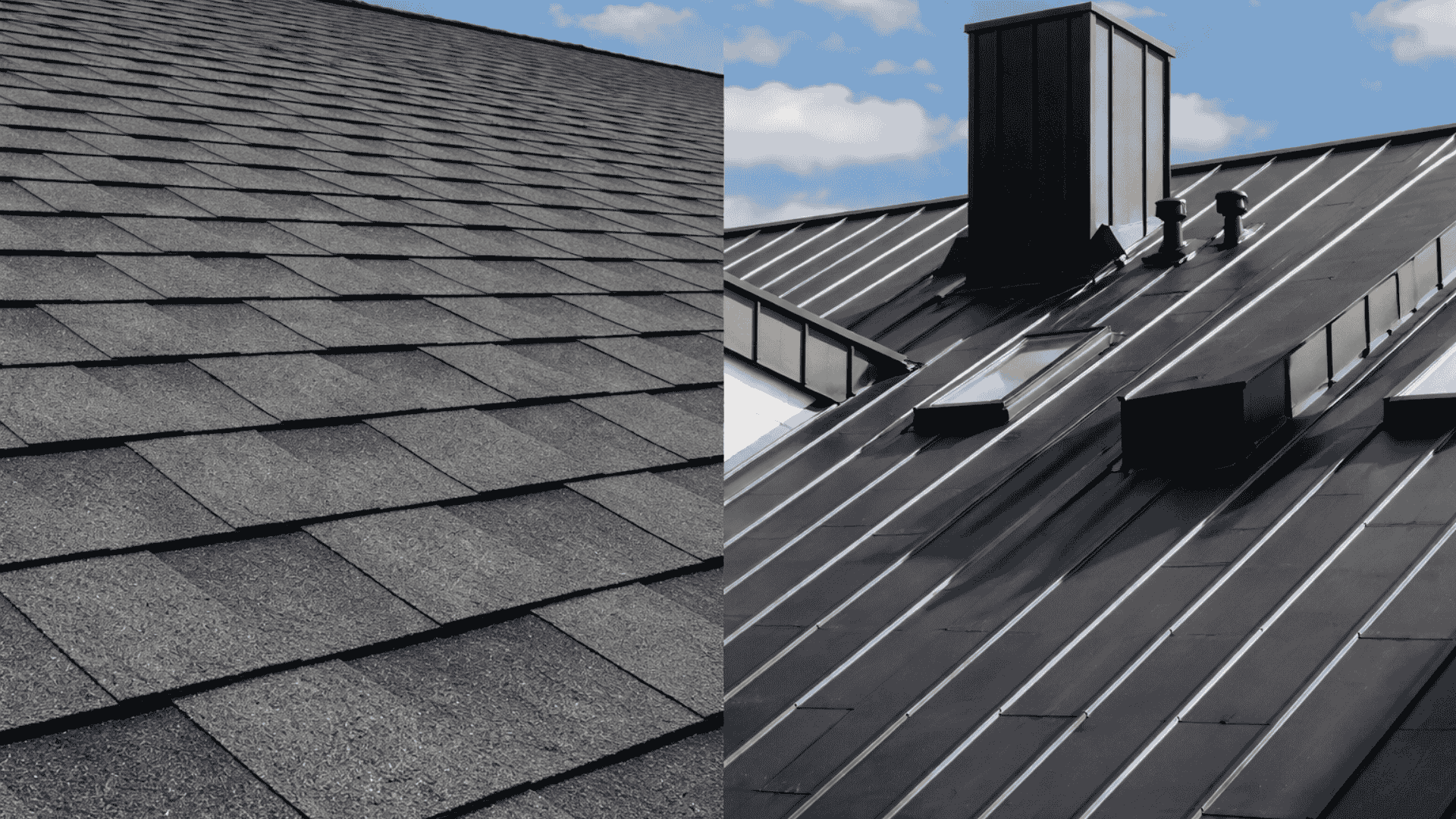
Choosing the right roofing material is one of the most important decisions you can make as a homeowner. Your roof protects your property from rain, wind, heat, and other weather conditions while contributing to your home’s appearance, energy performance, and long-term value. When it’s time to install a new roof or replace an aging one, two popular options stand out: asphalt shingles and metal roofing.
Both materials offer valuable benefits, but they differ in upfront cost, durability, maintenance requirements, installation methods, and expected lifespan. Asphalt shingles are widely appreciated for their affordability and traditional appearance, while metal roofing attracts homeowners seeking longevity, durability, and potentially improved energy efficiency.
So, which option is better for your home?
The answer depends on your budget, local climate, architectural style, long-term plans, and the performance you expect from your roof. This guide compares asphalt shingles vs. metal roofing to help you make an informed decision and choose a roofing solution that meets your needs.
What Are Asphalt Shingles?
Asphalt shingles are one of the most common residential roofing materials in the United States. They typically consist of a fiberglass mat coated with asphalt and finished with protective mineral granules. These layers help the shingles resist moisture, protect against weather exposure, and provide an attractive finish.
Homeowners can choose from several types of asphalt shingles, including:
- Three-tab shingles: A traditional, relatively economical option with a flat and uniform appearance.
- Architectural shingles: Thicker, dimensional shingles that offer a more textured appearance and generally better performance than basic three-tab products.
- Luxury shingles: Premium products designed to replicate the appearance of slate or wood roofing while providing the benefits of asphalt construction.
Asphalt shingles are available in a wide selection of colors, profiles, and styles. Their widespread availability also makes it easier to find contractors familiar with installation and repair.
For homeowners who want a conventional appearance without a substantial initial investment, asphalt shingles can be a practical roofing solution.
What Is Metal Roofing?
Metal roofing is made from durable metal panels or individual metal shingles designed to protect a building from the elements. Common materials include steel, aluminum, zinc, and copper, although availability and cost vary by product and region.
Metal roofing comes in several styles:
- Standing-seam metal roofing: Features raised seams and concealed fasteners, creating a clean appearance and reducing exposure of fastening points.
- Exposed-fastener metal panels: Use visible screws or fasteners to secure panels to the roof structure.
- Metal shingles: Individual metal units designed to resemble traditional shingles, slate, or other roofing materials.
Metal roofing is valued for its relatively low weight, resistance to rot and insect damage, and potential for a long service life. Depending on the product, coating, and installation quality, it can perform well in demanding weather conditions.
Although metal roofing generally costs more initially than asphalt shingles, its extended lifespan may make it attractive to homeowners planning to remain in their properties for many years.
Asphalt Shingles vs. Metal Roofing: Key Differences
Before examining each factor in detail, consider how the two materials compare.
| Feature | Asphalt Shingles | Metal Roofing |
|---|---|---|
| Initial cost | Generally lower | Generally higher |
| Typical service life | Approximately 15–30 years | Approximately 40–70 years for many systems |
| Installation | Familiar and widely available | Often requires specialized expertise |
| Maintenance | Periodic inspections and repairs | Periodic inspections, fastener and coating checks |
| Energy efficiency | Depends on color, ventilation, and product | Reflective finishes can reduce solar heat gain |
| Weather performance | Depends on shingle grade and installation | Depends on metal type, panel design, and installation |
| Appearance | Traditional, versatile styles | Modern panels or traditional-looking metal shingles |
| Repair | Individual shingles are often straightforward to replace | Repairs may require matching panels and specialized skills |
| Sustainability | Recycling options vary by location | Many products contain recycled content and are recyclable |
| Best suited for | Budget-conscious projects and traditional designs | Long-term ownership and durability priorities |
Actual performance depends on the specific roofing product, local climate, roof design, ventilation, installation, and maintenance. Neither material is automatically the best choice for every home.
1. Initial Installation Cost
Cost is often the first factor homeowners consider when comparing asphalt shingles vs. metal roofing.
Asphalt Shingles: A Budget-Friendly Option
Asphalt shingles typically have a lower upfront installation cost. The materials are widely available, and many roofing contractors have extensive experience installing them. This can make the project more accessible to homeowners working within a limited budget.
The final price depends on several factors, including:
- Roof size and slope
- Shingle quality and design
- Removal of existing roofing materials
- Condition of the roof decking
- Flashing and underlayment requirements
- Labor rates and local building codes
Architectural and luxury shingles cost more than basic three-tab products, but they can provide better visual depth and different performance characteristics.
Metal Roofing: A Larger Initial Investment
Metal roofing usually requires a higher initial investment because of material costs, panel fabrication, specialized installation requirements, and finishing details.
Standing-seam systems may be particularly expensive because their panels and concealed fastening systems require careful measurement and installation. Exposed-fastener panels may cost less, although their maintenance requirements can differ.
Metal roofing prices also vary considerably by material. Steel is generally more economical than premium options such as copper, while aluminum may be attractive in certain coastal environments because of its corrosion resistance.
Which is more affordable? Asphalt shingles usually win when the main priority is minimizing the initial project cost.
However, comparing written estimates is essential. A complete estimate should include tear-off, disposal, underlayment, flashing, ventilation improvements, necessary decking repairs, labor, and warranty details rather than just the price of the roofing material.
2. Lifespan and Long-Term Value
A roof’s lifespan affects how often you’ll need to invest in major repairs or replacement.
How Long Do Asphalt Shingles Last?
Asphalt shingle roofs commonly last around 15–30 years, although some products may have shorter or longer service lives depending on their specifications and the conditions they face.
Their longevity is influenced by:
- Quality of the shingles
- Exposure to intense sunlight and heat
- Wind and storm frequency
- Moisture accumulation
- Attic ventilation
- Installation workmanship
- Regular maintenance
A roof installed incorrectly may develop problems much earlier than expected. Missing shingles, deteriorating seal strips, damaged flashing, and poor ventilation can shorten its useful life.
How Long Does Metal Roofing Last?
Many properly installed metal roofing systems can last approximately 40–70 years, depending on the material, coating, design, environment, and maintenance.
Metal does not rot like wood and is not susceptible to the same granule loss and shingle deterioration associated with aging asphalt roofs. However, it is not maintenance-free. Corrosion, damaged coatings, loose fasteners, failed sealants, and poorly detailed joints can still cause problems.
Which Offers Better Long-Term Value?
Metal roofing can provide better long-term value for homeowners who intend to stay in their homes for decades. Its longer expected lifespan may reduce the likelihood of needing another complete roof replacement during that period.
Asphalt shingles may be more economical when a homeowner needs a lower initial cost or expects to move before the roof reaches the end of its useful life.
Rather than comparing lifespan alone, consider the total ownership cost: installation, inspections, repairs, energy use, and potential replacement over the time you expect to own the property.
3. Durability and Weather Resistance
Your roof must withstand the weather conditions common in your area.
Asphalt Shingles
Quality asphalt shingles can provide dependable protection against rain, wind, and everyday weather when correctly installed. Architectural shingles generally offer a more substantial construction than basic three-tab products.
However, strong winds may lift or remove shingles, especially when their adhesive seals have failed or installation was inadequate. Hail can bruise shingles, dislodge granules, or cause damage that is not immediately visible from the ground.
Repeated exposure to intense sunlight and temperature changes can also contribute to aging.
Metal Roofing
Metal roofs are generally durable and can offer strong resistance to wind, rain, and fire when the selected system is appropriately rated and installed according to its specifications.
Their interlocking seams and panel designs can help shed water efficiently. Certain metal systems also perform well in areas with heavy snow because their smooth surfaces can allow snow to slide off.
However, metal panels can dent under significant hail impacts or falling branches. Performance depends on metal thickness, panel profile, support spacing, and the severity of the impact. Coastal environments also require appropriate materials, coatings, and fasteners to manage corrosion.
Important: Neither material guarantees storm-proof performance. Check product-specific wind, impact, and fire ratings, and ensure that the installation complies with local building codes.
4. Energy Efficiency and Indoor Comfort
Roofing materials influence how much solar heat reaches the building, but the roof covering is only one part of a home’s energy performance.
Energy Performance of Asphalt Shingles
Standard asphalt shingles absorb some of the sun’s energy, potentially increasing heat transfer into the attic. Dark-colored shingles generally absorb more solar energy than lighter-colored alternatives, although product composition and design also matter.
Homeowners can improve roof performance by selecting appropriate shingle colors, maintaining effective attic insulation, and ensuring that the ventilation system is designed correctly.
Some asphalt shingles are manufactured with reflective granules that help reduce solar heat gain.
Energy Performance of Metal Roofing
Metal roofing with reflective finishes can reduce the amount of solar energy absorbed by the roof. This may help keep attic temperatures lower and reduce air-conditioning demand during hot weather.
However, not every metal roof performs equally well. Color, coating, roof assembly, insulation, air sealing, and local climate all influence actual results.
Metal is also a good conductor of heat, but that does not automatically make a properly designed metal roof uncomfortable. The entire roofing assembly determines how much heat reaches the interior.
If energy efficiency is a priority, compare tested solar reflectance and thermal emittance data rather than choosing a material based on appearance alone.
5. Maintenance Requirements
Regular maintenance helps protect your roof and identify small problems before they become expensive repairs.
Maintaining Asphalt Shingles
Asphalt roofs benefit from routine inspections, particularly after severe storms. Homeowners should look for missing, curled, cracked, or damaged shingles, along with signs of moisture around ceilings, chimneys, skylights, and roof valleys.
Typical maintenance includes:
- Clearing gutters and downspouts
- Removing debris that traps moisture
- Checking flashing and roof penetrations
- Inspecting attic spaces for leaks or condensation
- Replacing damaged shingles promptly
- Addressing moss or algae using manufacturer-approved methods
Avoid aggressive pressure washing or walking on a roof unnecessarily, as these activities can damage the roofing surface or create safety risks.
Maintaining Metal Roofing
Metal roofing often requires less frequent material replacement, but it still needs periodic inspections.
Check for loose fasteners, damaged coatings, corrosion, deteriorated sealants, clogged gutters, and debris around valleys or roof penetrations. Exposed-fastener systems may need closer attention to fasteners and sealing components over time.
Repairs should use compatible materials and follow the manufacturer’s recommendations. Incompatible metals or unsuitable fasteners can accelerate corrosion.
For both roofing types, professional inspections are particularly useful when a roof is difficult to access or has sustained significant storm exposure.
6. Appearance and Curb Appeal
Your roof occupies a large portion of your home’s exterior, making its appearance an important consideration.
Asphalt Shingles for Traditional Homes
Asphalt shingles suit many architectural styles, including ranch houses, suburban homes, cottages, and traditional designs.
They are available in numerous colors, from charcoal and brown to gray, red, and blended tones. Architectural shingles can create depth and texture, while luxury products can imitate the appearance of more expensive roofing materials.
Their widespread acceptance can also make them a convenient choice in neighborhoods with strict exterior design requirements.
Metal Roofing for Contemporary and Traditional Designs
Standing-seam metal roofing is often associated with modern, minimalist, and farmhouse-inspired architecture. Its clean lines can complement contemporary homes, while metal shingles can provide a more conventional appearance.
Available finishes vary by manufacturer and material, allowing homeowners to coordinate their roof with siding, brickwork, trim, and exterior accents.
Before making a final decision, check any homeowners association rules, historic-district requirements, or local restrictions that apply to roofing materials.
The best-looking roof is one that complements the home’s architecture while meeting practical performance requirements.
7. Noise During Rain and Hail
Some homeowners worry that a metal roof will make rain sound significantly louder indoors.
In reality, the noise level depends on the complete roof assembly, including the roof deck, underlayment, insulation, attic space, and interior ceiling construction.
A metal roof installed over a properly designed residential roof assembly is not necessarily noticeably louder than an asphalt shingle roof under ordinary rainfall.
Heavy rain or hail may still produce audible noise, especially in buildings with little insulation or exposed roof structures.
Asphalt shingles provide a familiar roofing surface, but the rest of the building assembly also plays an important role in sound control.
If noise is a major concern, ask the contractor to explain the proposed assembly and insulation details rather than rejecting metal roofing based on assumptions.
8. Environmental Impact and Sustainability
Environmental considerations are becoming increasingly important when homeowners choose building materials.
Asphalt Shingles
Asphalt shingles contain petroleum-based components, and discarded roofing materials can contribute to landfill waste when recycling facilities are unavailable.
Some regions offer asphalt shingle recycling programs, but acceptance depends on local infrastructure and the condition of the removed materials.
Choosing durable products and avoiding premature replacement can help reduce material waste.
Metal Roofing
Many metal roofing products contain recycled material, and steel and aluminum can often be recycled at the end of their service life.
Metal roofing’s longer potential lifespan can also reduce the frequency of complete roof replacements. Reflective finishes may offer additional energy benefits in suitable climates.
However, metal production requires energy, and transportation, coatings, and manufacturing processes also affect environmental impact.
For a more meaningful comparison, examine recycled content, expected service life, local recycling access, and the manufacturer’s environmental information.
9. Installation Complexity and Repair Considerations
Even high-quality roofing materials can fail when they are installed incorrectly.
Asphalt Shingle Installation
Asphalt shingles are familiar to many roofing crews, and straightforward projects can often be completed relatively quickly. Their widespread availability also makes replacement materials easier to source.
Individual damaged shingles can frequently be replaced without disturbing the entire roof, provided matching products are available and the surrounding roof remains in good condition.
Metal Roofing Installation
Metal roofing requires accurate measurements, suitable flashing, careful panel alignment, and correct fastening or seam-locking techniques.
Standing-seam systems may require specialized equipment and training. Expansion and contraction must also be accommodated according to the manufacturer’s specifications.
Although individual metal roof repairs are possible, matching older panels, finishes, or profiles can be more difficult than replacing standard asphalt shingles.
When comparing contractors, prioritize relevant installation experience and a detailed scope of work over the lowest quote alone.
10. Which Roofing Material Is Better for Different Homeowners?
The right choice becomes clearer when you consider your priorities.
Choose Asphalt Shingles If:
- You need to keep upfront costs manageable.
- You prefer a traditional roof appearance.
- You want a broad selection of colors and styles.
- You value straightforward repairs and readily available materials.
- You expect to move before a longer-lasting roof’s additional lifespan becomes useful.
- Your existing roof design and neighborhood requirements favor shingles.
Architectural asphalt shingles can be a sensible middle ground for homeowners seeking a balance of cost, appearance, and performance.
Choose Metal Roofing If:
- You plan to remain in your home for many years.
- You prioritize a potentially longer service life.
- You want a roofing system with relatively low routine maintenance needs.
- Reflective roofing finishes could benefit your home’s energy performance.
- Your area experiences weather conditions for which the selected metal system is appropriately rated.
- You are comfortable with a higher initial investment.
Metal roofing may be particularly appealing when long-term ownership costs matter more than the lowest initial price.
Neither option is universally superior. The right decision depends on the complete roofing system and the needs of the property.
11. Questions to Ask Before Hiring a Roofing Contractor
Before committing to either material, obtain detailed estimates from qualified roofing professionals.
Ask the following questions:
- Which roofing products and grades are included in the estimate?
- What is the expected service life under local weather conditions?
- Does the price include removing and disposing of the existing roof?
- Will the roof decking need inspection or replacement?
- Are underlayment, flashing, ventilation, and drainage included?
- What manufacturer and workmanship warranties are provided?
- Does the proposed material meet local building codes and wind requirements?
- How will the contractor handle unexpected damage?
- What maintenance will be required after installation?
- Can the contractor provide relevant references and proof of insurance?
If you are comparing residential roofing services, ensure that each contractor prices a comparable scope of work. A cheaper estimate may exclude important components or necessary repairs.
Review the warranty terms carefully, including exclusions, maintenance obligations, and any conditions that could affect coverage.
12. Common Mistakes to Avoid When Choosing a Roof
Homeowners sometimes focus too heavily on the material price and overlook factors that determine the roof’s long-term performance.
Choosing based on price alone: A low quote may not include necessary flashing, ventilation improvements, or decking repairs.
Assuming metal never needs maintenance: Metal roofing still requires inspections, and exposed fasteners, coatings, and sealants can deteriorate.
Ignoring ventilation: Poor attic ventilation and moisture control can damage roofing components and affect indoor comfort.
Overlooking the roof’s design: Complex rooflines, valleys, skylights, and penetrations can increase installation costs and create additional opportunities for leaks if poorly detailed.
Believing warranties guarantee a particular lifespan: A warranty’s coverage period is not a promise that a roof will remain problem-free for that entire period.
Ignoring local requirements: Building codes, wind exposure, fire requirements, and neighborhood restrictions may affect which products are suitable.
A well-informed decision considers all these factors before installation begins.
13. How to Compare the Long-Term Cost of Asphalt and Metal Roofing
A useful way to compare roofing materials is to evaluate their cost over the period you expect to own the home.
For example, suppose an asphalt roof costs less initially but needs replacement during your ownership period, while a metal roof costs more and remains serviceable longer. The total cost difference will depend on the original installation prices, future replacement costs, maintenance, and any energy savings.
Use this simple framework:
Total ownership cost = initial installation + maintenance and repairs + future replacement costs − applicable savings.
When estimating future expenses, account for inflation and avoid assuming that energy savings or resale benefits are guaranteed.
Also distinguish between the roof’s projected service life and the warranty period. A product with a long warranty may still have exclusions, while actual performance depends on installation quality and maintenance.
If you plan to sell your home relatively soon, a lower-cost roof that meets your property’s needs may make more financial sense. If you intend to remain in the home for several decades, a longer-lasting metal roof deserves careful consideration.
The best option is the one that balances current affordability with future performance.
Conclusion: Asphalt Shingles vs. Metal Roofing
When comparing asphalt shingles vs. metal roofing, the right choice comes down to your budget, long-term plans, local climate, and performance expectations.
Asphalt shingles remain a popular choice because they are affordable, versatile, widely available, and relatively straightforward to repair. They can be an excellent option for homeowners who want dependable roof protection without the higher initial expense of metal.
Metal roofing offers a different set of advantages, including a potentially much longer service life, relatively low routine maintenance requirements, and reflective finishes that can improve energy performance under suitable conditions. Its higher upfront cost, specialized installation requirements, and potential for denting should be considered before making a decision.
Before choosing either material, evaluate your roof’s condition, compare complete installation estimates, and review product-specific warranties and performance ratings.
Working with an experienced roofing professional can help you identify the right system for your home’s design and local weather conditions. A carefully selected and properly installed roof can protect your property, support indoor comfort, and provide value for years to come.
Whether you choose asphalt shingles or metal roofing, the goal is the same: a durable, properly installed roofing system that meets your home’s needs today and well into the future.
Frequently Asked Questions (FAQs)
1. Is metal roofing better than asphalt shingles?
Metal roofing is often better for homeowners who prioritize longevity, low routine maintenance, and reflective energy-efficient finishes. Asphalt shingles are generally better for those who prioritize lower upfront costs, traditional styles, and straightforward repairs. The best option depends on your home and budget.
2. Which roofing material lasts longer?
Many metal roofing systems can last approximately 40–70 years, while asphalt shingle roofs commonly last around 15–30 years. Actual service life varies with product quality, installation, climate, and maintenance.
3. Are asphalt shingles cheaper than metal roofing?
Yes. Asphalt shingles generally cost less to install initially. Metal roofing usually has higher material and labor costs, although its longer potential service life may improve its long-term value for some homeowners.
4. Does a metal roof make a house hotter?
Not necessarily. Metal roofs with reflective finishes can reduce solar heat gain. Indoor temperatures also depend on insulation, ventilation, air sealing, roof color, and the overall roof assembly.
5. Are metal roofs noisy during rain?
A properly constructed residential roof with a suitable deck, insulation, and interior ceiling can provide effective sound control. Noise levels depend on the entire assembly rather than the roofing material alone.
6. Which roofing material requires less maintenance?
Metal roofing generally requires less frequent material replacement, but it still needs inspections for corrosion, fasteners, sealants, and coating damage. Asphalt shingles may require more frequent repairs as they age, particularly after severe weather.
7. Can metal roofing withstand hail?
Many metal roofing products provide good impact resistance, but severe hail can dent panels or damage coatings. Check the specific product’s impact rating and warranty before choosing a system for hail-prone areas.
8. Do asphalt shingles increase home value?
A properly installed asphalt roof can support a home’s condition, appearance, and marketability. Its actual effect on resale value depends on the property’s location, buyer preferences, roof condition, and overall housing market.
9. Is metal roofing environmentally friendly?
Metal roofing can contain recycled materials and is often recyclable at the end of its service life. Its longevity may also reduce replacement waste, although manufacturing impacts and local recycling options should be considered.
10. How do I choose between asphalt shingles and metal roofing?
Start by comparing your budget, expected ownership period, local weather conditions, preferred appearance, maintenance expectations, and complete installation estimates. A qualified roofing contractor can help you assess suitable products and ensure the final installation meets applicable building requirements.