






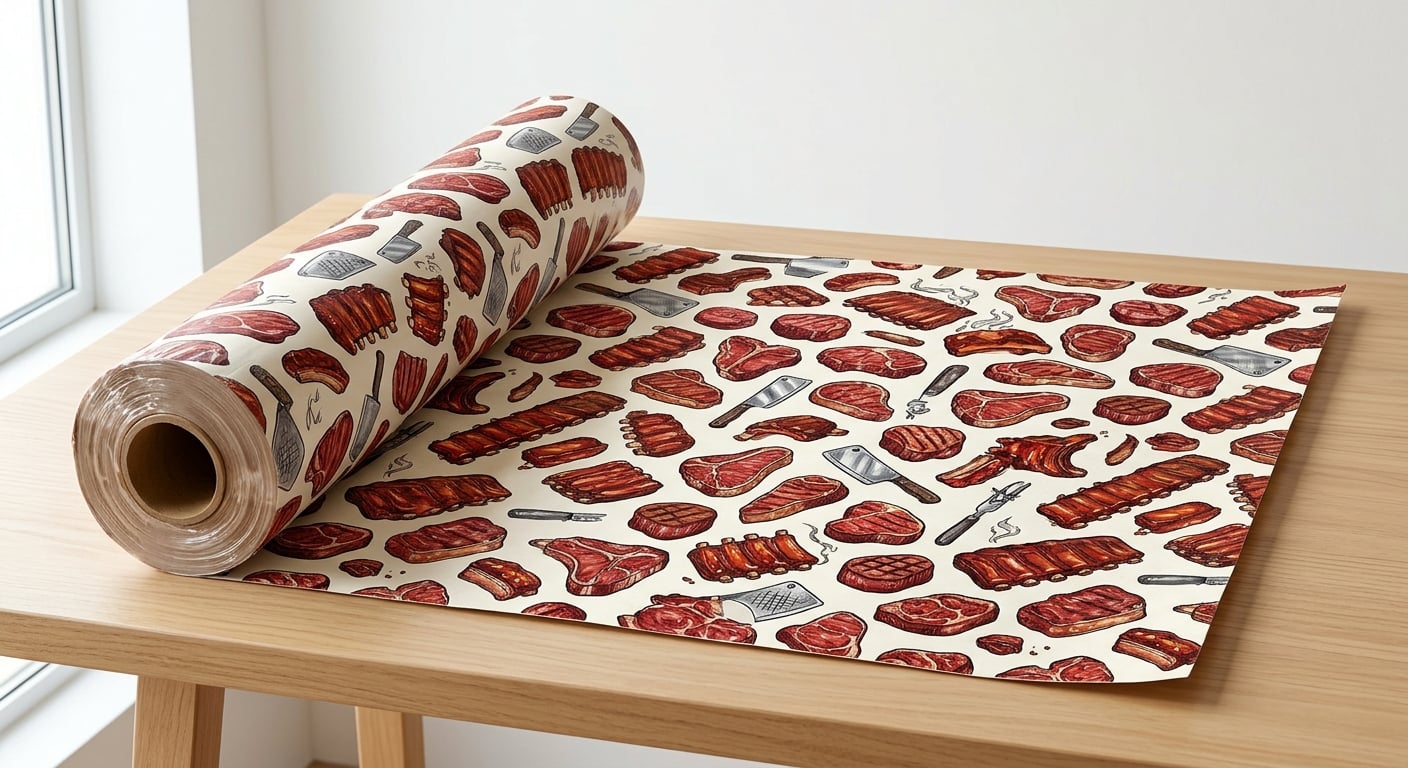
Food packaging plays an essential role in protecting products, supporting efficient service, and shaping customer impressions. For butcher shops, meat processors, restaurants, and specialty food retailers, Customized Butcher Paper offers a practical way to combine everyday food wrapping with consistent brand presentation. The right paper can support handling needs while helping businesses create a professional and recognizable customer experience.
From fresh cuts of meat to barbecue orders and deli products, butcher paper serves several purposes across the food industry. When customized with logos, colors, or repeating patterns, it can also become part of a business’s visual identity. Selecting suitable materials and printing options helps food businesses balance functionality, appearance, and purchasing costs.
What Is Custom Butcher Paper?
Custom Butcher Paper is paper designed for wrapping, separating, or presenting food that can be printed with a business’s branding. Depending on its construction and intended use, it may be suitable for wrapping meat, lining food trays, packaging barbecue orders, or supporting retail presentation.
Not all butcher paper performs the same way. Some varieties are intended for general wrapping, while others are designed for particular food-contact conditions or uses such as smoking and cooking. Businesses should confirm material specifications before using any paper with raw meat, greasy foods, or hot products.
Customization adds a branding opportunity to this practical material. Custom printed butcher paper can feature a company logo, brand colors, decorative patterns, or other approved graphics. When used consistently, the paper helps connect product presentation with the business’s broader identity.
Why Butcher Paper Matters in Food Packaging
Food businesses need packaging that suits their products and daily operating routines. The wrong paper may tear during handling, absorb more grease than expected, or fail to provide the presentation a business requires. Choosing the right grade can help address these concerns while supporting an efficient wrapping process.
For example, a neighborhood butcher shop may wrap individual cuts before placing them in a bag for customers. A barbecue restaurant may use a suitable paper to serve smoked meats on trays. Each application has different requirements, so paper selection should reflect the intended food and handling conditions.
Key benefits of suitable butcher paper include:
- Practical food handling: Helps wrap and separate products during preparation and service.
- Cleaner presentation: Can reduce direct contact between food and serving surfaces.
- Brand consistency: Printed designs help maintain a recognizable appearance.
- Flexible applications: Different sizes and formats can support retail, takeaway, and catering operations.
- Convenient workflow: Appropriate sheet sizes or rolls can simplify routine wrapping.
- Professional appearance: Coordinated packaging can help reinforce customer confidence.
The results depend on the paper type, food composition, temperature, and duration of contact. Material performance should always be tested under realistic conditions before a business adopts it at scale.
How Custom Printed Butcher Paper Strengthens Branding
Packaging is often one of the most frequent physical interactions customers have with a food business. Custom printing gives retailers and restaurants a way to reinforce their identity through materials already used in daily operations.
Make the Business More Recognizable
Branded butcher paper with logo helps businesses create a consistent visual experience. A clear logo, distinctive colors, or a repeated pattern can make packaging easier to associate with a particular shop or restaurant.
For independent butcher shops, this can help establish a recognizable local identity. For larger food retailers, standardized designs can create a consistent appearance across multiple locations.
The design should remain simple enough to be recognizable. Overcrowded graphics and excessive text may distract from the product and make the branding harder to notice. A well-spaced layout can communicate identity without overwhelming the food presentation.
Create a More Professional Customer Experience
Customers often notice the way products are wrapped, labeled, and presented. Clean, coordinated packaging can signal attention to detail and help create a more organized buying experience.
Personalized meat wrapping paper allows a business to adapt its packaging to its audience. A traditional butcher shop may choose a classic design, while a modern specialty retailer might prefer minimalist graphics and a limited color palette.
Branding alone cannot guarantee customer loyalty, but consistent presentation can contribute to a more memorable experience. When packaging matches signage, labels, bags, and other materials, the business appears more coordinated.
Support Marketing Beyond the Store
Branded packaging can remain visible after a customer leaves the store. It may appear in kitchen preparation, catered events, takeaway orders, or customer photographs.
For example, a barbecue business using printed paper for serving trays can reinforce its visual identity during dining and takeaway service. If customers share photographs, the branding may also appear in those images. This exposure is not guaranteed to generate sales, but it can support recognition across different touchpoints.
Common Applications of Customized Printed Papers
Customized printed papers can be used in several food-related settings, provided the chosen material is suitable for the intended application.
Butcher Shops and Meat Counters
Butcher shops often need paper for wrapping individual cuts, preparing customer orders, and organizing products for retail sale. Custom paper for butcher shops can combine practical wrapping with a consistent design that reflects the business’s identity.
The material must be suitable for the specific meat products being handled. Raw meat can release moisture, so buyers should verify the paper’s construction and any required barrier properties rather than assuming every printed paper offers adequate protection.
Barbecue Restaurants and Smokehouses
Barbecue businesses may use appropriate butcher paper for serving smoked meats, wrapping food, or presenting takeaway orders. Printed sheets can help connect the serving experience with the restaurant’s brand.
However, paper intended for serving is not automatically suitable for cooking or smoking. Some papers may be designed for particular heat-related uses, while others are not. Businesses should follow the supplier’s specifications and avoid exposing unsuitable paper to ovens, grills, or open flames.
Delis and Specialty Food Retailers
Delis and specialty shops can use butcher paper for selected food-wrapping and presentation tasks. Custom designs can complement labels, bags, and other packaging used for cheese, prepared foods, or retail products.
Different foods have different moisture and grease levels. Businesses should verify that the material is appropriate for the product rather than choosing paper solely because it looks attractive or carries a food-related label.
Catering and Food-Service Operations
Catering companies often handle large quantities of food and need packaging that can be stored, prepared, and distributed efficiently. Suitable printed sheets can support consistent presentation across events, service stations, and takeaway orders.
Pre-cut sheets may reduce the need for measuring and cutting during busy periods. Rolls can offer flexibility when different lengths are required. The best format depends on serving methods, staffing, storage capacity, and the expected volume of orders.
Choosing Between Custom Butcher Paper Rolls and Sheets
Format selection can affect speed, waste, and storage requirements. Custom butcher paper rolls offer flexibility because staff can cut the paper to the length needed for a particular product. Printed butcher paper sheets provide ready-to-use dimensions that can simplify repetitive wrapping tasks.
| Factor | Paper rolls | Pre-cut paper sheets |
|---|---|---|
| Size flexibility | Length can be adjusted | Fixed dimensions |
| Preparation | May require cutting | Ready to use |
| Storage | Requires suitable roll storage | Needs organized sheet storage |
| Best use | Varied wrapping sizes | Standardized portions |
| Waste control | Depends on cutting accuracy | Depends on matching sheet size to the product |
| Workflow | Useful where flexibility matters | Useful for quick, repeatable tasks |
A butcher shop wrapping products of different sizes may prefer rolls. A busy restaurant using the same liner dimensions throughout service may find pre-cut sheets more convenient.
Before deciding, businesses should consider the time required to prepare each sheet, the space available for storage, and the quantity of paper used per order.
How to Choose Food-Grade Meat Wrapping Paper
Selecting paper for food use requires more than checking its thickness or appearance. Buyers should verify the material’s suitability, expected performance, and printing specifications before placing a large order.
Confirm Food-Contact Suitability
Food-grade meat wrapping paper should meet applicable food-contact requirements for its intended use and destination market. Suppliers should provide relevant documentation for the paper and, where applicable, coatings and printing materials.
The intended food matters. Paper suitable for wrapping certain retail products may not be suitable for prolonged contact with wet meat, hot foods, or cooking applications. Businesses should confirm the exact use case rather than relying on a general product description.
Evaluate Grease and Moisture Resistance
Grease-resistant butcher paper may be useful when products release fats or oils. However, grease resistance varies between paper types and does not necessarily mean the material is waterproof or suitable for every food.
Testing should reflect real working conditions. Buyers can assess sample paper using representative products, expected contact times, and typical storage or serving conditions. This helps identify tearing, grease penetration, or other issues before the material is purchased in bulk.
Check Printing Quality and Design
Printed packaging should support branding without compromising the paper’s intended food-contact use. Buyers should check the clarity of the logo, color consistency, alignment, and repeat pattern before approving production.
A practical design review should cover:
- Logo placement and readability.
- Correct colors and approved artwork.
- Sheet dimensions or roll width.
- Print consistency across samples.
- Suitability of inks and other materials for the intended application.
- Clear confirmation of the product’s approved use.
A simple, consistent design is often more useful than one crowded with text and graphics.
Compare Supplier Reliability and Total Cost
The lowest price per sheet does not always provide the best value. Businesses should compare material specifications, printing costs, minimum order quantities, shipping, lead times, and reorder consistency.
For businesses sourcing custom butcher paper Canada, supplier evaluation should also include delivery coverage, relevant Canadian food-contact requirements, and the ability to maintain consistent specifications across repeat orders.
Custom Butcher Paper vs. Plain Butcher Paper
Plain butcher paper may be suitable for businesses focused on basic wrapping requirements. Custom versions offer a branding opportunity but may involve artwork preparation, printing setup, and minimum quantities.
| Consideration | Plain butcher paper | Custom butcher paper |
|---|---|---|
| Branding | Neutral appearance | Supports logos and brand colors |
| Setup | Usually straightforward | May require artwork approval |
| Design consistency | Limited | Can match other packaging |
| Initial purchasing needs | Often simpler | Depends on print specifications |
| Marketing potential | Limited visual branding | Repeated brand exposure |
| Best suited for | Basic wrapping tasks | Businesses prioritizing branded presentation |
The decision should depend on operational needs and business objectives. A custom product is worthwhile when it performs reliably, fits the wrapping process, and contributes to a consistent customer experience.
Common Mistakes to Avoid When Ordering
A successful packaging order begins with clear requirements. Several avoidable mistakes can lead to wasted materials, higher costs, or disappointing performance.
- Buying on price alone: Low-cost paper may not meet the required handling or resistance needs.
- Skipping sample tests: Samples should be tested with actual products before a bulk order.
- Assuming all paper is food-safe: Confirm material suitability for the intended application.
- Confusing wrapping paper with cooking paper: Verify whether the product is approved for heat exposure.
- Overloading the design: Too many graphics can make the logo harder to recognize.
- Ordering excessive quantities: Large orders may become wasteful if the design or specification changes.
- Ignoring delivery schedules: Custom production may require time for artwork approval and manufacturing.
- Overlooking reorder consistency: Different paper grades or print results can affect the customer experience.
A trial order is a useful way to check material performance and design quality before making a larger commitment.
A Practical Checklist for Implementing Branded Butcher Paper
A structured approach can help food businesses introduce custom packaging without disrupting everyday service.
- Identify the application. Determine whether the paper will wrap meat, serve barbecue, line trays, or support takeaway orders.
- Define performance requirements. Consider moisture, grease, temperature, contact time, and product dimensions.
- Choose the format. Compare rolls and pre-cut sheets against the existing workflow.
- Prepare the artwork. Select clear branding that matches the business’s other packaging.
- Request samples. Test the material and review the printing quality.
- Confirm documentation. Verify food-contact suitability and any special-use limitations.
- Calculate total costs. Include printing, shipping, storage, and expected waste.
- Review results. Assess wrapping speed, presentation, consistency, and staff feedback before expanding the order.
Following these steps helps buyers evaluate packaging as both a functional material and a branding tool.
Conclusion
Custom Butcher Paper can help butcher shops, meat retailers, barbecue restaurants, and other food businesses combine practical wrapping with consistent brand presentation. The right material can support handling and display needs, while custom printing adds a recognizable visual element to everyday packaging.
The strongest results come from matching paper specifications to the food, confirming food-contact suitability, testing performance, and choosing a format that supports efficient service. For businesses exploring customized food packaging, custom papers wholesale can be considered as part of a broader search for solutions that balance operational needs with professional presentation.
Frequently Asked Questions
1. What is custom butcher paper used for?
Custom butcher paper is used for wrapping and presenting suitable food products, including meat and barbecue meals. Printed designs can add brand recognition while serving practical packaging needs.
2. Can butcher paper be printed with a business logo?
Yes. Many suppliers offer printed butcher paper featuring logos, brand colors, and repeating patterns. Buyers should review artwork proofs and confirm the printing materials are suitable for the intended food-contact use.
3. Is butcher paper safe for wrapping raw meat?
It depends on the specific paper and its intended use. Businesses should verify food-contact suitability and confirm that the material meets applicable requirements for handling raw meat.
4. What is the difference between butcher paper rolls and sheets?
Rolls allow staff to cut different lengths as needed, while pre-cut sheets provide consistent dimensions and are ready to use. The better choice depends on order sizes, workflow, and storage.
5. Is all butcher paper grease-resistant?
No. Grease resistance varies by paper grade and construction. Buyers should review product specifications and test samples with the foods they intend to wrap or serve.
6. Can custom butcher paper be used for cooking or smoking?
Only when the specific product is designed and approved for that use. Businesses should follow supplier instructions and never assume ordinary wrapping paper is suitable for ovens, smokers, or direct heat.
7. How can businesses choose a butcher paper supplier?
They should compare material quality, food-contact documentation, print clarity, available formats, order minimums, production times, delivery costs, and consistency across repeat orders.