





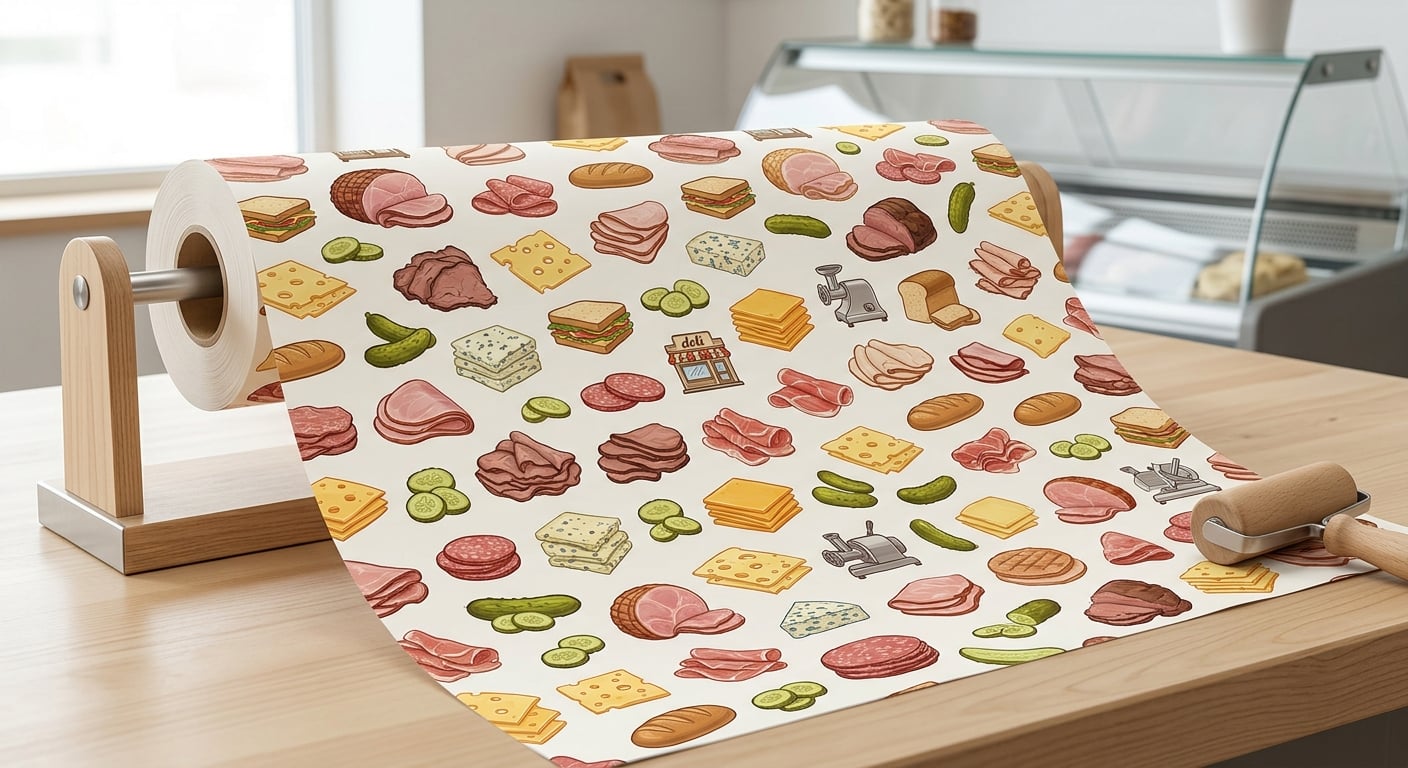
Food packaging influences how customers perceive a meal before they take the first bite. For delis, sandwich shops, cafés, bakeries, and takeaway restaurants, the right wrapping material can help protect food, simplify service, and create a consistent presentation. Customized Deli Paper combines practical food wrapping with branding opportunities, allowing businesses to make everyday packaging more recognizable.
From sandwich wraps to basket liners, deli paper can support food handling while helping maintain a neat serving area. When printed with logos, brand colors, or simple patterns, it can also reinforce a restaurant’s visual identity. The best solution balances material performance, food-contact suitability, design quality, and operating costs.
What Is Custom Deli Paper?
Custom Deli Paper is paper used to wrap, separate, or line food that can be customized with branding or decorative designs. It is commonly used for sandwiches, burgers, baked goods, deli meats, pastries, and takeaway meals.
Depending on the product specification, deli paper may be designed for grease resistance, moisture management, or direct food contact. Not every paper offers the same level of protection, so businesses should confirm its suitability for their menu items and serving conditions.
Customization makes the material more versatile from a marketing perspective. Instead of relying on plain wrapping sheets, businesses can use custom printed deli paper to display logos, signature colors, repeating patterns, or other brand elements.
This approach connects two important packaging functions: helping serve food conveniently and presenting the business consistently.
Why Deli Paper Matters in Food Packaging
Food businesses work in fast-moving environments where packaging must be easy to handle and suitable for the products being served. A well-chosen deli sheet can separate food from trays, help contain crumbs and surface grease, and support cleaner presentation.
For example, a sandwich shop may wrap each order in a branded sheet before placing it in a takeaway bag. A café might use paper liners for pastries or serving baskets. In both cases, the paper becomes part of the customer experience rather than simply an extra layer of packaging.
The main benefits include:
- Improved presentation: Clean wrapping creates a more organized appearance.
- Convenient handling: Properly sized sheets can help staff wrap and serve food efficiently.
- Brand visibility: Printed designs make packaging easier to associate with a business.
- Serving-area cleanliness: Suitable liners can help protect trays and baskets from crumbs and surface grease.
- Consistent customer experience: Coordinated packaging helps unify dine-in and takeaway presentation.
- Flexible applications: Different sizes and formats can accommodate a variety of menu items.
Actual performance depends on paper construction, food composition, temperature, and contact time. Businesses should test the selected material with real products before making it a standard part of their operations.
How Custom Printed Deli Paper Builds Brand Recognition
Packaging is often one of the most frequent physical touchpoints between a restaurant and its customers. Branded sheets offer a practical way to repeat a business’s visual identity across everyday orders.
Make the Brand Instantly Recognizable
Branded deli paper with logo gives restaurants a simple method for displaying their identity directly on food packaging. A recognizable logo, carefully selected colors, or a repeating design can help customers associate the presentation with a particular business.
The most effective designs are usually easy to recognize at a glance. Large amounts of text, competing colors, and complicated graphics can make the brand harder to identify. A clean layout allows the food and the packaging to complement each other.
Consistency also matters. When deli sheets match takeaway bags, food boxes, labels, and menus, the business creates a more coordinated appearance across different customer interactions.
Improve Food Photography and Presentation
Food presentation influences how meals appear in photographs, on social media, and in online ordering listings. A well-designed paper liner can provide a recognizable background without distracting from the food.
For instance, a burger restaurant could use a repeating logo pattern on its wrapping sheets. When customers photograph their meals, the design may remain visible in the image. This does not guarantee additional sales or social sharing, but it can support a more consistent brand appearance.
Support a More Professional Customer Experience
Customers notice small details, particularly when several businesses offer similar menu items. Clean wrapping and coordinated packaging can help communicate care and attention.
Personalized deli wrapping sheets allow businesses to tailor the presentation to their audience. A neighborhood deli may choose a simple, traditional design, while a contemporary café might use minimalist graphics and a limited color palette.
The goal is not to make packaging unnecessarily elaborate. It is to make the overall experience feel intentional and consistent.
Common Uses for Customized Printed Papers
Customized printed papers can serve different purposes depending on the business model, menu, and service environment. Choosing the right application helps businesses get more value from their packaging investment.
Sandwich Shops and Delis
Sandwiches, wraps, subs, and deli meals are natural applications for food wrapping paper. A correctly sized sheet can help hold a sandwich together during handling and provide a convenient layer between the food and its serving container.
Deli paper for sandwich shops can be customized to match the shop’s branding while supporting quick service. Businesses should assess grease resistance and paper strength based on the fillings, sauces, and moisture levels in their menu items.
Burger Restaurants and Fast-Casual Dining
Burger shops may use deli sheets to wrap individual burgers or line baskets and trays. Printed liners can provide a consistent look across dine-in and takeaway orders.
The material should be selected according to the food’s grease levels and the time it will remain in contact with the paper. Ventilation and container design should also be considered because trapped steam can soften bread and reduce crispness.
Cafés and Bakeries
Cafés and bakeries can use printed sheets for cookies, pastries, muffins, croissants, and other ready-to-serve products. Coordinated paper can complement pastry boxes, paper bags, cups, and labels.
However, not all deli paper is designed for oven use. Paper intended for serving or wrapping should not be placed in an oven unless the supplier specifically confirms that it is suitable for the required temperature and conditions.
Catering and Food Events
Catering companies often need packaging that works across different venues and serving styles. Branded liners can create a unified presentation for sandwiches, snack baskets, and prepared portions.
Pre-cut sheets may also help staff prepare multiple servings efficiently. For larger events, buyers should consider how the paper will be stored, distributed, and replenished throughout service.
Choosing Between Deli Paper Sheets and Rolls
The choice between pre-cut sheets and rolls affects preparation speed, storage, and material waste. Neither format is best for every operation.
Custom deli paper liners supplied as sheets can be convenient when staff need consistent dimensions for wrapping or lining baskets. Printed deli paper rolls offer more flexibility when different lengths are required or when a business uses a cutting process.
| Factor | Pre-cut deli sheets | Printed deli paper rolls |
|---|---|---|
| Size | Fixed dimensions | Flexible sheet lengths |
| Preparation | Ready to use | May require cutting |
| Storage | Needs organized sheet storage | Requires suitable roll storage |
| Waste control | Consistent portions can simplify use | Length control depends on cutting practices |
| Best fit | Standardized wrapping and lining | Flexible or high-volume operations |
A busy sandwich shop with a standard menu may prefer pre-cut sheets because staff can grab and use them quickly. A food business with varied portion sizes may prefer rolls for greater flexibility.
The decision should account for labor, storage space, expected waste, and the actual wrapping process.
How to Select Food-Safe Deli Wrapping Paper
Appearance alone cannot determine whether a paper is suitable for a particular food application. Purchasing teams should evaluate the material and the printing system before approving a large order.
Confirm Food-Contact Suitability
Food-safe deli wrapping paper should meet the applicable requirements for its intended use and destination market. Buyers should request relevant supplier documentation covering the paper, any coatings, and the printing system.
They should also confirm whether the material is appropriate for direct contact with the specific foods being served. General descriptions such as “food-grade” do not replace application-specific verification.
Evaluate Grease Resistance
Grease-resistant deli sheets can be useful for foods containing oils, butter, cheese, or sauces. However, grease resistance varies by material and does not automatically mean that the paper is waterproof or suitable for prolonged contact with hot food.
Before purchasing in bulk, businesses should test samples using representative menu items. The test should consider contact time, temperature, grease levels, and how the food will be wrapped or served.
Review Print Quality
A custom design should remain clear when the paper is folded, wrapped, or placed inside a food container. Buyers should check the logo’s readability, color consistency, alignment, and overall appearance.
Important checks include:
- Correct logo placement and proportions.
- Consistent colors and print quality.
- Suitable sheet dimensions or roll width.
- Appropriate printing materials for the intended food-contact use.
- Approved artwork proofs before full production.
The design should support recognition without making the paper look cluttered. A simple, repeatable pattern often works well for packaging used in large quantities.
Compare Suppliers and Total Costs
The lowest unit price does not always represent the best overall value. Buyers should compare paper specifications, print setup costs, minimum order quantities, shipping, production schedules, and reorder consistency.
For businesses sourcing custom deli paper Canada, supplier evaluation should also consider delivery coverage, relevant Canadian food-contact requirements, and the ability to maintain consistent product specifications across repeat orders.
Custom Deli Paper vs. Plain Paper: What Should Businesses Choose?
Plain deli paper can be suitable when the main priority is basic food handling and the business does not require branded packaging. Custom options add a visual benefit but may involve artwork preparation, print setup, and minimum quantities.
| Consideration | Plain deli paper | Custom deli paper |
|---|---|---|
| Visual identity | Neutral appearance | Supports branded presentation |
| Setup | Usually straightforward | May require design approval |
| Ordering | Often available in standard formats | Depends on supplier and specifications |
| Marketing potential | Limited branding opportunity | Repeated visual exposure |
| Cost | May have a lower initial cost | Depends on volume and customization |
| Best suited for | Basic packaging requirements | Businesses seeking consistent branding |
Businesses should evaluate the total cost per serving alongside the practical benefits. If custom sheets fit the menu, perform reliably, and complement the wider packaging system, the additional investment may be worthwhile.
Common Mistakes to Avoid When Ordering Custom Deli Paper
A successful packaging order requires clear specifications and realistic testing. Several common mistakes can lead to unnecessary costs or disappointing results.
- Choosing by price alone: The cheapest option may not meet the required performance standards.
- Skipping sample tests: Paper should be tested with actual food rather than judged only by appearance.
- Using unsuitable materials: Not every paper is appropriate for oily, moist, or hot foods.
- Overcomplicating the design: Busy graphics can reduce logo recognition.
- Ignoring order quantities: Large orders can create storage problems or leave a business with outdated designs.
- Overlooking lead times: Custom printing may require design approval and production time.
- Assuming all paper is oven-safe: Oven use requires explicit confirmation from the supplier.
- Failing to check repeat quality: Consistent specifications are important for reorders and multi-location operations.
A small trial order can help identify issues before a business commits to a larger quantity.
A Practical Checklist for Implementing Branded Deli Paper
Restaurants can follow a simple process to introduce customized packaging while limiting disruption to daily operations.
- Identify the main application. Decide whether the paper will wrap sandwiches, line trays, or package bakery products.
- Define material requirements. Consider food type, grease levels, moisture, temperature, and contact time.
- Prepare the design. Select clear brand elements that match existing packaging.
- Request samples. Evaluate both print quality and material performance.
- Calculate total cost. Include printing, delivery, storage, and potential waste.
- Approve specifications. Confirm dimensions, material, artwork, and intended use before production.
- Train staff. Explain the correct handling and storage procedures.
- Review results. Assess presentation, preparation speed, customer feedback, and reorder needs.
This process connects packaging decisions to operational outcomes. It also helps ensure that branding improvements do not come at the expense of food suitability or everyday efficiency.
Conclusion
Custom Deli Paper can help food businesses combine practical wrapping with more consistent branding. From sandwich shops and burger restaurants to cafés and catering companies, the right paper can support clean presentation, convenient handling, and a recognizable customer experience.
The best results come from choosing materials that match the food, verifying food-contact suitability, testing grease resistance, and keeping printed designs clear. Businesses should also compare supplier reliability, order quantities, and total costs before committing to a long-term packaging solution. For organizations exploring customized food packaging options, custom papers wholesale can be considered as part of the search for packaging that aligns with operational requirements and brand presentation goals.
Frequently Asked Questions
1. What is custom deli paper used for?
Custom deli paper is used to wrap or line foods such as sandwiches, burgers, pastries, and deli items. Printed designs can add brand recognition while supporting everyday food presentation.
2. Can deli paper be printed with a company logo?
Yes. Many suppliers offer customization with logos, colors, patterns, and other brand elements. Buyers should approve a print proof and confirm that the printing system is suitable for the intended food-contact application.
3. Is custom deli paper grease-resistant?
Some products are designed to resist grease, but performance varies by paper grade and construction. Businesses should confirm the specifications and test samples with their actual menu items.
4. What is the difference between deli paper sheets and rolls?
Sheets come in set dimensions and are ready for use. Rolls allow businesses to cut the paper to different lengths, but may require additional handling during preparation.
5. Is deli paper safe for hot food?
That depends on the paper’s specifications and intended use. Buyers should confirm temperature suitability and food-contact requirements with the supplier rather than assuming every deli paper product is suitable for hot food.
6. How can branded deli paper improve restaurant marketing?
Branded paper repeats a restaurant’s visual identity across everyday orders. It can create a more consistent presentation and make the business more recognizable, although it does not guarantee increased sales.
7. How should a business choose a deli paper supplier?
Businesses should compare material quality, food-contact documentation, grease resistance, printing quality, order minimums, production times, delivery costs, and consistency across repeat orders.