







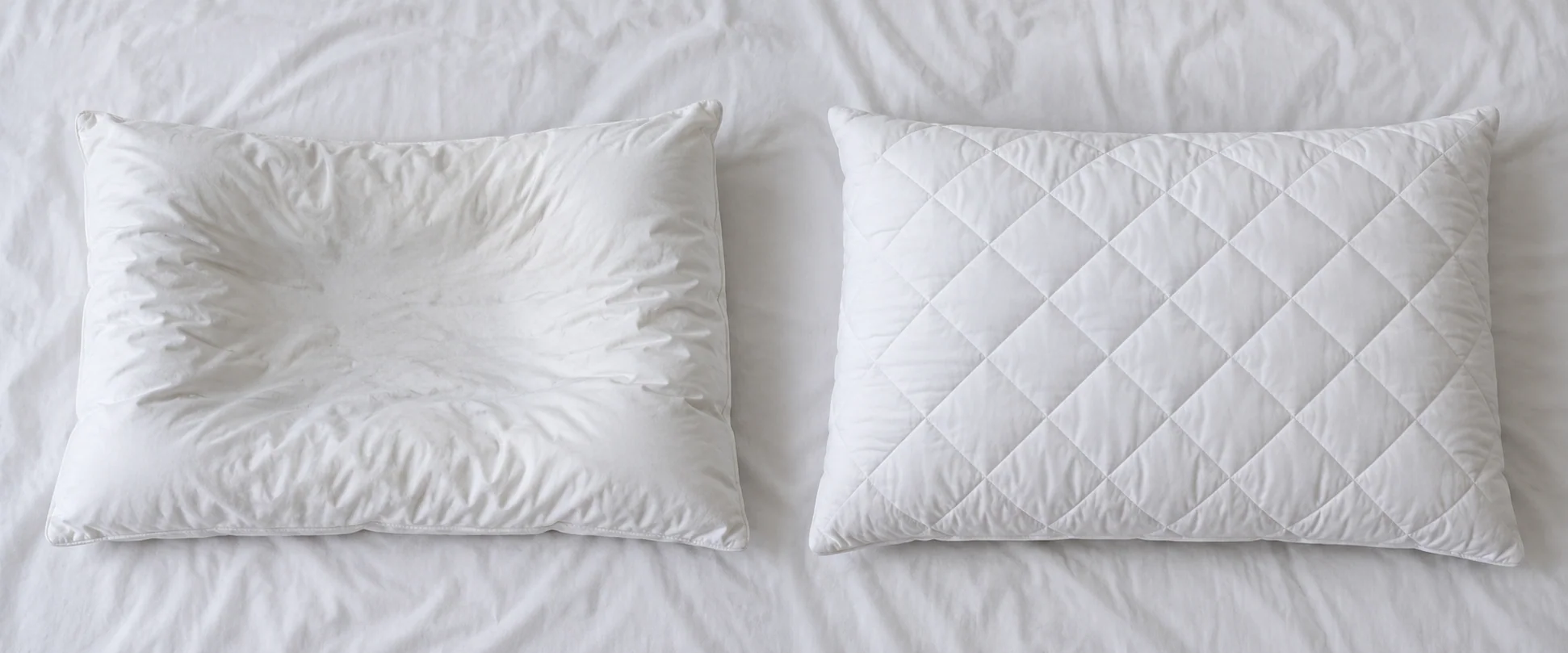
Pillows play an important role in everyday sleep comfort. However, keeping them comfortable does not depend only on choosing the right filling or firmness. Regular maintenance also matters. One common question people ask when buying new bedding is whether quilted pillows need less plumping than non-quilted pillows.
The answer depends on the pillow’s filling, construction, and how it is used. Quilting can help keep certain layers in place, but it does not automatically prevent a pillow from becoming flat or losing its shape. Understanding how different pillow designs work can help you make a better buying decision and maintain your pillows for longer.
In this guide, we explain how quilting affects pillow structure, how often pillows may need plumping, and what you should consider when comparing Quilted vs Non-Quilted Pillows.
What Does Plumping a Pillow Mean?
Plumping is the process of gently shaking, squeezing, or fluffing a pillow to restore its shape and redistribute the filling. Over time, pressure from your head and shoulders can compress the filling inside a pillow. This may cause it to become flatter, uneven, or less comfortable.
Regular plumping helps loosen compressed filling and improve the pillow’s overall appearance. It can also reduce areas where the filling has gathered together.
The amount of maintenance required varies between pillow types. Some fillings naturally recover their shape more easily, while others may need more frequent attention.
What Makes Quilted Pillows Different?
A quilted pillow features stitched patterns or seams across its outer construction. These stitches connect layers of fabric and, in some designs, help secure padding or filling in place.
The purpose of quilting is to create a more structured and consistent surface. It can also give the pillow a distinctive appearance and help prevent certain outer layers from shifting.
However, quilting does not always mean that the entire filling inside the pillow is fixed in position. The internal construction varies between manufacturers and products.
Some quilted pillows have a separate inner chamber containing loose filling, while others use layered materials that are secured through stitching. This difference can influence how much plumping a pillow needs.
Do Quilted Pillows Need Less Plumping?
Quilted pillows may need less frequent adjustment in some cases, particularly when their construction helps prevent the outer padding from moving around. Their stitched design can support a more consistent surface and reduce visible bunching.
However, it would be inaccurate to say that all quilted pillows need less plumping than non-quilted options.
The filling material is often more important than the quilting pattern. A pillow made with resilient filling may recover its shape after use, regardless of whether it has a quilted or non-quilted exterior.
For example, a quilted pillow containing soft polyester fibre may still become compressed with regular use. Similarly, a well-made non-quilted pillow with high-quality filling may retain its loft without requiring constant fluffing.
Therefore, when choosing between Quilted vs Non-Quilted Pillows, consider the complete construction rather than relying on stitching alone.
How Quilting Can Help Maintain Pillow Shape
Quilting can provide several practical benefits that may influence how a pillow looks and feels over time.
Helps Keep Outer Layers in Place
In pillows with quilted padding, stitching can help secure the outer layers and reduce unwanted movement. This may prevent the surface from becoming uneven or developing loose areas.
As a result, the pillow can maintain a more consistent appearance between uses.
Creates a More Structured Surface
The stitched pattern creates sections across the pillow’s surface. Depending on the design, these sections can help distribute padding more evenly.
This does not necessarily prevent internal filling from compressing, but it can support the pillow’s overall structure.
Reduces Certain Types of Bunching
When padding is secured through quilting, it may be less likely to move freely inside the outer fabric. This can reduce bunching in the quilted sections.
However, loose filling inside the main pillow chamber can still shift. The pillow may therefore require occasional shaking or fluffing.
Why Some Pillows Need More Plumping Than Others
Pillow maintenance depends on several factors. Understanding them can help you identify why one pillow needs frequent attention while another maintains its shape more easily.
Filling Material
The filling is one of the most important factors affecting how often a pillow needs plumping.
Polyester fibre pillows can become compressed over time, although the quality and density of the fibre influence how well they recover. Some may need regular fluffing to maintain their loft.
Memory foam pillows generally behave differently. Many are designed to recover their original shape after pressure is removed, although their care requirements depend on the specific foam construction. Traditional solid memory foam pillows should not be treated like loose-fill pillows.
Down and feather pillows can be shaken and fluffed to redistribute their natural filling. Their softness and recovery depend on the quality and ratio of down and feathers.
Microfibre pillows may offer a soft feel, but their ability to retain shape depends on fibre quality, filling density, and overall construction.
Pillow Construction
A pillow with separate internal chambers may distribute filling differently from one with a single open compartment. Chamber construction can help control how filling moves and may reduce the need for frequent adjustments.
Similarly, quilted outer layers may provide additional structure, but they cannot guarantee that the internal filling will remain evenly distributed.
Sleeping Habits
People who change sleeping positions frequently may place pressure on different areas of their pillows throughout the night. This can affect how the filling settles.
Side sleepers may compress a larger section of the pillow while looking for suitable head and neck support. Back and stomach sleepers may apply pressure differently depending on their preferred pillow height.
Frequency of Use
A pillow used every night generally experiences more compression than one used occasionally. Regular pressure, body heat, and moisture can gradually affect its condition.
This is why even a well-constructed quilted pillow may need occasional maintenance.
How to Plump a Quilted Pillow Properly
Although quilted pillows may have a structured design, gentle maintenance can help keep them comfortable.
1. Check the care label first
Before cleaning or adjusting your pillow, read the manufacturer’s care instructions. Different fillings require different handling methods.
2. Hold the pillow from opposite sides
Gently hold both ends and shake the pillow to help redistribute loose filling. Avoid pulling aggressively on the fabric or seams.
3. Fluff the surface carefully
Use your hands to gently press and release the pillow. This can help restore its appearance without putting unnecessary pressure on the stitching.
4. Allow it to air regularly
If the care instructions permit, allow your pillow to air in a suitable, well-ventilated area. This can help reduce trapped moisture and keep the bedding fresher.
5. Avoid excessive pressure
Do not twist, fold, or hit the pillow aggressively. Excessive force may damage the outer fabric, seams, or internal structure.
Quilted vs Non-Quilted Pillows and Their Maintenance
Both pillow types can provide comfortable sleep, but their maintenance requirements may differ depending on their construction.
Quilted pillows often have stitched outer sections that help secure padding and create a structured surface. This can reduce movement in certain layers and make the pillow look more consistent.
Non-quilted pillows usually have a simpler outer design without the same stitched pattern. Their filling may move more freely, depending on whether the pillow has a single chamber or another internal structure.
However, a non-quilted pillow is not necessarily harder to maintain. A resilient filling can recover its shape effectively, while a low-quality quilted pillow may still become flat.
When comparing Quilted vs Non-Quilted Pillows, look at the filling quality, construction, comfort preferences, and care instructions. These details provide a more useful indication of maintenance needs than the exterior design alone.
Signs Your Pillow Needs Plumping
You do not need to plump your pillow constantly. Instead, pay attention to changes in its appearance and comfort.
Common signs include:
- The pillow looks flatter than usual.
- Filling appears unevenly distributed.
- Certain areas feel softer or firmer than others.
- The surface looks bunched or compressed.
- The pillow does not return to its usual shape after use.
If the pillow remains flat even after gentle plumping, the filling may have lost some of its ability to recover. In that situation, additional maintenance may not restore its original comfort.
How to Choose a Pillow That Requires Less Maintenance
If you prefer bedding that does not need frequent adjustment, consider more than just whether a pillow is quilted.
First, check the filling material and its ability to recover after compression. Look for clear product information about filling quality, construction, and expected care.
Next, consider the pillow’s internal design. Separate chambers or secured layers may help maintain a more consistent structure, depending on how the product is made.
You should also choose a pillow that suits your sleeping position. A pillow that provides an appropriate height and level of support may feel more comfortable without requiring constant repositioning.
Finally, follow the manufacturer’s maintenance instructions. Proper care can help preserve the pillow’s condition and prevent avoidable damage.
Frequently Asked Questions
Do quilted pillows need to be plumped every day?
Not necessarily. Some quilted pillows maintain their appearance with occasional adjustment, while others may need more regular fluffing. The filling material and construction determine the actual maintenance requirements.
Do non-quilted pillows go flat faster?
Not always. A non-quilted pillow made with resilient, high-quality filling may retain its shape well. Quilting alone does not determine how long a pillow stays comfortable.
Does quilting prevent pillow filling from moving?
Quilting can secure certain outer layers or padding, depending on the design. However, it does not necessarily prevent loose filling inside the pillow from shifting.
How can I make my quilted pillow last longer?
Follow the care label, plump it gently when needed, keep it clean, and avoid excessive pressure. Using a suitable pillow protector may also help protect it from everyday dirt and moisture.
Which pillow is better for low maintenance?
Neither type is automatically better. A pillow with durable filling and suitable internal construction may require less maintenance, whether it is quilted or non-quilted.
Final Thoughts
Quilted pillows can offer a more structured surface and help keep certain layers in place, which may reduce some types of bunching and adjustment. However, they do not automatically need less plumping than non-quilted pillows.
The most important factors are filling quality, internal construction, sleeping habits, and proper care. A well-made pillow with resilient filling can maintain its shape regardless of its exterior design.
When choosing between Quilted vs Non-Quilted Pillows, focus on how the pillow is constructed and how well it suits your comfort needs. This will help you find an option that is easier to maintain and supports a comfortable sleeping routine.