





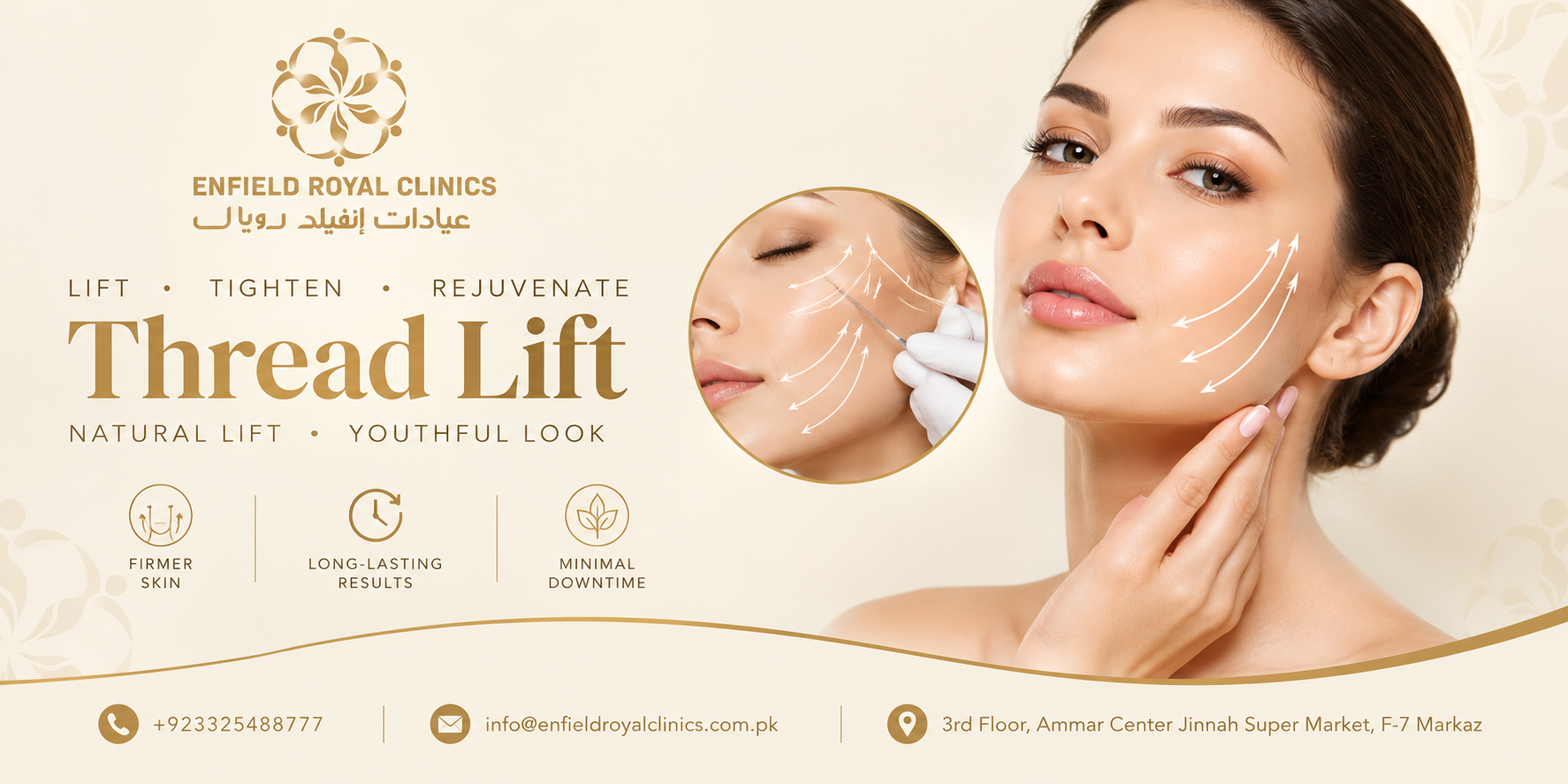
Thread Lift Treatment in Islamabad is a popular option for people who want to improve cheek firmness and facial contours without undergoing traditional facelift surgery. As the skin ages, it may gradually lose elasticity, causing the cheeks to appear less lifted, facial contours to become softer, and mild sagging to develop. A thread lift may help address these concerns by providing temporary mechanical support beneath the skin while stimulating the body’s natural collagen production.
Although this treatment can create a subtle lifting effect, its suitability depends on the degree of skin laxity, facial structure, and individual aesthetic goals. Understanding how the procedure works, what results it can provide, and its potential limitations helps individuals make informed decisions about cheek rejuvenation.
How Does Thread Lift Treatment Tighten the Cheeks?
A thread lift uses temporary medical-grade threads placed beneath the skin to support and lift selected facial tissues. Depending on the technique and thread type, these threads may have small barbs or other features that help anchor the tissue in a higher position.
When used around the cheeks, the threads may improve the appearance of mild sagging and create a more defined transition between the cheeks and lower face. The treatment can also help restore a subtle lifted appearance when age-related changes have caused the midface to look less firm.
Another important aspect is collagen stimulation. Collagen is a structural protein that helps maintain the skin’s strength and elasticity. As the threads gradually dissolve, the body’s healing response may encourage collagen formation around the treated areas. This process can contribute to tissue support over time, although the amount of improvement varies between individuals.
A thread lift does not permanently tighten the skin or replace the deeper structural changes achieved through surgical lifting. Instead, it offers a temporary option for selected people who want a modest improvement in facial firmness.
What Cheek Concerns Can a Thread Lift Improve?
Thread lift treatment may help address several early signs of facial ageing, particularly when the cheeks have mild sagging rather than significant tissue descent.
Mild cheek sagging: When the cheek tissues begin to move downward, the face may appear less lifted. Carefully positioned threads may provide support and create a subtle elevation.
Reduced facial definition: Age-related changes can soften the natural contours of the cheeks. A thread lift may help improve their appearance by supporting selected tissues and creating a more defined facial outline.
Early changes in the midface: Some individuals notice that their cheeks appear flatter or lower than before. Depending on their anatomy, a thread lift may offer a modest lifting effect, although it does not replace lost facial volume.
Changes around the lower cheeks: Mild tissue descent can contribute to the appearance of early jowls. In suitable candidates, lifting selected facial tissues may improve the overall contour of the lower cheek area.
The treatment is generally more appropriate for early changes than for advanced sagging. Significant skin laxity, considerable volume loss, or deep facial folds may require a different approach. A qualified practitioner can assess whether a thread lift is likely to meet the individual’s expectations.
What Are the Benefits of Thread Lift Treatment in Islamabad?
People considering Thread Lift Treatment in Islamabad may appreciate its minimally invasive nature and the possibility of improving facial contours without traditional surgery.
One potential benefit is the relatively short procedure time. Treatment is usually performed using local anaesthesia, depending on the technique and the individual’s needs. Small entry points are used to insert the threads, so large surgical incisions are generally unnecessary.
Another advantage is that results may be visible soon after the procedure. Some lifting can appear immediately, while collagen-related changes develop gradually over the following weeks or months. The final appearance depends on the treatment method, thread placement, tissue response, and individual healing.
Other potential benefits include:
- A subtle improvement in cheek elevation and facial contours.
- Limited downtime compared with a surgical facelift.
- Small entry points rather than extensive incisions.
- The possibility of returning to many everyday activities relatively quickly.
- An approach that can be tailored to specific areas of the face.
However, these benefits do not guarantee a particular result. A thread lift is not suitable for everyone, and the degree of improvement is usually more limited than that of surgery. Realistic expectations and careful patient selection are important for a satisfactory outcome.
Who Is a Suitable Candidate for Cheek Tightening?
A thread lift may be suitable for adults who have mild to moderate facial tissue laxity and want a modest improvement without undergoing surgery. People with relatively good skin quality and realistic expectations may be more likely to appreciate the results.
The treatment may be considered by individuals who have noticed early cheek sagging, reduced facial definition, or slight changes in the midface. It may also appeal to those who prefer a minimally invasive procedure and understand that the effects are temporary.
However, some individuals may benefit more from alternative treatments. Those with significant loose skin, pronounced jowls, or substantial volume loss may not achieve the desired improvement with threads alone. In such cases, a practitioner may discuss other options based on the person’s facial anatomy and goals.
A medical assessment is essential before treatment. The practitioner should review medical history, medications, previous cosmetic procedures, skin condition, and any factors that may affect healing. Active skin infections and certain medical conditions may require treatment to be postponed or avoided.
Pregnant or breastfeeding individuals should discuss the timing of elective cosmetic procedures with an appropriate healthcare professional, as treatment may be deferred.
What Happens During and After the Procedure?
The process generally begins with a consultation in which the practitioner examines the cheeks, assesses skin laxity, and discusses the expected outcome. The treatment area may then be marked to guide thread placement.
Local anaesthesia is commonly used to improve comfort. The practitioner inserts the selected threads through small entry points and positions them to support the targeted tissues. The threads are adjusted carefully to create a balanced, natural-looking result.
After placement, the entry points are checked and aftercare instructions are provided. Mild swelling, bruising, tenderness, or tightness may occur during the early recovery period. Some people also notice temporary dimpling or unevenness as the tissues settle.
Following aftercare guidance can help support recovery. Depending on the practitioner’s instructions, patients may be advised to:
- Avoid rubbing, massaging, or applying unnecessary pressure to the cheeks.
- Limit strenuous exercise during the recommended recovery period.
- Avoid excessive facial movements or activities that strain the treated area.
- Sleep in a position that minimises pressure on the face.
- Attend follow-up appointments when recommended.
Recovery varies according to the technique and the individual. Severe or increasing pain, spreading redness, fever, unusual discharge, skin colour changes, or sudden asymmetry should be assessed promptly by a healthcare professional.
How Long Do Cheek-Tightening Results Last?
The results of a thread lift are temporary. Their duration depends on the type of threads used, the severity of the original sagging, lifestyle factors, skin quality, and the body’s healing response.
Some improvement may be noticeable immediately after treatment, but early swelling can affect the appearance. As swelling settles and the tissues adapt, the result becomes easier to assess. Collagen-related changes may develop over the following weeks or months.
Over time, the threads dissolve or are absorbed by the body, depending on the material used. The support they provide gradually decreases, while the natural ageing process continues. As a result, the cheeks may slowly return toward their previous appearance.
Maintaining healthy skincare habits, protecting the skin from excessive sun exposure, and following professional advice may support overall skin health. However, these measures cannot guarantee longer-lasting thread lift results.
A thread lift should therefore be viewed as a temporary contouring treatment rather than a permanent solution to cheek sagging. Follow-up treatment should only be considered after a professional assessment of the results and the condition of the tissues.
Are There Any Risks or Limitations?
Although a thread lift is minimally invasive, it is still a medical procedure and carries potential risks. Possible complications include bruising, swelling, infection, pain, visible or palpable threads, skin dimpling, asymmetry, thread migration, and unsatisfactory cosmetic results.
Some complications are temporary, while others may require additional medical treatment. In uncommon cases, thread placement or healing problems can lead to more significant tissue changes.
The treatment also has limitations. It cannot remove large amounts of excess skin, provide the same degree of lifting as a surgical facelift, or reliably replace lost cheek volume. Individuals expecting dramatic or permanent tightening may be disappointed.
Choosing an appropriately qualified and experienced medical practitioner is essential. The consultation should include a discussion of the expected benefits, available alternatives, potential complications, and the possibility that the result may be subtle.
Frequently Asked Questions
1. Does a thread lift make the cheeks look firmer?
A thread lift may improve the appearance of mild cheek sagging by providing temporary tissue support. Collagen stimulation may contribute to skin support over time, but results vary according to skin quality, facial anatomy, and the degree of laxity.
2. Are cheek-tightening results visible immediately?
Some lifting may be visible immediately after treatment. However, swelling and bruising can temporarily affect the appearance, and the result becomes clearer as recovery progresses.
3. Is a thread lift better than a surgical facelift for sagging cheeks?
Neither option is best for everyone. A thread lift may suit people with mild sagging who prefer a minimally invasive approach. A surgical facelift can provide a more substantial correction for significant skin laxity, but it involves surgery and a different recovery process.
4. Can a thread lift replace lost cheek volume?
A thread lift primarily supports and repositions selected tissues. It does not reliably replace lost facial fat or restore substantial cheek volume. A practitioner can assess whether another treatment may be more appropriate for volume loss.
Meta Description: Discover how Thread Lift Treatment in Islamabad may tighten cheeks, improve facial contours, stimulate collagen, and provide temporary lifting results.