




A well-mannered dog can make everyday life more enjoyable, from welcoming guests into the home to walking calmly through the neighborhood. However, when a dog constantly pulls on the leash, jumps on people, barks at passing activity, or ignores familiar instructions, even simple routines can become frustrating.
For dog owners in Aurora, Illinois, the first step toward improvement is understanding what happens before, during, and after a behavior. A dog may react differently depending on the surroundings, the people nearby, or the level of excitement in the moment. Recognizing these patterns helps owners choose a practical way forward.
Working with a professional Dog Trainer can help families establish clearer expectations, improve communication, and develop skills that are useful in real-life situations. The aim is not just to teach commands but to make those skills meaningful at home and beyond.
Why Everyday Situations Reveal Training Gaps
Some behavior problems become noticeable only when a dog encounters a particular situation. A dog might respond well in a quiet room but struggle when someone rings the doorbell. Another may walk comfortably on a familiar street but become distracted when encountering unfamiliar people or dogs.
These differences do not necessarily mean that previous training has failed. They may indicate that the dog needs more practice under different conditions.
Look at the Pattern, Not Just the Problem
Before deciding how to address an unwanted behavior, identify when it occurs. For several days, observe the situation and note any repeated patterns.
Consider these questions:
- What happens immediately before the dog reacts?
- Is the dog excited, uncertain, frustrated, or uncomfortable?
- Does the behavior occur in a particular room or location?
- What do family members typically do in response?
- Does the dog settle quickly, or does the reaction continue?
For example, a dog that barks whenever someone walks past a window may need a combination of environmental management and training. Closing the curtains during busy periods, providing a comfortable resting space, and practicing an alternative routine can help reduce repeated opportunities to rehearse the behavior.
If the behavior involves intense fear or aggression, avoid deliberately provoking it. Seek qualified professional guidance and prioritize safety.
Make Leash Walking More Manageable
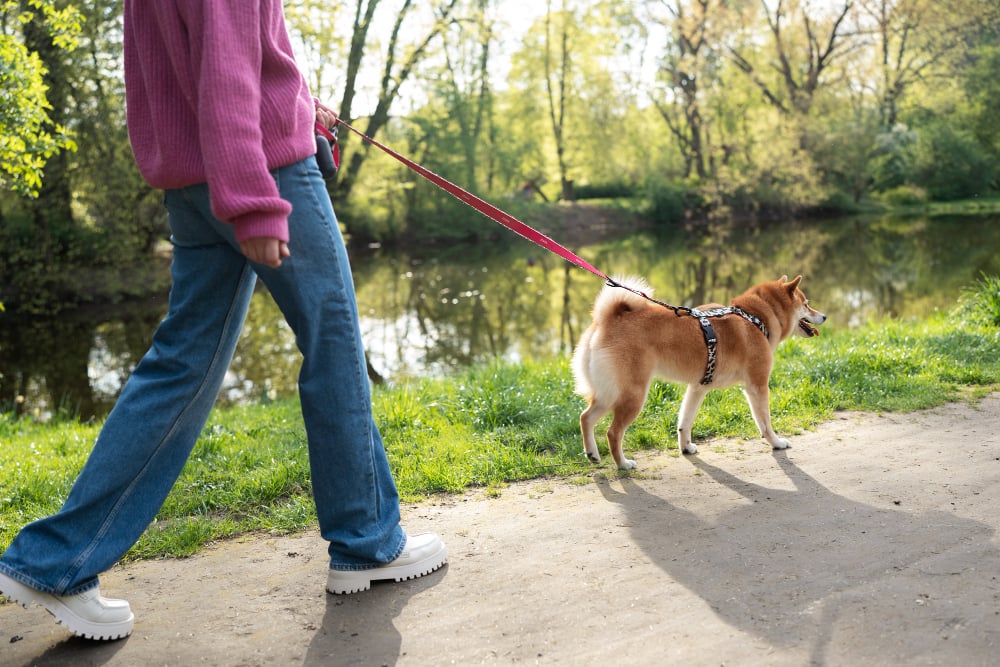
Walking should provide an opportunity for dogs to explore while remaining safely connected to their handlers. When pulling, lunging, or constant zigzagging takes over, the experience can become difficult for both the dog and owner.
Begin With Better Walking Preparation
The routine before leaving home can influence the rest of the walk. If a dog becomes overly excited as soon as the leash appears, rushing outside may make it harder to establish control.
Prepare the equipment in advance and begin when you have enough time to work calmly. Practice attaching the leash and starting the walk without allowing excitement to dictate every step.
If the dog struggles, shorten the practice session or begin in a quieter area. Progress depends on the dog’s ability to respond, not on how quickly the owner moves through the exercise.
Practice Around Distractions Gradually
Dogs may need additional support when encountering other animals, pedestrians, bicycles, or unfamiliar sounds. Start at a distance where the dog can still pay attention to the handler.
Practice short stretches of walking together, responding to changes in direction, and pausing when necessary. Gradually work closer to distractions only when the dog can remain comfortable and manageable.
Keep your dog leashed in public areas as required and use equipment suitable for the dog’s size and behavior. Reliable responses take practice, so avoid testing a developing skill in an environment that is too challenging.
Improve Behavior Around the Home
Training at home gives owners the opportunity to address the situations they experience most frequently. Household manners can include greeting people appropriately, respecting boundaries, settling during quiet periods, and responding to familiar instructions.
Create a Consistent Greeting Routine
Jumping on visitors often becomes a repeated habit when the dog receives excitement or attention each time it happens. Instead of waiting until the dog is already jumping, plan how greetings should take place.
Use a leash, gate, or other appropriate management tool if needed. Ask visitors to follow the same routine and avoid encouraging unwanted jumping. Practice with familiar people before attempting more difficult greetings.
For dogs that become distressed around visitors, provide distance and separation rather than forcing interaction.
Establish Clear Household Boundaries
Dogs benefit when family members understand which behaviors are acceptable and respond consistently. If one person encourages a behavior that another person discourages, the dog may receive mixed information.
Discuss household expectations and agree on simple routines for common situations, such as entering rooms, waiting before going outdoors, and settling while family members are busy.
A practical plan should also allow for appropriate exercise, exploration, rest, and social interaction. Clear boundaries work best when the dog’s everyday needs are considered alongside training goals.
Choosing a Training Service That Fits Your Needs
When searching for Dog Training near me, owners may encounter group classes, private lessons, online instruction, and other training options. The right choice depends on the dog’s behavior, the owner’s experience, and the situations that need attention.
Group classes can provide structured opportunities to practice basic skills around other dogs. Private lessons may be more suitable when the main concerns happen inside the home or involve specific household routines.
Before choosing a provider, ask questions such as:
- What training methods and equipment will be used?
- How will the trainer assess my dog’s behavior?
- Will lessons address the situations that cause the most difficulty?
- What should I practice between appointments?
- How will progress be evaluated?
- What safety measures are recommended for challenging behaviors?
Look for a trainer who explains the approach clearly, listens to your concerns, and sets realistic expectations. Be cautious of guarantees that promise immediate results for every dog.
Private In-Home Training With Always Faithful Dog & Puppy Training
Always Faithful Dog & Puppy Training offers private in-home lessons based on its Leadership Dog Training philosophy. The approach emphasizes communication between dogs and their owners and aims to help families establish consistent expectations in everyday life.
The company’s stated philosophy is “No Treats, No Clickers, No Shock Collars, No Gimmicks.” Owners can discuss the training methods directly with the company to understand how the approach may fit their goals and their dog’s individual needs.
Private instruction can be useful when owners want help addressing behavior in the environment where it occurs. Depending on the dog’s circumstances, training discussions may cover:
- Leash pulling and difficulty walking calmly.
- Barking and jumping during household activity.
- Puppy manners and early training routines.
- Digging and other unwanted habits.
- Responding more reliably to owner direction.
- Developing clearer expectations around family interactions.
Owners play an important role in the process. Understanding the recommended techniques and practicing consistently between lessons helps make training part of daily life rather than something that happens only during an appointment.
Turn Training Goals Into Everyday Progress
Improvement becomes easier to evaluate when owners choose a specific, realistic goal. Instead of aiming to fix every behavior at once, start with the situation that causes the most disruption.
For example, a household might focus on calmer greetings before addressing more challenging outdoor distractions. Another family may begin with leash manners because walks have become difficult to manage.
Track progress by observing what happens in the actual situation. Is the dog recovering more quickly? Can the owner redirect the dog earlier? Is the routine becoming easier to repeat? These changes can help guide the next stage of training.
If a behavior appears suddenly or may be related to pain or illness, consult a veterinarian. For severe fear, aggression, or a risk of injury, obtain appropriate professional support rather than attempting difficult exercises without guidance.
Take the First Step Toward Better Communication
Living with a dog should not mean feeling unprepared for every visitor, walk, or unexpected distraction. With thoughtful observation, consistent routines, and appropriate instruction, owners can work toward more manageable behavior and a stronger understanding of their dogs.
If you are looking for a Dog Trainer Aurora IL, Always Faithful Dog & Puppy Training offers private in-home lessons focused on its Leadership Dog Training philosophy. Contact the company to discuss your dog’s behavior, explain your priorities, and ask about a free phone consultation.
Starting with an honest conversation about your challenges can help you determine which training options may be appropriate for your household.