


A dog’s behavior can change depending on what is happening around them. A dog that listens comfortably in the living room may become distracted when the front door opens. Another may walk calmly on a quiet street but pull hard when encountering an unfamiliar dog. These differences can leave owners wondering why familiar instructions suddenly seem ineffective.
The answer often begins with examining the situation rather than repeating the same command more loudly. Dogs need opportunities to practice skills under different conditions, and owners need a practical way to guide them through those moments.
For families exploring dog training in Memphis, Tennessee, the goal should be to develop useful behaviors that carry over into daily life. A well-planned approach can help owners address common concerns while building routines they can maintain long after a lesson ends.
Understand the Moments When Behavior Changes
Dogs do not experience every situation in the same way. Excitement, unfamiliar surroundings, sudden movement, and competing distractions can affect how well a dog responds. Recognizing these influences helps owners decide when to practice, when to simplify a task, and when to create more distance from a distraction.
Notice What Happens Before the Behavior
Consider a dog that barks whenever a visitor arrives. The barking may begin when the doorbell rings, when footsteps approach, or when the visitor enters the house. Each starting point presents a slightly different training opportunity.
Instead of waiting until the dog is already highly excited, observe the earliest signs of the reaction. These might include becoming still, staring toward the door, moving quickly through the house, or vocalizing.
Owners can then plan a manageable routine around the specific trigger. This may involve preparing the dog before opening the door, using a leash or barrier for safety, and arranging greetings in a controlled manner.
The same principle applies to jumping, pulling, and ignoring instructions. Identifying the conditions surrounding a behavior gives training a clearer direction.
Separate Excitement From Disobedience
A dog that struggles to respond during an exciting moment is not necessarily behaving the same way as a dog that has never learned the requested skill. The distinction matters because the training plan should match the dog’s current ability.
If a dog cannot respond reliably around a particular distraction, reduce the difficulty. Practice first in a quieter setting, use shorter sessions, and gradually increase the challenge as the dog becomes more comfortable.
A dog trainer can help owners evaluate where a skill breaks down and determine how to progress without repeatedly placing the dog in situations that are too difficult.
Create a Consistent Routine for Busy Households
A household does not need a complicated schedule to support better behavior. What matters is making important expectations predictable. Dogs benefit when family members use similar cues, manage situations consistently, and provide appropriate opportunities for activity and rest.
Give Family Members a Shared Plan
Conflicting expectations can make training harder. One person may allow a dog to jump during greetings, while another discourages it. Someone might invite the dog onto furniture, while another person expects the dog to stay off.
Families should agree on basic household rules and communicate them clearly. Consider creating a short list of priorities:
- How should the dog greet family members and visitors?
- What should happen before the dog goes through an exterior door?
- Where can the dog rest when the household is busy?
- What is the expected response when the dog is called?
- How should family members respond when unwanted behavior begins?
Consistency does not require every family member to have the same personality. It requires everyone to understand the expectations and follow a compatible plan.
Build Practice Into Existing Activities
Training does not always require a separate block of time. Everyday routines offer opportunities to reinforce skills in manageable ways.
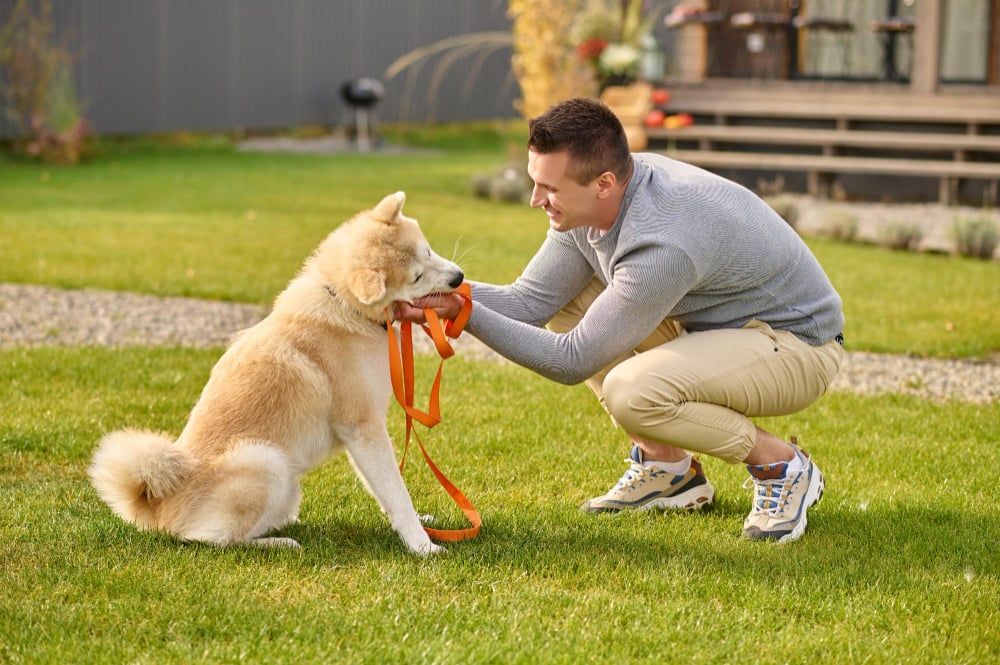
Before a walk, practice preparing calmly and waiting for the leash to be attached. During feeding routines, establish an orderly process that suits the dog’s needs. When family members return home, use a consistent greeting routine rather than allowing excitement to determine what happens next.
Keep practice sessions brief enough to maintain the dog’s attention. If frustration rises, make the task easier and return to the more challenging step later.
The objective is to create repeatable habits—not to turn every interaction with a pet into a formal lesson.
Teach Skills That Work Outside the Living Room
A dog may understand a command in a familiar room but struggle to respond when new sounds, scents, or movement compete for attention. This is why skills need to be practiced in different environments, with difficulty increased gradually.
Introduce Distractions One Step at a Time
Suppose a dog responds to a recall cue indoors but ignores it in the yard. Rather than immediately testing the dog in a crowded or unfamiliar place, begin in a secure, low-distraction area outdoors.
Use a suitable lead or long line when appropriate, and practice at a distance where the dog can still focus. Gradually introduce additional distractions while keeping safety in mind.
This progression helps owners recognize the difference between a skill that is established in one setting and a skill that needs more practice elsewhere.
Make Leash Manners a Shared Responsibility
Pulling can make walks uncomfortable and difficult to manage. Owners should consider the walking environment, the dog’s level of excitement, the equipment being used, and their own handling habits.
Start in an area with enough space to practice comfortably. Work on moving together, responding to changes in direction, and pausing when necessary. Avoid allowing the dog to repeatedly drag the handler toward every interesting object.
When distractions are too intense, increase the distance or return to a quieter location. For dogs that lunge, show significant fear, or present a safety risk, seek qualified professional guidance before attempting more difficult walks.
A successful walking routine should support safe movement for both the dog and the person holding the leash.
What to Look for When Choosing a Dog Trainer
Searching for Dog Training near me can bring up a range of providers, programs, and training philosophies. Before choosing one, consider what kind of support your household needs and how the trainer plans to involve you in the process.
A suitable professional should be able to explain the training approach, discuss realistic expectations, and adapt instruction to the dog’s behavior and circumstances.
Ask Questions Before Committing
Use an initial conversation to understand the provider’s methods and lesson structure. Useful questions include:
- How will the trainer assess my dog’s current behavior?
- What will I be expected to practice between lessons?
- How are distractions introduced during training?
- What equipment and handling techniques are recommended?
- How will progress be evaluated?
- What additional support is available if a behavior persists?
Look for clear answers rather than guarantees of instant results. Behavior change can take time, and outcomes depend on factors such as the dog’s history, the complexity of the concern, and the consistency of practice.
For serious aggression, intense anxiety, or behavior that may result in injury, consider a qualified veterinary or behavior professional when appropriate. Training should include suitable safety measures rather than relying on repeated exposure to difficult situations.
Private In-Home Lessons With Always Faithful Dog & Puppy Training
Always Faithful Dog Training offers private in-home lessons through its Leadership Dog Training approach. The company’s philosophy emphasizes communication between owners and dogs, along with clear expectations that can be practiced during normal household activities.
Its stated approach is “No Treats, No Clickers, No Shock Collars, No Gimmicks.” Owners can discuss the methods directly with the trainer to understand how the approach would be applied to their dog’s individual needs.
In-home instruction can provide a useful setting for working on problems that occur around familiar routines, including:
- Jumping when people arrive or return home.
- Barking during household activity.
- Pulling on the leash before or during walks.
- Digging or other unwanted habits.
- Difficulty responding to owner direction.
- Puppy manners and early household routines.
The value of private instruction is that owners can discuss real situations, observe the recommended handling techniques, and practice the steps themselves. This makes it easier to identify which parts of a routine need adjustment and how to continue working on the behavior between appointments.
Training is not limited to the time spent with a professional. The skills developed during lessons need to be practiced in everyday situations, with expectations adjusted to the dog’s progress.
Give Your Dog a Clearer Path to Success
Better behavior starts with understanding where a challenge occurs and choosing a realistic next step. When owners identify triggers, agree on household expectations, and practice skills gradually, they have a more organized way to address everyday frustrations.
Whether the priority is calmer greetings, improved leash manners, or more reliable responses around distractions, dog training should focus on practical changes that matter to the household.
If you are looking for a dog trainer in Memphis, TN, visit Always Faithful Dog & Puppy Training to learn more about its private in-home lessons and Leadership Dog Training philosophy. You can also ask about a free phone consultation to discuss your dog’s behavior, your training goals, and whether the approach is a suitable fit for your family.