




Every dog has a different way of responding to the world. Some dogs become excited when they see another animal, while others struggle to settle when household activity increases. A puppy may chew on belongings, and an adult dog may continue pulling on the leash despite repeated reminders.
These challenges can affect the entire household when owners are unsure how to respond consistently. The solution often begins with understanding the dog’s needs, identifying the situations that trigger unwanted behavior, and developing a clear plan for everyday practice.
For families exploring Dog training in Fort Worth, Texas, the focus should be on practical skills that support a more manageable relationship between dogs and their owners. With appropriate guidance and consistent handling, families can work toward better manners at home and more reliable behavior in daily situations.
Recognize the Difference Between Knowing and Doing
A dog might understand a familiar instruction in a quiet room but struggle to respond when something exciting happens. This is an important distinction when deciding what to practice next.
Knowing a cue in one environment does not automatically mean the dog can perform it reliably everywhere. Distractions, excitement, unfamiliar surroundings, and previous experiences can all affect a dog’s response.
Adjust the Difficulty Instead of Repeating Commands
Imagine that your dog responds when called indoors but ignores the same instruction in the backyard. Repeating the cue several times may not solve the problem if the environment is too distracting.
Instead, return to a setting where your dog can pay attention. Practice the response, then gradually introduce more distractions as the dog becomes more consistent. Use a leash or long line where appropriate, and do not test an unreliable recall in an unsafe or unsecured area.
The same approach can help with leash manners, waiting at doorways, and responding to instructions when visitors arrive.
Measure Progress Through Everyday Behavior
Training progress does not always mean a dog performs perfectly. Improvement might look like recovering more quickly after becoming excited, responding earlier to guidance, or needing less help to complete a familiar routine.
Observe these changes over time. If an exercise repeatedly becomes difficult, simplify it and try again under easier conditions. This helps owners identify what their dogs are ready to learn next.
Make Household Rules Clear to Everyone
Dogs share their homes with people who may have different schedules, expectations, and habits. Without a consistent plan, the dog can receive conflicting signals about what is acceptable.
For example, one family member might encourage jumping during greetings, while another tries to stop it. A dog that receives different responses may struggle to understand the desired behavior.
Agree on a Few Important Expectations
Start by choosing the household rules that matter most. These might include:
- Keeping four paws on the floor when greeting people.
- Waiting calmly while a leash is attached.
- Settling in an appropriate resting area during quiet periods.
- Leaving household belongings alone.
- Responding to familiar instructions before moving into another activity.
Everyone involved in the dog’s care should understand how to respond to these situations. The plan should be simple enough to follow consistently, including on busy days.
Prevent Rehearsal of Unwanted Habits
Management is an important part of training. If a puppy repeatedly chews shoes, keep footwear out of reach and provide appropriate chew items. If a dog becomes highly excited when watching activity through a window, consider adjusting access to that view while teaching a calmer routine.
Preventing repeated opportunities for unwanted behavior can make practice easier. It is not a substitute for teaching, but it gives owners a better chance to reinforce suitable choices.
Build Better Walking Habits in Fort Worth
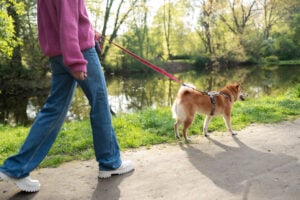
Walks provide dogs with opportunities to explore, exercise, and experience different surroundings. They can also expose training challenges, especially when dogs become distracted by moving objects, unfamiliar animals, or interesting scents.
The goal is to create a walking routine in which the owner can guide the dog safely without constant pulling or abrupt changes of direction.
Practice Before the Walk Becomes Difficult
Begin in a relatively quiet location where your dog can focus. Work on short stretches of walking together, pausing when necessary, and responding to gentle changes in direction.
If the dog starts pulling intensely, avoid dragging the dog forward. Create more space from the distraction or return to an easier area. Reward or acknowledge appropriate responses in a manner consistent with your chosen training approach.
As the dog improves, gradually practice in more challenging environments. Avoid assuming that a skill developed on a quiet street will automatically transfer to every public setting.
Treat Safety as Part of Training
Use suitable equipment and maintain control of the leash in public areas. Keep an appropriate distance from dogs or people that trigger strong reactions, and follow applicable local leash requirements.
If your dog lunges, shows intense fear, or may injure another animal or person, seek qualified professional support. Difficult behavior should be managed carefully rather than tested repeatedly in unpredictable situations.
What to Consider When Searching for Dog Training Near You
Searching for Dog Training near me can help owners explore different lesson formats and training philosophies. However, choosing a provider involves more than finding the nearest available appointment.
Think about the problems you want to address and the kind of support that would help you practice effectively at home.
Compare the Training Format With Your Goals
Group classes can offer structured opportunities to practice around other dogs and people. Private lessons may be a better fit when the primary concerns involve household routines, visitor greetings, or specific behavior patterns.
Before selecting a provider, ask:
- How will the trainer assess my dog’s behavior?
- What techniques and equipment are used?
- Will the lessons address the situations we experience at home?
- What will I need to practice between sessions?
- How will progress be evaluated?
- What safety precautions are recommended for difficult behaviors?
A professional should explain the approach clearly and set realistic expectations. Be cautious of promises that every behavior can be changed immediately, regardless of the dog’s history or circumstances.
Private In-Home Lessons With Always Faithful Dog & Puppy Training
Always Faithful Dog & Puppy Training offers private in-home lessons based on its Leadership Dog Training philosophy. The company’s approach emphasizes communication between dogs and their owners, with the goal of establishing clearer expectations during everyday interactions.
Its stated philosophy is “No Treats, No Clickers, No Shock Collars, No Gimmicks.” Prospective clients can discuss the methods directly with the company to understand the approach and determine whether it fits their dog’s needs.
Private instruction allows owners to discuss challenges in the environment where they occur. Depending on the household, training priorities may include:
- Improving leash manners and responses during walks.
- Addressing jumping when family members or visitors arrive.
- Managing barking during household activity.
- Working on digging and other persistent habits.
- Establishing puppy routines and appropriate household behavior.
- Improving consistency when giving everyday instructions.
Owners are an essential part of the learning process. They need to understand the plan, practice the recommended skills, and apply expectations consistently between lessons.
A suitable training plan should also account for the dog’s individual temperament and needs. When a dog becomes overwhelmed, the task may need to be simplified or approached differently.
Support Your Dog’s Progress Between Lessons
Skills become more useful when they are practiced regularly in ordinary situations. Rather than reserving all training for a scheduled session, choose a few moments during the day to reinforce the behaviors you want to develop.
For instance, practice a calm start before a walk, use a consistent greeting routine when visitors arrive, or spend a few minutes working on an established instruction in a quiet setting.
Keep a simple record of what is improving and where difficulties remain. This information can help you decide whether to increase the challenge, repeat an easier exercise, or ask your trainer for additional guidance.
If a behavior changes suddenly or appears connected to pain or illness, consult a veterinarian. Persistent fear, aggression, or behavior that creates a risk of injury calls for appropriate professional assessment and careful safety management.
Start Building More Reliable Everyday Habits
A better relationship with your dog develops through understanding, clear expectations, and consistent practice. Whether you want to improve walking manners, manage excitement at home, or establish a foundation for a new puppy, start with the behavior that affects your daily routine most.
If you are looking for Dog training Fort Worth TX, Always Faithful Dog & Puppy Training offers private in-home lessons through its Leadership Dog Training approach. Contact the company to discuss your goals and ask about a free phone consultation.
A conversation about your dog’s current challenges can help you explore suitable next steps and decide how to build a more manageable routine for your family.