




Global Gin Market to Witness Strong Growth Driven by Premium Spirits Demand, Botanical Innovation and Expanding Cocktail Culture
Market Overview
The global gin market is experiencing steady growth as consumers increasingly prefer premium alcoholic beverages, distinctive botanical flavors, and innovative cocktail experiences. Rising disposable incomes, urbanization, expanding hospitality industries, and changing drinking preferences are creating new opportunities for gin manufacturers. The growing popularity of craft spirits, flavored gin, and premium international brands is further strengthening the industry’s growth prospects.
To know the most attractive segments, click here for a free sample of the report: https://www.maximizemarketresearch.com/market-report/gin-market/125491/
1. Gin Market Estimation, Growth Drivers and Opportunities
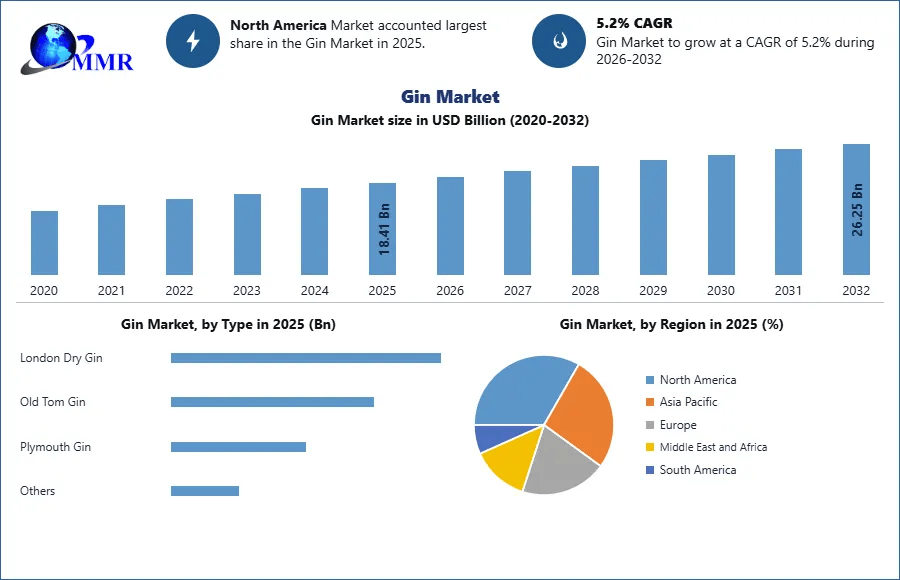
According to Maximize Market Research, the global gin market was valued at USD 18.41 billion in 2025 and is expected to reach approximately USD 26.25 billion by 2032, expanding at a compound annual growth rate (CAGR) of 5.2% during the forecast period of 2026–2032.
The rising consumer preference for premium alcoholic beverages is a major factor contributing to the growth of the gin market. Consumers are increasingly choosing high-quality spirits that offer unique flavor profiles, premium ingredients, and traditional distillation techniques. In response, manufacturers are introducing innovative gin varieties infused with juniper berries, citrus fruits, herbs, spices, and locally sourced botanicals to meet evolving consumer preferences.
The growing popularity of cocktail culture is further supporting market expansion. Classic gin-based drinks, including Gin and Tonic, Martini, Negroni, and Tom Collins, are witnessing strong demand across bars, restaurants, hotels, and other hospitality establishments. Additionally, the increasing trend of home mixology is encouraging consumers to explore premium gin brands, experiment with cocktail recipes, and purchase distinctive spirit varieties for personal consumption.
The rapid development of e-commerce and digital retail channels is creating additional growth opportunities for gin manufacturers. Online platforms enable consumers to discover international brands, compare product offerings, and access specialized gin varieties. At the same time, investments in craft distilleries, sustainable manufacturing practices, and innovative packaging are helping producers strengthen brand identity and differentiate their products in an increasingly competitive market.
Emerging opportunities are also developing in the low-alcohol and alcohol-free gin segments, ready-to-drink (RTD) cocktails, organic botanical formulations, and premium flavored products. These categories are attracting attention from consumers seeking greater variety and alternative beverage options. Manufacturers focusing on product innovation, sustainable sourcing, and changing consumption preferences are well-positioned to capitalize on new opportunities and support the long-term growth of the global gin market.
2. United States Gin Market: Latest Trends and Investment Developments in 2024
The United States remains an important market for premium and craft gin, supported by its established cocktail culture and growing interest in locally produced spirits. During 2024, premiumization, super-premium products, botanical experimentation, and mindful drinking were important industry trends. According to the Distilled Spirits Council of the United States, total US gin volumes declined from approximately 8.98 million nine-liter cases in 2023 to 8.32 million cases in 2024. However, the super-premium category demonstrated a significant long-term opportunity, with supplier revenues increasing from USD 132 million in 2019 to USD 129 million in 2024 after reaching higher levels in 2022 and 2023. A notable innovation development came from Pernod Ricard, which announced the January 2024 launch of Beefeater 0.0%, an alcohol-free alternative designed to retain the brand’s characteristic juniper and citrus profile. Such developments demonstrate how manufacturers are investing in product diversification, premium offerings, and changing consumer preferences to strengthen their position in the US gin market.
3. Gin Market Segmentation: Largest Market Share
The global gin market is segmented by type, product type, price point, distribution channel, and region. Among these categories, the following segments demonstrate market leadership or expected dominance:
-
By Type – London Dry Gin: London Dry Gin dominated the global market in 2025. Its popularity is supported by its traditional production methods, distinctive juniper flavor, citrus notes, and widespread availability. Its versatility in classic cocktails also strengthens its consumer preference.
-
By Product Type – Flavored Gin: Flavored Gin is expected to dominate the market by the end of the forecast period. Increasing consumer interest in fruit, citrus, floral, and herbal flavors is encouraging manufacturers to introduce innovative varieties, including strawberry, rhubarb, orange, and violet.
-
By Region – Europe: Europe represents the largest regional market, supported by its established gin heritage, mature consumer base, strong distillery network, and extensive premium spirits industry.
4. Competitive Analysis: Leading Gin Market Companies
The global gin market features established international spirits manufacturers competing through premium product launches, portfolio expansion, distribution partnerships, and botanical innovation. The following five companies are among the leading players identified in the market report.
1. Diageo plc
Diageo maintains a strong position through its established gin portfolio, including Tanqueray and Gordon’s. The company focuses on premiumization, product innovation, and international distribution. In January 2024, Diageo established a Breakthrough Innovation team to explore new business models, platforms, technologies, and consumer experiences beyond conventional product development. Its innovation strategy creates opportunities for premium gin experiences and new consumption formats.
2. William Grant & Sons Limited
William Grant & Sons is recognized for its premium gin portfolio, particularly Hendrick’s Gin. The company emphasizes distinctive botanical combinations, premium positioning, and experiential marketing. Its long-term strategy of introducing limited-edition products and expanding consumer experiences supports differentiation in the competitive premium gin segment. Such investments in brand development and flavor innovation can strengthen demand for specialty gin products.
3. Bacardi Limited
Bacardi competes through its premium gin portfolio, particularly Bombay Sapphire. The company focuses on botanical quality, sustainability, and premium brand positioning. Bombay Sapphire’s emphasis on carefully selected botanicals and distinctive vapor-infusion distillation provides a differentiated product offering. Its continued focus on responsible sourcing, production efficiency, and premium consumer experiences creates opportunities for growth.
4. Pernod Ricard S.A.
Pernod Ricard maintains a competitive position through Beefeater Gin and its international distribution network. A major development in 2024 was the introduction of Beefeater 0.0%, an alcohol-free alternative inspired by the original London Dry Gin. The product uses natural flavors to recreate the traditional citrus and juniper profile. This innovation reflects the company’s strategy of responding to mindful consumption and expanding its presence in the alcohol-free beverage category.
5. San Miguel Corporation
San Miguel Corporation is included among the major companies in the gin market. Its strategy focuses on expanding its premium spirits portfolio and strengthening retail distribution, particularly across Asia-Pacific. The company’s established beverage distribution capabilities provide opportunities to increase product accessibility and reach consumers in developing markets. Portfolio diversification and improved retail penetration can support its future competitiveness.
5. Regional Analysis: Major Gin Markets
United States: The United States is a significant market for premium and craft gin, supported by rising demand for locally distilled spirits, premium cocktails, and botanical-rich beverages. The expansion of craft distilleries and specialty liquor retailers is encouraging product diversification. Alcohol production and distribution are regulated through federal and state-level frameworks, including licensing and labeling requirements. Growing consumer interest in super-premium gin and alcohol-free alternatives provides additional opportunities.
United Kingdom: The UK represents one of the most established gin markets because of its historical association with London Dry Gin and its strong distillery industry. The popularity of gin-based cocktails, premium craft spirits, and locally produced botanical beverages continues to support demand. The government’s alcohol duty reforms, implemented in August 2023, introduced a strength-based taxation structure, while draught relief supports eligible hospitality products. These policies influence pricing and production decisions across the spirits industry.
Germany: Germany offers growth opportunities through its established spirits distribution network, premium beverage consumption, and increasing interest in craft products. Gin benefits from the popularity of international cocktails and specialty spirits across restaurants, bars, and retail outlets. Demand for distinctive botanical combinations and imported premium brands is supporting market development. Alcohol taxation and food and beverage labeling regulations remain important considerations for manufacturers.
France: France represents an important European market for premium alcoholic beverages, supported by its established hospitality sector, tourism industry, and consumer interest in sophisticated spirits. The popularity of premium cocktails and international gin brands is creating opportunities for manufacturers. The country’s established wine and spirits distribution infrastructure also provides an effective channel for introducing new gin varieties.
Japan: Japan offers emerging opportunities through its sophisticated beverage market, premium hospitality industry, and growing interest in innovative cocktail experiences. Consumers’ appreciation of distinctive flavors and carefully developed alcoholic beverages creates opportunities for premium gin brands. International manufacturers can strengthen their presence through locally inspired botanical ingredients and collaborations with hospitality businesses.
China: China presents long-term growth potential because of its expanding urban population, rising disposable incomes, and increasing exposure to international beverage trends. Premium imported spirits and modern cocktail culture are creating opportunities for international gin manufacturers, particularly in major metropolitan markets. However, alcohol advertising, distribution, and taxation regulations remain important factors influencing market entry and expansion.
Country-level percentage market shares for the six countries are not separately disclosed in the referenced market report. Europe is identified as the largest regional market, while North America is expected to maintain a leading position by the end of the forecast period.
6. Conclusion
The global gin market is positioned for sustainable growth as premiumization, botanical innovation, and changing consumer preferences reshape the international spirits industry. With the market projected to reach USD 26.25 billion by 2032, manufacturers have considerable opportunities to expand their product portfolios and strengthen their international presence.
In my view, the most significant growth opportunities will emerge from premium flavored gin, craft distilleries, and alcohol-free alternatives. Companies that invest in distinctive botanical ingredients, sustainable sourcing, innovative distillation technologies, and environmentally responsible packaging can establish stronger competitive advantages. Additionally, expanding distribution networks across Asia-Pacific and strengthening premium product penetration in established markets such as the United States and Europe will create further opportunities.
The increasing popularity of cocktail culture and demand for differentiated drinking experiences will remain important market growth factors. However, manufacturers must also address regulatory restrictions, production costs, and changing alcohol consumption patterns. Overall, continuous product innovation, premium brand positioning, and diversification into low- and no-alcohol alternatives are expected to play important roles in shaping the future of the global gin market.
To know the most attractive segments, click here for a free sample of the report: https://www.maximizemarketresearch.com/request-sample/125491/
About us
Maximize Market Research publishes sector forecasts, competitive analysis, and consulting insight for teams evaluating demand, competition, pricing, and growth strategy across high-value industries.
MAXIMIZE MARKET RESEARCH PVT. LTD.
2nd Floor, Navale IT Park Phase 3
Pune Banglore Highway, Narhe
Pune, Maharashtra 411041, India
+91 9607365656
sales@maximizemarketresearch.com