







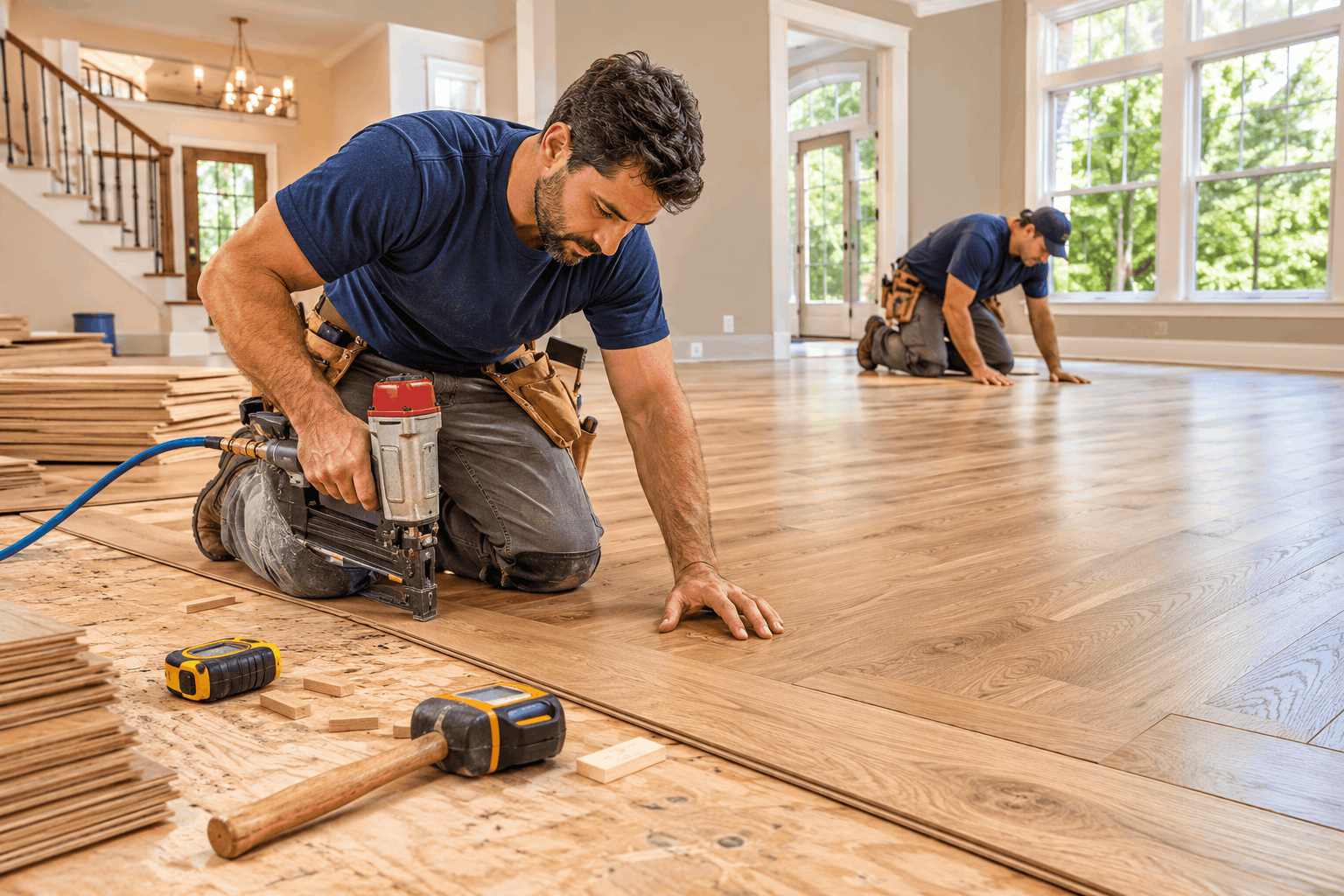
Picture a family that has just moved into a 1990s two-story home in North Fulton. The carpet is tired and stained, and the beige tile in the kitchen feels dated. They want something warm, timeless, and easy to live with. For many homeowners in this situation, the answer is wood.
Hardwood Flooring Installation in Alpharetta, GA has become a common upgrade, whether the house is a newer build or an older home in an established neighborhood. Wood floors are still one of the most sought-after finishes in the area, but getting a good result takes more than picking a pretty board.
This guide covers what the process involves, what affects the outcome, and how homeowners can make smarter choices before the first plank goes down.
Why Wood Floors Remain a Popular Choice
Flooring trends come and go, but hardwood has held its place for decades. It adds natural character that few other materials match, and it can last for generations with basic care.
Buyers also tend to notice hardwood right away. Many real estate professionals point to wood floors as a feature that helps a home show well, especially in main living areas.
There’s also the practical side. Unlike carpet, hardwood doesn’t trap pet hair, dust, or allergens deep in its fibers. A quick sweep or a damp mop is usually all it needs day to day.
What to Expect From Hardwood Flooring Installation in Alpharetta, GA
Installing wood floors is part craft and part science. The visible work, laying and fastening boards, is only one piece of the job. Much of what decides how long a floor lasts happens before installation begins.
Moisture and Climate Matter More Than Most People Think
North Georgia summers are hot and humid, and winters bring drier indoor air once the heat kicks on. Wood responds to these swings by expanding and shrinking.
That’s why experienced installers check moisture levels in both the wood and the subfloor. If the difference is too large, the floor may cup, gap, or buckle within months. Letting the wood acclimate to the home’s conditions before installation is a standard practice that many manufacturers require.
The Subfloor Sets the Stage
Homes in the region are often built on either concrete slabs or crawlspaces. Each one calls for a different approach.
Crawlspace homes usually have plywood or OSB subfloors, which work well for traditional nail-down solid hardwood. Slab homes often need engineered hardwood that can be glued down or floated, since solid wood generally isn’t recommended directly over concrete.
A good installer also checks that the subfloor is flat, clean, and structurally sound. Squeaks, dips, and soft spots are much easier to fix before new flooring hides them.
Solid vs. Engineered Hardwood
Solid hardwood is one piece of wood from top to bottom. It can be sanded and refinished many times, which makes it a long-term investment.
Engineered hardwood has a real wood top layer bonded to a stable core. It handles humidity changes better and works in places where solid wood struggles, such as basements or slab foundations. Engineered boards with a thicker wear layer can also be refinished, though fewer times than solid boards.
Prefinished or Site-Finished?
Prefinished boards arrive already stained and sealed. Installation is faster, there’s less dust, and the home can be used again sooner.
Site-finished floors are sanded, stained, and sealed after installation. This allows custom stain colors and a smooth, seamless surface. The tradeoff is more time, more odor, and a few days of limited access to the space.
The Real Benefits of Getting It Done Right
A properly installed hardwood floor feels solid underfoot. There’s no hollow sound, no shifting, and no early gaps between boards. That quality comes from careful prep, correct fastening, and the right expansion space around the room’s edges.
Durability is another major advantage. Hardwood that’s installed and finished well can handle years of foot traffic, furniture, and family life. When it starts to look worn, it can often be refinished instead of replaced.
Good installation also protects the homeowner’s investment. Many manufacturer warranties depend on following specific installation guidelines. Shortcuts with moisture testing or adhesives can void that coverage.
Finally, there’s the everyday comfort factor. Wood floors bring warmth to open floor plans and connect rooms visually, which makes a home feel larger and more cohesive.
Real-World Scenarios Homeowners Face
Every house tells a different story, and the right flooring plan depends on how people actually live in the space.
The Busy Household With Pets
A couple with two large dogs wants hardwood but worries about scratches. In cases like this, installers often suggest harder species such as hickory or white oak, along with a matte or wire-brushed finish. These choices help hide everyday wear far better than glossy, soft woods.
The Older Home With Hidden Surprises
Another homeowner pulls up old carpet and finds original oak underneath. Sometimes that wood can be refinished. Other times, water damage or past repairs mean new boards need to be woven in. A skilled installer can blend new wood with old so the patch doesn’t stand out.
The Slab-Built Townhome
A young professional in a newer townhome wants a wood look on the ground floor, which sits on concrete. Engineered hardwood with a proper moisture barrier is usually the safer route here. It delivers real wood beauty without the risks solid wood faces over a slab.
When Hardwood Isn’t the Best Fit
Hardwood isn’t always the answer for every room. Bathrooms, laundry areas, and basements with moisture concerns often call for something more water-resistant.
That’s one reason luxury vinyl plank has grown so popular across Georgia. In smaller communities east of Atlanta, many homeowners exploring Luxury Vinyl Plank Flooring in Watkinsville, GA choose it for rental properties, mudrooms, and spaces where spills happen often.
Some households mix both materials. They use hardwood in living and dining areas and vinyl plank in wetter spaces. Comparing options like Luxury Vinyl Plank Flooring in Watkinsville, GA with hardwood in a similar climate can help homeowners understand the tradeoffs in cost, feel, and long-term value.
Choosing the Right Installer
The flooring material is only as good as the person installing it. Homeowners usually benefit from asking a few direct questions before hiring anyone:
- Do they test moisture in both the wood and the subfloor?
- How long do they let the wood acclimate?
- Are they licensed and insured?
- Can they share photos of past projects or references from local clients?
Local experience matters too. Installers who regularly work in Alpharetta tend to understand the area’s mix of slab and crawlspace homes, as well as how seasonal humidity affects wood. Regional companies such as Lica Hardwood Floors LLC are among the many local installers that handle this type of work in North Fulton.
Getting at least two or three estimates is also a smart move. It gives homeowners a clearer sense of fair pricing and helps them spot any bid that skips important prep work.
Common Mistakes to Avoid
Skipping acclimation is one of the most frequent problems. Wood that goes straight from a truck to the floor may react badly once it adjusts to the home’s conditions.
Choosing flooring based on looks alone is another. A soft, light-colored species with a high-gloss finish might look stunning in a showroom but show every scratch in a busy home.
Some homeowners also underestimate the transition details. Stair nosing, thresholds, and the joints between rooms all affect how polished the final result looks.
Final Thoughts
Wood floors can change how a home looks and feels for decades. The key is planning ahead, choosing the right type of wood for the space, and working with someone who takes prep work seriously.
Before starting a project, homeowners can walk through each room and note where moisture, pets, and heavy traffic come into play. That simple list makes conversations with installers more productive and helps lead to a floor that lasts.
FAQs
How long does hardwood flooring installation take?
Most standard rooms can be installed in a few days. Site-finished floors take longer because sanding, staining, and sealing add drying time. Acclimation may also add several days before work begins.
Can hardwood be installed over concrete?
Solid hardwood generally isn’t recommended directly over concrete. Engineered hardwood is the more common choice for slab foundations, usually glued down or floated over a moisture barrier.
How much does hardwood flooring installation cost in Alpharetta?
Costs depend on the wood species, board width, subfloor condition, and whether the floor is prefinished or site-finished. Removing old flooring and repairing the subfloor can also affect the final price.
Is engineered hardwood as good as solid hardwood?
Both are real wood on the surface. Solid hardwood can be refinished more times, while engineered hardwood handles humidity changes better and works in more areas of the home.