






Imagine launching a crypto project and attracting 50,000 followers, only to discover that very few understand your product. Your announcements receive reactions, but wallet connections remain low. Community discussions revolve around token prices rather than genuine applications. Sounds familiar?
This is where micro-community marketing changes the conversation.
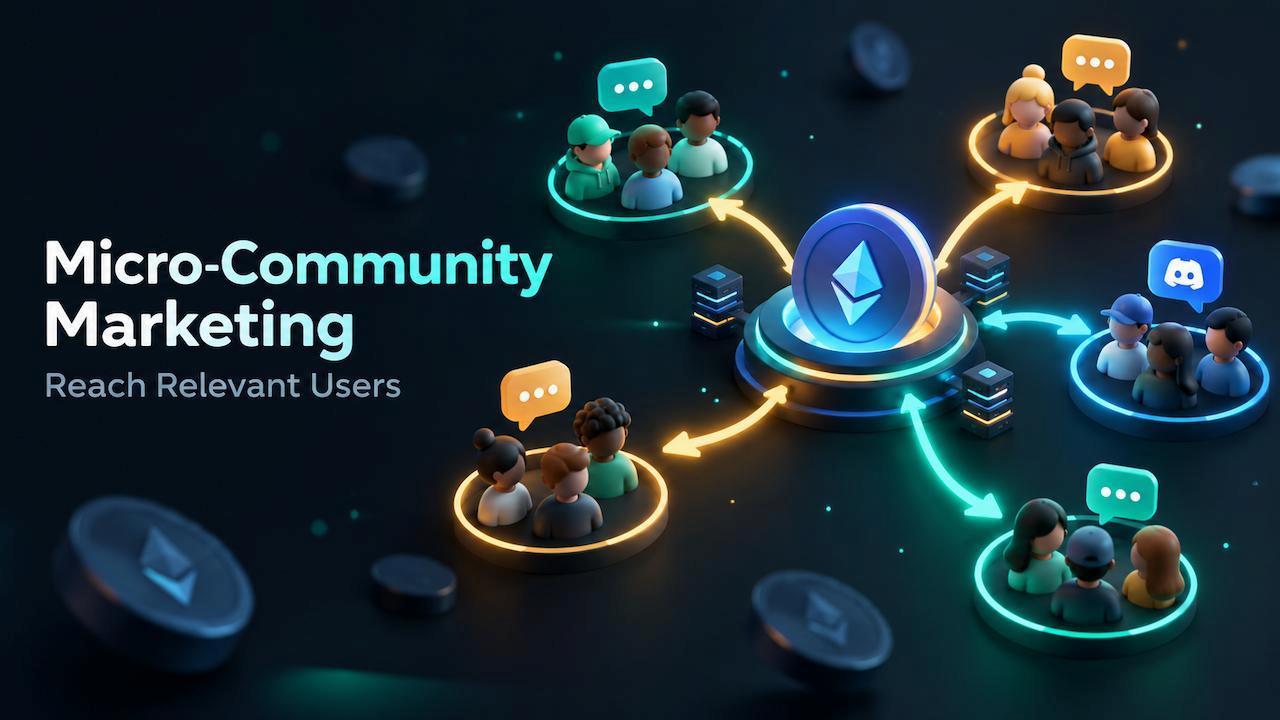
Instead of broadcasting messages to everyone interested in cryptocurrency, projects connect with smaller groups sharing specific interests, problems, or technical expertise. A DeFi lending protocol might engage active borrowers, while a blockchain gaming platform could approach dedicated gaming guilds.
Recent research supports this community-focused approach. Hivebrite’s 2026 Community Growth and Benchmark Report, drawing on data from more than 1,000 communities, found that groups per community doubled as members gravitated toward smaller, purpose-driven spaces.
For crypto founders, the message is clear: reaching relevant people can matter more than collecting massive audiences.
What Is Micro-Community Marketing in Crypto?
Crypto micro-community marketing involves engaging smaller, interest-based groups whose members share common blockchain interests or professional goals. These communities might focus on DeFi, NFTs, tokenization, decentralized infrastructure, blockchain gaming, or particular networks.
Unlike broad promotional campaigns, micro-community strategies prioritize conversations, education, and relationships. Projects participate in existing discussions, answer technical questions, gather feedback, and introduce products when they genuinely fit members’ needs.
Think of traditional crypto advertising as speaking through a loudspeaker in a crowded stadium. Micro-community marketing resembles joining a focused discussion where participants already care about your subject.
The second approach offers fewer immediate impressions but can create more meaningful interactions. This is particularly useful for projects requiring trust, technical understanding, or repeated product engagement.
Why Smaller Communities Matter in Web3
Smaller communities often make discussions easier to follow and allow members to interact directly with project teams. Questions receive detailed answers, and participants can exchange experiences without competing against endless promotional messages.
Pew Research Center’s October 2026 research found that 74% of surveyed online community participants post or share content in their most-visited community, while 56% visit daily.
These figures describe online communities generally, not cryptocurrency groups specifically. Still, they demonstrate the potential for recurring participation when members find conversations relevant.
For Web3 projects, consistent interaction creates opportunities to identify interested users and understand their expectations.
Why Crypto Projects Are Moving Toward Micro-Communities
Relevance Matters More Than Follower Counts
Crypto audiences are increasingly spread across different networks, applications, and communities. A campaign that appeals to NFT collectors may have little relevance to developers building decentralized infrastructure. Broadcasting identical messages across these audiences can waste marketing resources.
CoinGecko’s April 2026 research reported that X, Telegram, and YouTube accounted for 84% of respondents’ preferred crypto social platforms. However, platform popularity doesn’t automatically indicate where your ideal users participate.
Projects need to examine particular conversations, interests, and community behavior instead of relying exclusively on audience size.
This creates opportunities for specialized crypto audience engagement and growth campaigns that connect blockchain products with communities most likely to understand their value.
How Micro-Community Marketing Helps Crypto Projects Grow
Reaching Users With Specific Interests
Targeted crypto community marketing helps projects communicate with people who already understand their market. A tokenized real estate platform, for example, could engage property investment communities rather than general cryptocurrency trading groups.
These audiences are more likely to ask relevant questions about ownership, liquidity, compliance, and asset management. Their interests create natural openings for useful product conversations.
Projects can identify suitable communities by examining discussion topics, member participation, and previously supported applications.
The goal is finding users with a genuine problem your product addresses.
Building Trust Through Meaningful Conversations
Trust develops when project teams consistently provide useful information and respond openly to concerns. Smaller communities make these interactions easier to manage.
Founders can participate in discussions, explain technical decisions, and acknowledge limitations without turning every conversation into a sales pitch.
Community members may become familiar with the people behind a project rather than knowing only its token symbol.
Over time, these relationships can support stronger credibility and encourage informed participation.
Improving Product Feedback and Early Adoption
Micro-communities can function as valuable feedback environments during product development. Members often understand specific problems deeply enough to identify missing features or confusing user experiences.
For example, active DeFi participants might test borrowing interfaces, evaluate documentation, and report transaction difficulties.
Their feedback can help developers prioritize improvements before approaching broader audiences.
This turns community engagement into something more useful than promotional activity. It creates a direct connection between marketing discussions and product development.
Effective Micro-Community Marketing Strategies
Find Communities That Match Your Project
Begin by identifying communities that discuss problems related to your product. Search relevant Telegram groups, Discord servers, Reddit communities, developer forums, and blockchain ecosystem channels.
Evaluate discussion quality before approaching moderators or introducing promotional content.
Look for thoughtful questions, recurring contributors, relevant expertise, and genuine member interactions.
Avoid judging communities entirely by membership numbers. A smaller group with knowledgeable participants may offer greater relevance than a large channel dominated by automated messages.
Collaborate With Trusted Community Leaders
Community leaders understand their members’ expectations and communication preferences. Working with them can help crypto projects introduce unfamiliar products through established relationships.
However, partnerships should focus on genuine expertise rather than paid enthusiasm.
Invite relevant educators, developers, or community organizers to review product features, host discussions, or explain practical applications.
Give collaborators room to express independent opinions and disclose promotional arrangements transparently.
Authentic recommendations carry more meaning when audiences recognize that their trusted contributors can speak openly.
Create Educational and Interactive Campaigns
Educational campaigns provide communities with reasons to engage beyond token speculation. Instead of repeatedly announcing partnerships or upcoming listings, explain practical problems your product addresses.
Host technical discussions, live demonstrations, beginner workshops, and interactive product sessions.
A decentralized exchange might organize a workshop explaining liquidity pools, while a blockchain gaming project could host gameplay testing sessions.
These activities help participants understand the product through direct experience.
Useful education can encourage continued engagement even when cryptocurrency market attention declines.
Encourage Community-Led Growth
Community-led growth happens when participants voluntarily introduce useful products to others. Projects can support this behavior by recognizing contributors and providing reliable educational materials.
Invite members to create tutorials, translate documentation, suggest improvements, or participate in product testing.
Establish clear contributor guidelines and acknowledge meaningful work publicly.
Avoid designing incentives around repetitive posting or artificial referral activity.
The strongest contributors usually have reasons to participate beyond immediate rewards.
Micro-Community vs. Mass Crypto Marketing
Both approaches can support crypto project growth, but they address different marketing objectives.
| Marketing Factor | Micro-Community Marketing | Mass Crypto Marketing |
|---|---|---|
| Audience | Specific interest groups | Broad crypto audiences |
| Communication | Interactive discussions | Large-scale promotion |
| Primary goal | Relevance and participation | Awareness and reach |
| Campaign format | Workshops and community collaborations | Advertisements and large influencer campaigns |
| Feedback | Detailed and direct | Broad and less personal |
| Success indicators | Product adoption and retention | Reach, clicks, and impressions |
Projects don’t necessarily need to choose one approach exclusively. Broad campaigns can introduce a brand, while smaller communities help interested users develop a deeper understanding of its products.
How to Measure Micro-Community Marketing Success
Measuring micro-community marketing performance requires examining actions rather than celebrating follower increases. Engagement quality, product participation, and returning users provide more useful signals.
Track meaningful conversations, qualified referral traffic, completed registrations, and first-time product interactions.
For blockchain applications, examine relevant wallet activity while accounting for automated transactions and repeat addresses.
Compare participation across communities to identify which audiences consistently demonstrate interest.
Measure retention after campaigns finish to distinguish genuine users from temporary reward seekers.
Common Mistakes Crypto Projects Should Avoid
Entering communities solely to distribute promotional links is among the fastest ways to lose credibility. Members usually recognize when projects value their attention more than their participation.
Another mistake involves choosing groups based entirely on audience size while ignoring relevance.
Projects also struggle when they offer excessive incentives, encourage artificial engagement, or disappear after promotional activities end.
Respect community rules, disclose paid partnerships, and avoid unrealistic financial claims.
Treat every community as an existing relationship network rather than an advertising inventory.
Conclusion
Micro-community marketing helps crypto projects reach audiences with relevant interests, useful expertise, and stronger reasons to participate.
By focusing on educational conversations, trusted contributors, and practical applications, projects can establish relationships beyond temporary token excitement.
For Web3 founders, sustainable community growth begins with meaningful participation rather than impressive follower counts.
Frequently Asked Questions
1. What Makes a Crypto Micro-Community Different?
Crypto micro-communities focus on specific interests, applications, or blockchain ecosystems. Members typically discuss shared challenges and participate in more specialized conversations than broad cryptocurrency audiences.
2. Which Platforms Are Best for Micro-Community Marketing?
Telegram, Discord, Reddit, X communities, and developer forums can be effective. The right platform depends on where relevant users already communicate.
3. Can Micro-Communities Help New Crypto Projects?
Yes. Early-stage projects can use smaller communities to gather feedback, identify potential users, and explain their products before launching broader promotional campaigns.
4. How Can Crypto Projects Find Relevant Communities?
Research ecosystem discussions, competitor audiences, developer groups, and niche forums. Evaluate participation quality and topic relevance before starting outreach.
5. Is Micro-Community Marketing Better Than Influencer Marketing?
Neither approach is universally better. Micro-community marketing emphasizes relationships and participation, while influencer marketing can provide wider visibility. Combining both may produce stronger results.